News
Here, we regularly share articles about metal forging, including how the process works, news and updates from top forging companies, and trends in the industry. Whether you’re a professional, an enthusiast, or a business looking to stay informed, our column gives useful knowledge, practical tips, and industry insights to help you stay connected and up to date in the world of metal forging.
37-48 of 126 results
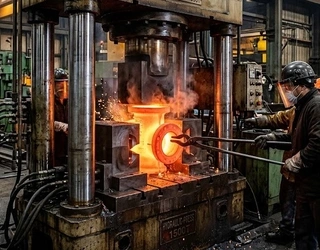
Precision Forging in Industrial Valves Manufacturing
Apr 24, 2026
25
Precision forging is an advanced manufacturing process widely used in industrial valve production to achieve high dimensional accuracy, improved material properties, and superior structural integrity. By deforming heated or controlled-temperature metal under precision dies, it produces near-net-shape components with reduced machining allowance and highly consistent quality. In valve applications, precision forging enhances the strength, toughness, and fatigue resistance of critical parts such as valve bodies, bonnets, and stems, while also improving sealing performance and operational reliability. Combined with CNC machining and controlled heat treatment, it ensures stable performance across production batches and meets strict international standards, making it a preferred solution for high-pressure, high-reliability industrial systems.
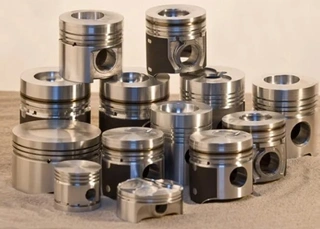
How to Choose Between Forged Pistons and Cast Pistons
Apr 23, 2026
103
This article explains the key differences between forged pistons and cast pistons in engine modification, focusing on manufacturing processes, material properties, structural design, and real-world performance. It highlights how cast pistons prioritize cost, comfort, and everyday reliability, while forged pistons offer superior strength, heat resistance, and durability for high-boost, high-RPM, and performance applications. The guide also compares their suitability, cost implications, and application scenarios to help readers make informed decisions based on power goals, driving style, and budget.
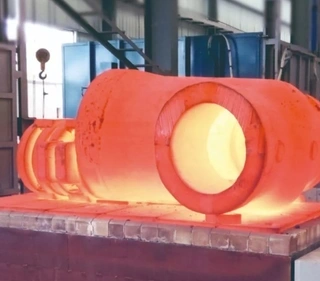
Guide to Forged Valve Manufacturing Process
Apr 20, 2026
43
Forged valves are high-strength industrial valves made by shaping solid metal under heat and pressure. They offer superior density, toughness, and pressure resistance compared to cast valves. With no internal porosity or shrinkage defects, they ensure reliable sealing and long service life. Widely used in oil and gas, chemical, and power industries, forged valves perform well under high-pressure and high-temperature conditions. They are ideal for critical applications where safety and durability are essential.
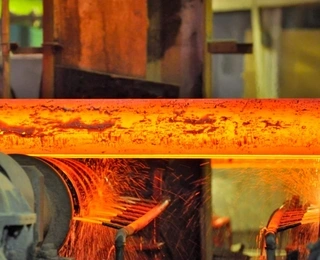
How Titanium Is Forged into High-Performance Components
Apr 17, 2026
38
This article provides a comprehensive overview of titanium forging, covering its fundamental principles, process flow, key temperature control requirements, and major forging methods such as hammer forging, open-die, closed-die, flashless, multi-action, local, and isothermal forging. It also explains how different titanium alloys behave under forging conditions, the critical parameters that influence quality, and how forging compares with casting and machining in terms of strength, fatigue resistance, and structural integrity. In addition, the article highlights common titanium grades and their applications across aerospace, medical, and industrial sectors, offering a clear understanding of how titanium forging transforms raw material into high-performance, durable components.
An Introduction to Hot Forging Process
Apr 13, 2026
41
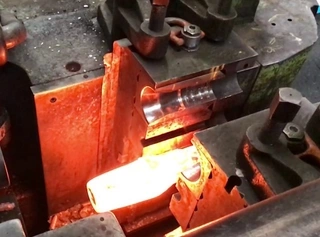
Hot forging is a critical metal forming process in which materials are heated above their recrystallization temperature and shaped under pressure to achieve superior mechanical properties and complex geometries. This article provides a comprehensive overview of hot forging, including its fundamental principles, temperature requirements for various materials, and the complete process flow from heating and deformation to cooling and finishing. It also explores key metallurgical mechanisms such as grain refinement and flow line formation, highlighting how these contribute to enhanced strength, toughness, and reliability. In addition, the article examines the advantages and limitations of hot forging, advanced techniques like isothermal forging, essential temperature control strategies, and its widespread applications across industries such as automotive, aerospace, energy, petrochemical, and fastener manufacturing.
What to Know About Brass Forging Processes
Apr 11, 2026
36
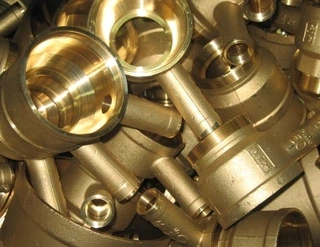
Brass forging is a solid-state metalworking process that shapes copper-zinc alloys into durable, high-performance components. Unlike casting, forging enhances internal grain structure, resulting in superior mechanical strength, precision, and corrosion resistance. Widely used in automotive, piping, electrical, and marine industries, forged brass offers long-term economic and environmental benefits. With both hot and cold forging methods, this process accommodates complex shapes and strict tolerances, making forged brass an essential solution for high-stress, precision, and sustainable industrial applications.
Aluminum Forging vs. Aluminum Casting: Differences & Selection
Apr 07, 2026
48
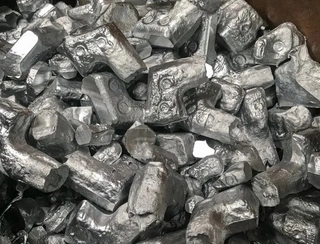
Aluminum forging and casting are two distinct manufacturing processes with unique advantages and applications. Casting involves melting aluminum and shaping it in molds, offering excellent design flexibility, thin walls, and complex geometries at lower initial costs, making it ideal for engine blocks, housings, and decorative parts. Forging, on the other hand, reshapes solid aluminum under high pressure, producing dense, directional grain structures with superior strength, fatigue resistance, and impact toughness, critical for aerospace, automotive safety components, and high-pressure fluid parts. Choosing between the two depends on performance requirements, geometric complexity, production volume, lifecycle costs, and supply chain constraints, with forging favored for high-performance, reliability-critical applications and casting preferred for complex shapes and cost-sensitive production.
An Introduction to Forging in Aerospace Industry
Apr 01, 2026
39
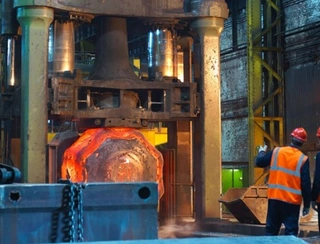
Aerospace forging is a specialized manufacturing process that shapes metals under controlled pressure to produce high-strength, lightweight, and fatigue-resistant components. Utilizing methods like open-die and closed-die forging, and materials such as aluminum, titanium, and steel alloys, it meets the extreme demands of aircraft and spacecraft structures, engines, and flight control systems. The process involves precise heating, forming, heat treatment, and machining, supported by rigorous quality control and non-destructive testing. While forging delivers superior performance and material efficiency, it also presents challenges, including high costs, complex processes, and stringent inspection requirements, making informed material and process decisions essential.
Impression Die Forging: A Forging Process for Mass Production
Mar 31, 2026
32
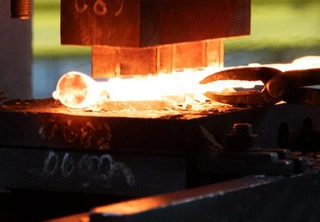
Impression die forging, or closed-die forging, is a precision metal forming process that shapes heated billets into high-strength, complex components using carefully designed dies. By aligning metal grains along the part geometry, this method enhances mechanical properties, fatigue resistance, and durability, while ensuring dimensional consistency and high material utilization. Widely used across automotive, aerospace, rail, defense, oil and gas, and medical industries, impression die forging enables efficient mass production of near-net-shape parts with intricate geometries. Key factors for success include optimized die design, flash control, fillet radii, and draft angles, making it an indispensable process for high-performance industrial components.
Overview of Inconel Forgings for Engineers and Buyers
Mar 30, 2026
26
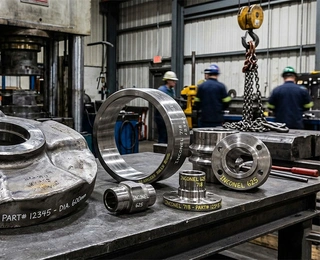
Inconel forgings, made from nickel-chromium-based superalloys, offer exceptional high-temperature strength, corrosion resistance, and durability, making them ideal for extreme industrial environments. This comprehensive guide covers the material properties, common grades such as Inconel 600, 601, 625, and 718, detailed manufacturing processes including forging, heat treatment, and inspection, as well as key applications across aerospace, petrochemical, energy, marine, automotive, and food processing industries. Understanding these aspects helps engineers and procurement professionals select the right Inconel forgings to ensure reliability, longevity, and cost-effective performance in critical applications.
Forging Process of Hastelloy C276
Mar 28, 2026
21
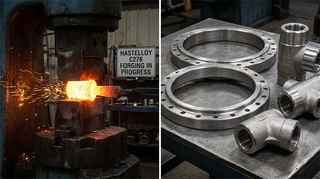
Hastelloy C276 is a nickel-based alloy renowned for its exceptional corrosion resistance, high-temperature stability, and mechanical strength. This article details the complete forging process, including material preparation, heating, forging, heat treatment, and subsequent machining, highlighting key technical points such as temperature control, deformation rate, forging ratio, and die design. It also covers the alloy’s performance characteristics, applications across chemical, petrochemical, power, environmental, marine, and pharmaceutical industries, advantages of forging over other manufacturing methods, and considerations for machining, welding, and material selection. The comprehensive guide demonstrates how Hastelloy C276 forgings deliver superior reliability, longevity, and efficiency in demanding environments.
How to Control Tolerance in Steel Forging Process
Mar 25, 2026
30
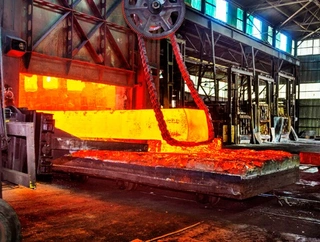
Forging tolerances define the allowable dimensional variations in forged components before final machining, accounting for material flow, thermal expansion, and die wear. They encompass dimensional, geometric, surface, and burr-related tolerances, ensuring parts meet design requirements, fit properly, and function safely. Effective tolerance control impacts assembly precision, operational safety, and production costs across industries like aerospace, automotive, energy, and oil & gas. By managing material selection, forging parameters, die design, and post-forging processes, manufacturers can optimize precision, reduce waste, and maintain consistent quality.
Total 126 Records, 12 records per page