An Introduction to Hot Forging Process
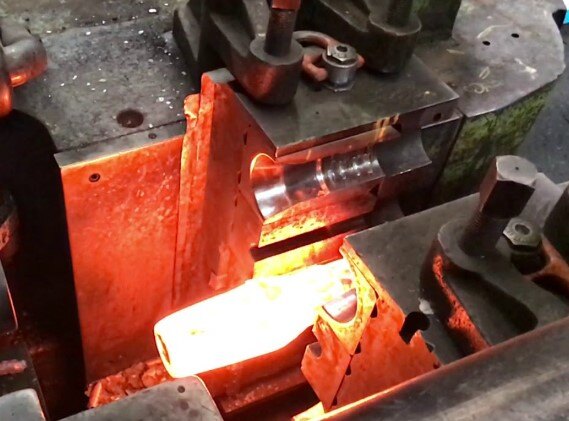
Hot forging is a critical metal plastic forming process. Its core principle involves heating metal above its recrystallization temperature and then applying pressure to induce plastic deformation, ultimately achieving the desired shape and properties. Understanding the key terms in this definition is essential to grasp the fundamental characteristics of hot forging.
Recrystallization temperature is the central concept in hot forging. When metal is heated above this temperature, its internal grain structure undergoes rearrangement and refinement, a process known as recrystallization. The most direct benefit of recrystallization is the elimination of work hardening. During deformation, the metal does not become brittle or crack due to stress accumulation; instead, it maintains a relatively low yield strength and high ductility. This makes hot forging particularly suitable for applications requiring large deformation.
From a temperature control perspective, hot forging temperatures are determined based on scientific principles. For pure metals, the recrystallization temperature is typically 0.3 to 0.4 times the melting point; for alloys, this ratio increases to about 0.5, usually not less than 60% of the absolute melting temperature. These temperature settings ensure that the material remains in an optimal plastic state during forming.
Different metals exhibit significant variations in hot forging temperature ranges, and precise temperature control is essential for process success. Typical temperature ranges for common fastener materials are as follows:
Within this range, steel exhibits excellent plasticity and low deformation resistance, allowing complex shapes to be formed. Temperatures that are too low increase deformation resistance and risk cracking, while excessive temperatures may cause grain coarsening and degrade mechanical properties.
Aluminum alloys are sensitive to temperature variations and require precise control. Temperatures above the upper limit can lead to grain coarsening and surface oxidation, while lower temperatures may cause forging cracks.
Widely used in aerospace, titanium alloys are highly reactive at elevated temperatures and tend to react with oxygen and nitrogen. Therefore, hot forging is typically performed in a vacuum or protective atmosphere.
Due to high thermal conductivity, copper alloys dissipate heat quickly, requiring rapid operation during forging to minimize heat loss.
These temperature ranges define the processing window in which optimal formability can be achieved without compromising structural integrity. Deviations may lead to defects such as cracks, folds, or abnormal grain growth, severely affecting product quality and yield.
Hot forging is a systematic process consisting of multiple interconnected stages, each significantly impacting the final product quality.
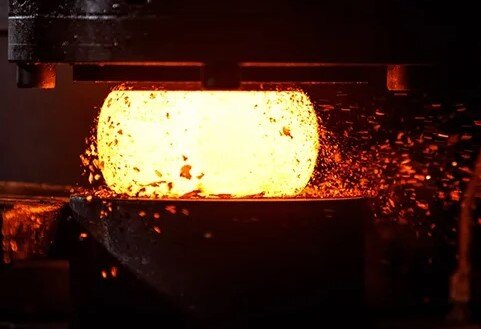
The process begins with heating raw materials such as billets or bars in a dedicated furnace to the target temperature. The heating rate and soaking time must be strictly controlled to ensure uniform temperature distribution and avoid excessive thermal stress. Temperature control directly affects formability and final mechanical properties, making it the primary condition for successful forging.
Simultaneously, dies must be prepared. Hot forging dies are typically made from high-temperature tool steels such as H13 or 3Cr2W8V to withstand severe thermal cycling and mechanical loads. The die cavity is custom-designed based on the part geometry, considering metal flow characteristics, draft angles, and fillet radii. Proper die design directly determines forging quality and die service life.
Heated workpieces must be quickly transferred to forging equipment to minimize heat loss and oxidation. Equipment selection depends on part size, shape complexity, and production volume, including drop hammers, hydraulic presses, mechanical presses, and screw presses.
During forging, the die applies significant pressure to plastically deform the material and fill the cavity. Key process parameters include deformation speed, degree of deformation, and applied pressure, all of which must be optimized based on material properties and design requirements. Complex parts may require multiple forging passes to gradually achieve the final shape.
After forging, the workpiece enters the cooling stage. The cooling method has a decisive influence on final properties. Common methods include air cooling, pit cooling, furnace cooling, and quenching.
Cooling too quickly may cause deformation or cracking, while excessively slow cooling may negatively affect mechanical performance. For components with specific property requirements, cooling must strictly follow process specifications.
Forged parts typically require finishing operations such as trimming, punching, and machining to meet final dimensional requirements. Additional heat treatments, such as quenching and tempering or surface hardening, may be applied to further optimize mechanical properties. Quality control at this stage directly affects assembly performance and service life.
Hot forging is not only a forming process but also an important metallurgical process involving beneficial internal structural changes.
As-cast structures often contain coarse columnar and equiaxed grains, along with low-melting phases and non-metallic inclusions at grain boundaries. Hot forging breaks down the cast structure and promotes dynamic recrystallization, resulting in refined and uniformly distributed grains.
Fine equiaxed grains provide higher strength and improved toughness, which is why forged components typically outperform cast or machined parts in mechanical properties.
During hot forging, inclusions, segregations, and voids align along the direction of metal flow, forming "flow lines" or a fibrous structure. This directional structure enhances strength and toughness parallel to the flow direction, while properties perpendicular to it are relatively lower.
Proper die design and forging processes can align flow lines with the part contour, ensuring optimal performance along principal stress directions. This anisotropic characteristic must be considered in critical load-bearing components.
Compared to other metal forming processes, hot forging offers several technical advantages:
- Superior Mechanical Properties: Grain refinement and flow line control result in high strength, toughness, and fatigue resistance. Forgings generally offer better reliability and longer service life than cast or welded components.
- Strong Forming Capability: At elevated temperatures, metals exhibit high plasticity and low deformation resistance, enabling large deformation with relatively lower equipment capacity. This is ideal for complex shapes with varying cross-sections.
- Wide Material Applicability: Hot forging is suitable for nearly all metals, including high-strength alloy steels, titanium alloys, and nickel-based superalloys, which are difficult to process at room temperature.
- Elimination of Work Hardening: Since deformation occurs above recrystallization temperature, work hardening is avoided, allowing multi-pass deformation to achieve complex geometries.
- Closure of Internal Defects: The compressive stress state during forging helps eliminate internal porosity and voids, improving material density and uniformity.
Despite its advantages, hot forging also presents several challenges:
- Dimensional Accuracy and Surface Quality: Forgings generally have lower dimensional accuracy and higher surface roughness than cold forming or precision casting. Post-machining is often required.
- Oxidation and Decarburization: High-temperature exposure leads to oxidation (scale formation) and, in steels, decarburization, reducing surface hardness and wear resistance. Protective atmospheres or coatings may be required.
- High Energy Consumption: Continuous heating and temperature maintenance result in higher energy usage compared to cold processes.
- Die Life Issues: Dies operate under extreme thermal and mechanical conditions, leading to fatigue, cracking, and wear. Die material selection and cooling optimization are critical.
- Complex Cooling Control: Improper cooling may cause defects or residual stress, especially in large forgings with uneven cooling rates.
Isothermal forging is a specialized and advanced form of hot forging. In this process, the die is heated to the same temperature as the workpiece, and deformation is controlled using adiabatic heating effects.
This process is typically carried out in a vacuum or controlled atmosphere to prevent oxidation. Its advantages include:
- Uniform deformation and fine microstructure
- Capability to form complex thin-walled shapes
- Excellent suitability for titanium alloys and nickel-based superalloys
However, isothermal forging requires high investment, has slower production rates, and involves higher costs. It is mainly used in aerospace applications, such as turbine discs and compressor blades, where performance requirements are extremely demanding.
Temperature control is critical throughout the hot forging process:
- Deformation Heating Effect: Approximately 90% of plastic work converts into heat, increasing workpiece temperature, especially during rapid deformation.
- Heat Loss to Dies: Heat dissipates through contact with cooler dies, creating temperature gradients between the surface and core.
- Die Preheating Balance: Dies are typically preheated to 260°C–454°C to reduce thermal gradients, balancing workpiece quality and die life.
- Real-Time Temperature Monitoring: Modern forging uses infrared sensors and thermocouples for real-time monitoring and predictive control.
Hot forging is widely used across modern industries:
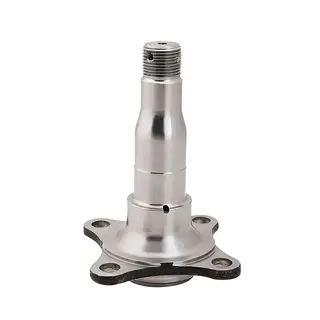
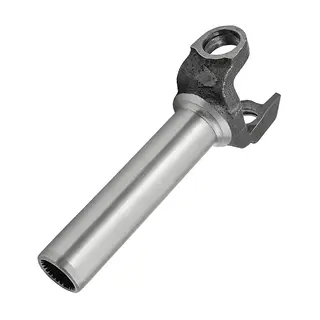
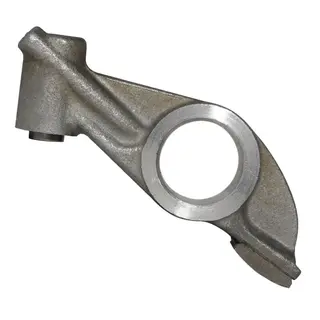
- Automotive Industry: Crankshafts, connecting rods, gears, and axles requiring high fatigue strength.
- Aerospace Industry: Turbine discs, blades, casings, landing gear, and structural components made from advanced alloys.
- Energy Sector: Large forgings for nuclear, wind, and gas turbines.
- Petrochemical Industry: High-pressure valves, flanges, and pressure-bearing components.
- Fastener Manufacturing: Large bolts (above M36) and high-strength alloy fasteners, including titanium aerospace fasteners.
Hot forging is a mature and indispensable metal forming technology in modern manufacturing. Its key strengths lie in producing high-performance, complex, and large components while accommodating difficult-to-process materials. A thorough understanding of its principles, process parameters, and control methods is essential for proper application. For engineers, mastering hot forging not only supports optimized design and material selection but also enhances quality control and problem-solving capabilities. This guide aims to provide a systematic and practical reference for understanding and applying hot forging technology.