An Introduction to Forging in Aerospace Industry
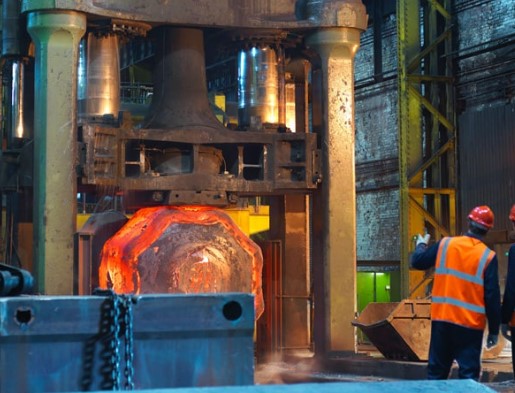
Forging is a manufacturing process in which metal is shaped by the localized application of compressive forces. In simple terms, pressure is used to deform metal into the desired shape. Unlike casting or machining, forging does not change the total volume of the material; instead, it reorganizes its internal structure.
In the aerospace industry, forging plays an irreplaceable role in the production of critical components. Aircraft and spacecraft must operate under extreme conditions—low temperatures at high altitudes, severe thermal fluctuations, intense vibration, and enormous pressure. Components must be lightweight to reduce fuel consumption while also being strong enough to ensure safety. Forging uniquely meets these seemingly conflicting requirements. Its core advantage lies in its ability to refine the internal grain structure of metals. During the forging process, metal grains are realigned along the direction of applied force, forming what is known as grain flow. This structure enhances the mechanical performance of components under tensile and compressive loads, resulting in higher strength and superior fatigue resistance compared to cast or conventionally machined parts made from the same material.
Forging is not a single technique but a collection of processes developed to accommodate varying levels of part complexity, size, and precision. In aerospace applications, the two most commonly used methods are open-die forging and closed-die forging, each suited to different production scenarios.
Open-die forging is the most basic form of forging. Heated metal is placed between flat or simply shaped dies and deformed using hammers or presses. This process is characterized by simple tooling and high adaptability.
In aerospace applications, open-die forging is mainly used in two scenarios: producing large components with relatively simple geometries, such as certain airframe structures, and serving as a preforming step prior to precision closed-die forging. It prepares billets for subsequent shaping processes.
Open-die forging requires a high level of operator skill. The technician must continuously adjust the process based on the deformation behavior of the metal, controlling dimensions and geometry in real time. Although it offers lower dimensional accuracy than closed-die forging, it is cost-effective for very large components.
Closed-die forging utilizes dies that closely match the final shape of the component. Heated metal is placed into the lower die, and the upper die closes under immense pressure, forcing the material to flow and fill the cavity completely.
The advantages of this process are clear: high dimensional accuracy, the ability to produce complex geometries, and excellent surface quality. Many critical aerospace components are manufactured using closed-die forging, including engine blades, landing gear components, and various connectors.
However, closed-die forging requires specialized die design and manufacturing, resulting in higher initial costs. It is best suited for batch production. In aerospace manufacturing, where quality requirements are extremely high and production volumes are relatively moderate, closed-die forging provides the optimal balance between quality and cost.
While forging determines how a material is shaped, the choice of material determines whether the component can meet the demanding requirements of aerospace applications. Each material offers unique performance characteristics, and engineers must select the most suitable one based on the operating environment and functional requirements of the component.
Aluminum alloys are among the most widely used materials in aerospace forging. Their density is roughly one-third that of steel, yet through alloying and heat treatment, they can achieve relatively high strength.
In aerospace applications, aluminum alloy forgings are typically used for non-critical structural components such as brackets, frames, and access doors. The primary motivation for selecting aluminum is weight reduction—every kilogram saved significantly reduces fuel consumption or increases payload capacity.
Titanium alloys occupy a unique position in aerospace forging. They combine high strength, excellent corrosion resistance, and relatively low density. More importantly, they maintain stable performance at elevated temperatures.
These properties make titanium alloys the preferred choice for engine components, critical landing gear parts, and high-performance structural elements. Components such as turbine disks and compressor blades are commonly forged from titanium alloys.
It is important to note that pure titanium is relatively heavy for certain applications; therefore, titanium alloys are more commonly used. By adding elements such as aluminum and vanadium, engineers can significantly enhance the strength-to-weight ratio while preserving corrosion resistance.
High-strength steels are also indispensable in aerospace forging. Although they have higher density, they offer superior strength limits, relatively lower cost, and a mature supply chain. They are particularly suitable for small but highly critical components where structural integrity is paramount.
Typical applications include fasteners, gears, bearings, and hydraulic system components. For example, oilfield-related forgings made from alloy structural steels such as 35CrMo or 42CrMo can achieve an excellent combination of strength and toughness through proper forging and heat treatment, enabling them to withstand extreme hydraulic pressures.
Stainless steel, an important subset of steel alloys, is widely used in aerospace due to its corrosion resistance and oxidation resistance. It can withstand drastic temperature and pressure variations at high altitudes. From turbine blades and landing gear struts to hydraulic fittings and sensor housings, stainless steel forgings are found throughout aircraft systems.
Once the appropriate material and forging method are selected, the next step is transforming raw material into qualified components. Aerospace forging involves multiple tightly controlled stages, each critical to meeting stringent quality standards.
The process begins with strict raw material selection. Suppliers must provide complete material certifications, including chemical composition, metallurgical quality, and non-destructive testing data.
Before forging, the material is heated to an appropriate temperature, which varies by material: aluminum alloys typically at 350–500°C, titanium alloys at 800–1000°C, and steel alloys at 1000–1200°C. Heating improves plasticity, reduces deformation resistance, and prevents issues such as grain coarsening due to overheating.
In open-die forging, heated metal is placed on an anvil, and operators use hammers or presses to perform multiple deformation passes. Each pass requires precise control of reduction, feed, and rotation to gradually achieve the desired shape.
Closed-die forging is more automated. Heated metal is accurately positioned in the lower die, and the upper die closes under pressures ranging from thousands to tens of thousands of tons. The metal flows under high pressure to fill every part of the die cavity. Advanced techniques such as isothermal forging and precision forging are widely used in modern aerospace manufacturing to further enhance accuracy and material utilization.
After forging, components typically undergo heat treatment processes such as annealing, normalizing, quenching, and tempering. These processes relieve residual stresses, refine microstructure, and achieve the required balance of strength and toughness.
Subsequently, forgings are machined to meet final dimensional tolerances and surface finish requirements. Aerospace components often require micrometer-level precision and strict surface roughness standards.
Completion of manufacturing does not mark the end of the process. In aerospace applications, even minor defects can have catastrophic consequences. Therefore, quality control is integrated throughout the entire production cycle.
Every aerospace forging must undergo rigorous non-destructive testing to ensure it is free of internal and surface defects.
Ultrasonic testing uses high-frequency sound waves to detect internal flaws such as cracks, voids, and inclusions. It is the most commonly used method for aerospace forgings.
Magnetic particle testing is suitable for ferromagnetic materials like steel and reveals surface and near-surface cracks.
Radiographic testing (X-ray or gamma ray) produces images of internal structures, making it effective for inspecting complex components.
Dye penetrant testing is used to detect surface-breaking defects in non-porous materials.
In addition to defect detection, dimensional inspection is essential. Coordinate measuring machines (CMM) and optical scanning technologies are widely used to verify geometric accuracy.
Chemical composition analysis is also mandatory. Even minor deviations can significantly affect material performance. Techniques such as spectroscopic analysis and chemical titration are used to ensure compliance with specifications.
- Airframe Structures: Forgings are widely used in aircraft structures, including wing spars, fuselage frames, and landing gear doors. Landing gear components, for instance, must withstand the full weight of the aircraft during takeoff, landing, and taxiing, as well as absorb impact loads and vibrations. Critical forged parts such as struts, brackets, and torque arms must exhibit exceptional strength and reliability.
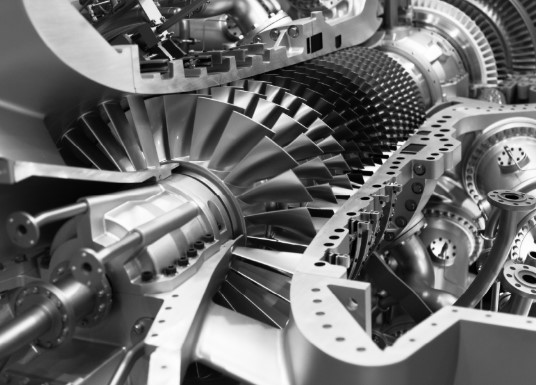
- Engine Systems: Aerospace engines represent one of the most demanding applications for forging technology. Key components such as turbine disks, compressor blades, combustion casings, and bearing housings are all forged. These parts operate under extreme conditions of high temperature, pressure, and rotational speed, requiring the highest levels of material performance and manufacturing quality.
- Flight Control Systems: Components in flight control systems, including actuator housings, hydraulic valve bodies, and control linkages, also rely on high-precision forgings. These parts are directly related to flight safety, and any failure could have catastrophic consequences, making reliability paramount.
Strict quality control ensures the reliability of forgings, but achieving such high standards comes at a cost. Understanding both the practical benefits of forging and the specific challenges it presents allows for a more comprehensive evaluation of this manufacturing technology’s true value.
- High Strength and Lightweight Design: Grain flow alignment enhances strength in critical directions, enabling reduced cross-sectional dimensions and lighter designs.
- Excellent Fatigue Resistance: The continuity of the forged structure minimizes crack initiation and propagation under cyclic loading, extending service life and reducing maintenance costs.
- High Precision and Material Efficiency: Precision forging enables near-net-shape manufacturing, reducing machining requirements, lowering costs, and shortening production cycles.
- High Raw Material Costs: Aerospace materials such as titanium alloys and high-performance steels are expensive and require significant inventory investment.
- Process Complexity: Designing and manufacturing dies for complex components is challenging, with narrow process windows and high requirements for equipment and expertise.
- Strict Quality Control: Comprehensive inspection throughout the process increases time and cost.
High Equipment and Talent Investment: Large forging equipment requires substantial capital, and skilled operators and engineers require long training periods.
For companies sourcing aerospace forgings, the following factors are critical:
- Certifications: Ensure the supplier holds aerospace quality certifications such as AS9100 and special process certifications like NADCAP.
- Technical Capability: Evaluate equipment capacity (press tonnage, die manufacturing capability), material range, and process development expertise.
- Quality Track Record: Review historical performance data, including rejection rates, customer complaints, and on-time delivery.
- Industry Experience: Prefer suppliers with experience in similar products, as they better understand industry-specific requirements.
- Responsiveness: Aerospace projects often operate under tight schedules, making rapid response capability essential.
Aerospace forging is a highly specialized and technology-intensive field with extremely stringent quality requirements. From raw material selection to final delivery, every step must be carefully controlled. As aerospace technology continues to evolve, forging processes are also advancing, providing a solid foundation for improved safety, reliability, and economic efficiency in modern aircraft and spacecraft. Understanding the characteristics and value of forging enables manufacturers, engine producers, and maintenance organizations to make more informed procurement decisions.