Forging Process of Hastelloy C276
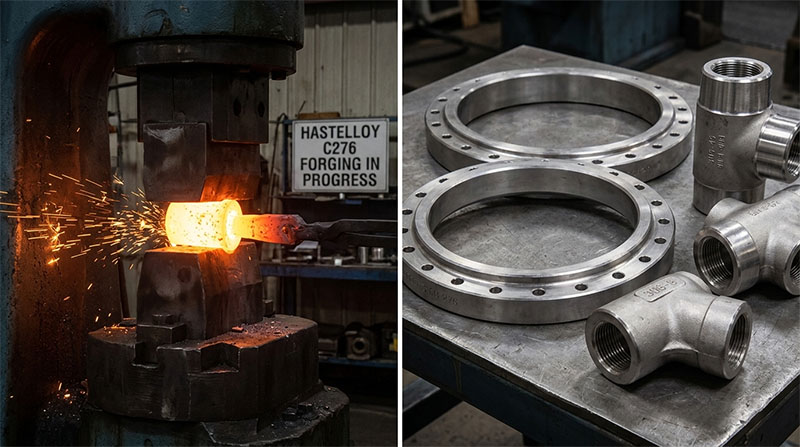
Hastelloy C276 is a nickel-based alloy widely used in chemical, petrochemical, and power industries. Its primary composition includes nickel, molybdenum, chromium, and iron, with nickel content being the highest, supplemented by small amounts of tungsten and other elements. The most prominent characteristic of this alloy is its strong corrosion resistance. It can maintain stability in highly corrosive environments such as strong acids, chloride solutions, and seawater. At the same time, it also retains excellent mechanical properties under high temperatures, capable of withstanding oxidizing environments up to 1037 °C.
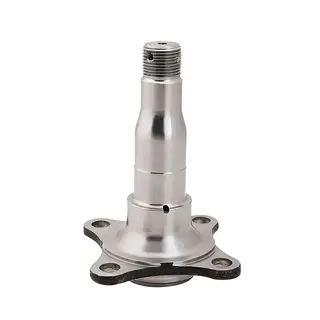
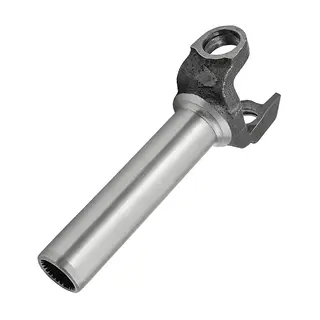
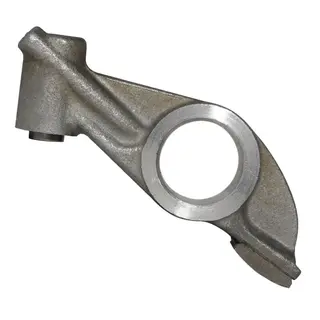
Due to these features, Hastelloy C276 is often used to manufacture process equipment such as heat exchangers, valves, pump bodies, and pipelines. Among these, forged parts are particularly common because the forging process can further improve the material's performance.
Forging is a metalworking process in which metal materials are subjected to pressure to induce plastic deformation, thereby achieving the desired shape and mechanical properties. Unlike casting, forging does not alter the chemical composition of the metal but changes its internal microstructure.
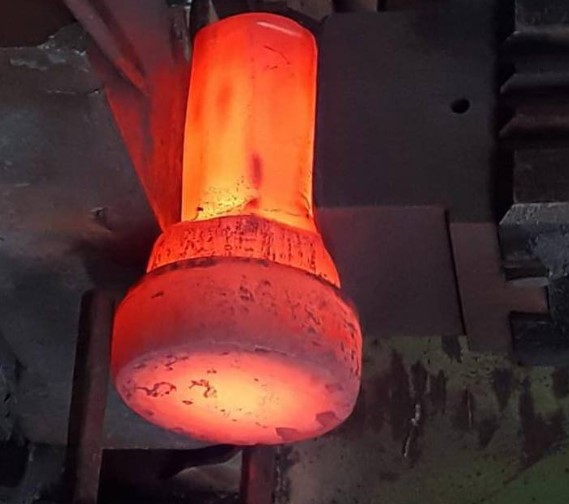
For Hastelloy C276 forging, the forging process begins with heating the material. The heating temperature is generally controlled between 1150 °C and 1300 °C, a range that allows the alloy to reach a good plastic state suitable for shaping. During the heating process, it is important to control the heating rate. Initially, the temperature should rise slowly, and when it reaches approximately 960 °C, which is the recrystallization temperature, the heating rate can be accelerated. This staged heating method helps avoid deformation or cracking caused by thermal stress.
Once the material reaches the target temperature, it is subjected to pressure using forging equipment to deform it into the required shape. During this process, the grains inside the metal realign along the direction of the applied force, forming the so-called "forging flow lines." This structural change is the key reason why forged components outperform cast components in terms of mechanical properties.
- Material Preparation: Before forging, it is necessary to inspect the raw Hastelloy C276 material to confirm that its chemical composition meets the standard and that the surface has no significant defects. The raw materials are usually in the form of bars, billets, or preformed blanks with simple shapes.
- Heating: Place the material into a furnace and heat it according to a predetermined temperature curve. Since Hastelloy C276 has relatively poor thermal conductivity, uniform heating is required to avoid local overheating or uneven temperature distribution.
- Forging and Shaping: After reaching the forging temperature, the material is transferred to forging equipment for shaping. Depending on the complexity of the product, multiple heating and forging cycles may be required. Complex-shaped parts may also require precision dies to assist in forming.
- Heat Treatment: After forging, annealing or tempering is generally required. The purpose of this step is to eliminate internal stresses generated during forging, stabilize the microstructure, and adjust the hardness and toughness balance. Heat treatment can ensure the forging achieves more uniform performance and meets the requirements of various applications.
- Subsequent Machining: After heat treatment, the forged parts may still require mechanical processing such as turning, milling, or drilling to achieve the final dimensional accuracy and surface quality.
Due to Hastelloy C276's high strength and high-temperature resistance, specialized equipment is required for forging.
- Heating Equipment: Electric or gas-fired furnaces are commonly used, requiring precise temperature control and good uniformity inside the furnace.
- Forging Equipment: Depending on the size and shape of the forging, equipment such as air hammers, friction presses, hydraulic presses, or precision die forging machines may be selected. Large forgings require high-tonnage hydraulic presses, while small precision forgings may use CNC die forging equipment.
- Dies: During forming, Hastelloy C276 requires sufficient support, making die design critical. Precision dies help control forging dimensions and reduce subsequent machining.
- Cutting Tools: Trimming of forged blanks requires carbide or cobalt high-speed steel tools because Hastelloy C276 is difficult to machine.
- Temperature Control: Temperature is a core parameter in forging Hastelloy C276. Too low a temperature results in poor plasticity, difficult deformation, and easy cracking. Too high a temperature may cause grain coarsening and affect final performance. Therefore, it is essential to strictly control heating and forging temperature ranges.
- Deformation Rate: Hastelloy C276 is sensitive to the deformation rate. Excessive deformation speed causes work hardening and increases resistance; too slow a rate may lead to rapid cooling. The appropriate deformation rate must be chosen according to specific equipment and product requirements.
- Forging Ratio: The forging ratio, which is the ratio of cross-sectional area before and after forging, ensures dense internal microstructure and proper flow line distribution. For Hastelloy C276, an adequate forging ratio is necessary to fully utilize the property improvements brought by forging.
- Die Design: Due to high deformation resistance, dies need sufficient strength and wear resistance. Die cavity design should consider metal flow characteristics to avoid folding, incomplete filling, or other defects.
After forging and proper heat treatment, Hastelloy C276 forgings exhibit the following characteristics:
- Mechanical Properties: Tensile strength up to 572 MPa (≈83 ksi), yield strength not less than 276 MPa (≈40 ksi), elongation between 30% and 45%. These values indicate excellent strength combined with good plasticity.
- Corrosion Resistance: Capable of resisting pitting, crevice corrosion, stress corrosion cracking, and other forms of corrosion. Particularly effective in chloride-containing environments and able to withstand a variety of strong acids.
- High-Temperature Performance: Maintains oxidation resistance at temperatures up to 980 °C and demonstrates good creep resistance below 815 °C, making it suitable for high-temperature applications.
- Physical Properties: Density approximately 8.89 g/cm³, melting point range 1325–1370 °C, moderate thermal expansion coefficient.
- Processing Properties: Good weldability with various welding methods. Also has certain cold processing capabilities, though machining is challenging and requires specialized tools and process parameters.
- Chemical Industry: In chemical production, many processes involve highly corrosive media. Hastelloy C276 forgings are used for pipelines, valves, reactor internals, and heat exchanger tube sheets, capable of long-term stable operation in acidic, alkaline, and saline environments. Typical applications include sulfuric acid production units, chlor-alkali equipment, and organic synthesis reactors.
- Petrochemical Industry: High-temperature and high-pressure environments in hydrogenation and catalytic cracking units, as well as corrosive conditions during sulfur-containing crude oil processing, are suitable for Hastelloy C276 forgings. Seawater systems and fire protection systems on offshore oil platforms also commonly use this material.
- Power Industry: Flue gas desulfurization devices in thermal power plants, seawater cooling systems, and certain nuclear power plant components utilize Hastelloy C276 forgings. Its corrosion resistance at high temperatures and seawater durability are fully leveraged in these applications.
- Environmental Protection Industry: Harsh working environments in waste incineration flue gas treatment systems, wastewater treatment equipment, and scrubbing towers demand high corrosion resistance. Hastelloy C276 forgings can extend equipment service life and reduce maintenance costs.
- Marine Engineering: Seawater piping systems on ships, offshore platform structural components, and seawater desalination equipment are continuously exposed to seawater or marine atmosphere. The seawater corrosion resistance of Hastelloy C276 forgings makes them ideal for these applications.
- Pharmaceutical Industry: Pharmaceutical production requires high material purity and often involves diverse chemical media. Hastelloy C276 forgings meet hygiene standards while resisting corrosion, suitable for reactors, distillation columns, and crystallizers.
Compared with other manufacturing methods, forging Hastelloy C276 offers several advantages:
- Dense Microstructure: Forging eliminates potential casting defects such as porosity, making the internal structure more compact.
- Enhanced Performance: Flow lines in forged parts allow anisotropy to be effectively utilized, with strength and toughness along the flow lines superior to other directions. Overall performance exceeds that of cast components.
- Good Surface Quality: Forgings exhibit smooth surfaces and high dimensional accuracy, reducing post-processing requirements.
- High Reliability: Fewer internal defects ensure safer operation under high-pressure, high-temperature, and corrosive conditions, reducing the risk of leakage or failure.
- Long Service Life: Comprehensive performance enables Hastelloy C276 forgings to last longer than cast or welded parts, lowering total lifecycle cost.
- High Material Utilization: Precision forging reduces machining allowance, decreasing material consumption and processing costs.
Although Hastelloy C276 forgings have excellent properties, subsequent processing requires attention:
- Machining: High nickel content increases material adhesiveness, causing rapid tool wear. Carbide or ceramic tools are recommended, with lower cutting speeds and proper feed rates. Adequate cutting fluid helps with cooling and chip removal.
- Welding: Hastelloy C276 has good weldability using tungsten inert gas (TIG) welding, gas-shielded welding, or similar methods. Filler materials should match the base material composition. Preheating is generally unnecessary, and post-weld heat treatment is rarely required, but interpass temperature must be controlled.
- Heat Treatment: If performance adjustment is needed, solution treatment can be performed. Heating to approximately 1120 °C followed by rapid cooling achieves optimal corrosion resistance and appropriate strength.
- Surface Treatment: Depending on application requirements, pickling, passivation, and polishing may improve corrosion resistance or meet hygiene standards.
When deciding whether to select Hastelloy C276 forgings, the following factors should be considered:
- Corrosive Media: For highly corrosive media where standard stainless steel is insufficient, Hastelloy C276 is appropriate.
- Temperature and Pressure: High strength and temperature stability give Hastelloy C276 an advantage in high-temperature and high-pressure conditions.
- Safety Requirements: For critical equipment, the high reliability of forged parts is valuable.
- Economics: Although the initial cost is high, considering service life and maintenance costs, it may be more economical over the lifecycle.
- Processing Difficulty: Post-processing capabilities and costs should be evaluated to ensure manufacturing and installation feasibility.
Hastelloy C276 forging is a mature metalworking process. Through proper temperature control, deformation management, and heat treatment, it produces high-performance nickel-based alloy forgings. These forgings play a crucial role across chemical, petrochemical, power, environmental protection, marine, and pharmaceutical industries, particularly in corrosive media and high-temperature, high-pressure conditions, demonstrating advantages that other materials cannot replace.
When selecting Hastelloy C276 forgings, it is essential to fully understand their performance characteristics and application limitations, and to make material choices according to specific working conditions. Collaboration with experienced suppliers ensures that forging processes and quality control meet requirements, allowing the full value of this high-performance alloy to be realized.