News
Here, we regularly share articles about metal forging, including how the process works, news and updates from top forging companies, and trends in the industry. Whether you’re a professional, an enthusiast, or a business looking to stay informed, our column gives useful knowledge, practical tips, and industry insights to help you stay connected and up to date in the world of metal forging.
25-36 of 126 results
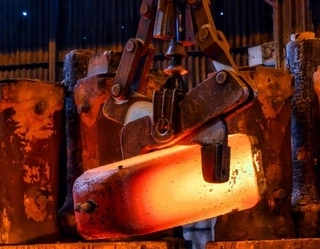
Temperature Monitoring in Metal Forging
May 23, 2026
22
This article explains the importance of precise temperature monitoring in metal forging and how it affects product quality, energy efficiency, and process stability. It highlights key forging stages, common temperature-related defects, and the advantages of non-contact infrared temperature measurement technologies in improving forging performance and reliability.
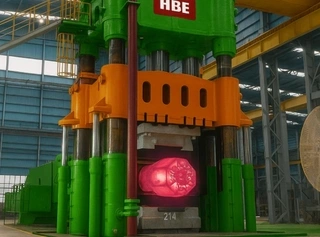
Guide to Hot Forging Press Selection and Application
May 22, 2026
18
This article provides a comprehensive overview of hot forging presses, covering their working principles, major types (hydraulic, mechanical, and screw), and key differences from cold forging. It explains essential selection factors such as production capacity, material compatibility, equipment specifications, control systems, and energy efficiency, along with economic considerations including purchase cost, operating expenses, and reliability. The guide also highlights major industrial applications in automotive, aerospace, and heavy machinery sectors, offering practical insights to help manufacturers choose the right equipment and optimize production efficiency and long-term performance.
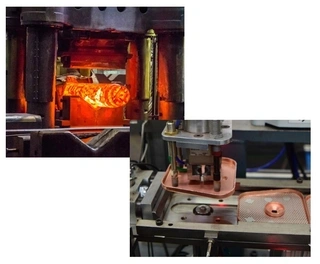
Precision Metal Stamping vs. Metal Forging: How to Choose
May 18, 2026
19
This article compares precision stamping and forging, two key metal forming processes, highlighting their differences in principles, materials, mechanical performance, surface quality, cost, and applications. Precision stamping excels in high-volume production of thin-walled, high-precision parts, while forging produces strong, durable components for high-stress applications. Practical guidance, including identifying stamped steel control arms in automotive suspensions, helps manufacturers and engineers choose the most suitable process based on production needs, material requirements, and performance demands.
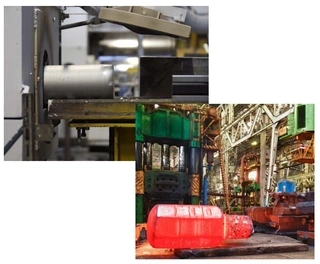
How to Select Between Forging and Extrusion for Manufacturing
May 15, 2026
26
Forging and extrusion serve distinct roles in modern manufacturing. Forging is ideal for high-strength, high-toughness parts, widely used in automotive components like crankshafts and gears, aerospace landing gear and turbines, industrial hand tools, and defense applications. Extrusion excels in producing uniform, high-precision profiles and tubes for construction, automotive, electrical, and consumer products, as well as plastic tubing, medical devices, and food-related components. Each process offers unique advantages tailored to material, strength, and design requirements.
Differences Between Drop Forging and Press Forging
May 14, 2026
19
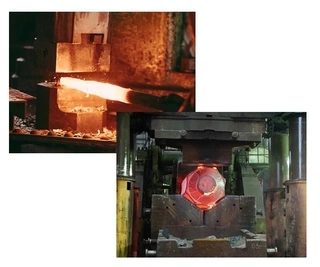
This article explains the key differences between drop forging and press forging in metal manufacturing. It covers their working principles, equipment structures, forming methods, material utilization, dimensional accuracy, mechanical properties, energy consumption, and production efficiency. The article also compares their advantages and limitations in industries such as automotive and aerospace, while discussing how material type, part complexity, production volume, and quality requirements influence process selection. By understanding these differences, manufacturers can choose the most suitable forging method to balance cost, performance, precision, and production efficiency.
Connecting Rod Manufacturing: Forging vs. Casting Process
May 13, 2026
68
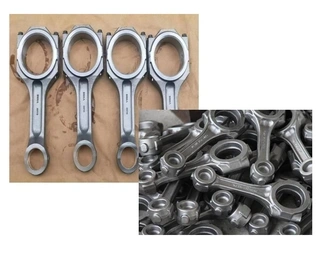
This article compares forged and cast connecting rods in automotive engines, explaining their manufacturing processes, material behavior, and performance differences. Forged rods offer higher strength, fatigue resistance, and durability for high-performance applications, while cast rods provide a cost-effective solution for mass-produced standard engines. It also outlines key factors such as cost, reliability, and usage scenarios to help determine the most suitable connecting rod type for different engine requirements.
Understanding Copper Alloy Forging for Industrial Use
May 11, 2026
27
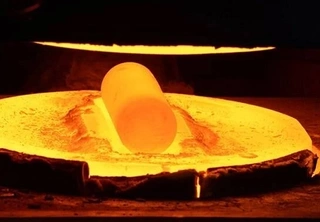
This article provides a comprehensive overview of copper alloy forgings, detailing their key properties, impact on the manufacturing process, and practical applications across industries. It explains how ductility, thermal conductivity, strength-to-weight ratio, corrosion resistance, machinability, and alloying flexibility make copper alloys ideal for forging. The article also covers manufacturing steps from raw material preparation to inspection, compares hot and cold forging methods, and highlights applications in petrochemical, aerospace, automotive, electrical, and construction sectors, offering insights for material selection and process optimization.
Open Die Forging and Closed Die Forging: How to Select
May 09, 2026
17
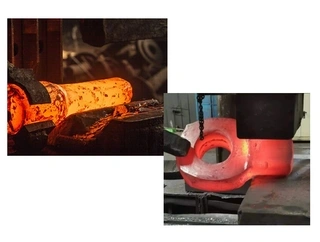
This article provides a comprehensive comparison of open die forging and closed die forging, two fundamental metal forming processes widely used in modern manufacturing. It explains their working principles, process flows, equipment requirements, and tooling characteristics, while highlighting key differences in precision, complexity capability, material utilization, production efficiency, and cost structure. The discussion also explores their respective advantages, limitations, and typical industrial applications across sectors such as automotive, aerospace, energy, and heavy machinery.
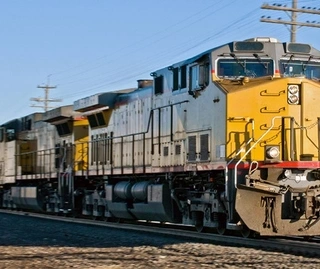
An Introduction to Metal Forging in the Railway Industry
May 08, 2026
40
Railway forging technology is a key manufacturing process that produces high-strength, durable components essential for safe and efficient rail operations. Through controlled heating and deformation, it forms critical parts such as axles, wheels, couplers, and brake systems capable of withstanding heavy loads, fatigue, and harsh environments. Using methods like open die, closed die, upset, and rolling forging, the process ensures precision, material efficiency, and reliable performance. With superior mechanical properties, cost efficiency, and long service life, forging remains fundamental to modern railway safety and performance.
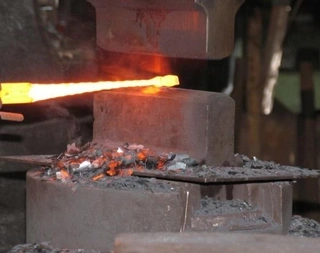
Complete Drop Forging Handbook for Manufacturers
Apr 28, 2026
28
Metal drop forging is a precision process that reshapes heated or cold billets in dies, enhancing strength, toughness, and reliability. Using equipment like single, double-acting, or counterblow hammers, it can be open-die or closed-die. Widely applied in automotive, aerospace, defense, and heavy machinery, drop-forged parts offer superior mechanical properties, uniform grain, complex shapes, and cost efficiency. Defects such as cracks, folds, porosity, and dimensional errors are minimized through careful material choice, precise die design, controlled heating, proper lubrication, and strict quality control, making drop forging vital for high-performance components.
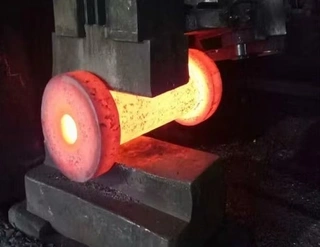
A Complete Guide to Low Carbon Steel Forging Technology
Apr 27, 2026
28
This article provides a comprehensive overview of low carbon steel forging, covering its material properties, chemical composition, and working principles. It explains key forging methods such as open die, closed die, and roll forging, along with essential heat treatment processes including annealing, normalizing, quenching, and tempering. The article also highlights quality control techniques like nondestructive testing, dimensional inspection, and mechanical testing. Finally, it explores the wide industrial applications of low carbon steel forgings in automotive, aerospace, machinery manufacturing, and oil and gas industries, emphasizing their balance of performance, reliability, and cost-effectiveness.
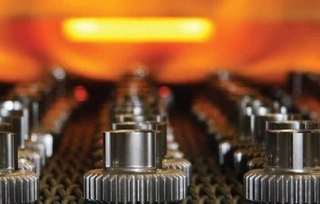
Powder Forging Process, Benefits & Applications
Apr 25, 2026
53
Powder forging combines powder metallurgy and precision forging to produce high-density, high-strength, and complex-shaped metal components. Through a sequence of pressing, sintering, and forging, this technology maximizes material utilization, enhances mechanical performance, and reduces production costs. Ideal for automotive, aerospace, and industrial applications, powder forging offers superior fatigue resistance, dimensional accuracy, and design flexibility, making it a key solution for modern high-performance manufacturing.
Total 126 Records, 12 records per page