How to Control Tolerance in Steel Forging Process
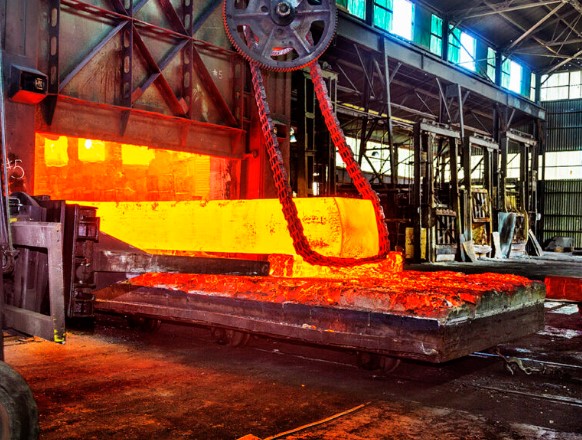
Forging tolerances refer to the allowable variation in dimensions such as length, width, and thickness of a forged component before it undergoes final machining. In simpler terms, forging tolerance defines the permissible deviation between the actual dimensions of a forged part and its design specifications. During the forging process, metal is shaped under high temperature and high pressure, causing thermal expansion and subsequent contraction upon cooling. Additionally, dies experience gradual wear with repeated use. These factors inevitably result in a discrepancy between the final product dimensions and the ideal design.
The concept of forging tolerance acknowledges these inevitable variations and aims to control them within acceptable limits. Compared to machining tolerances, forging tolerances are generally more lenient. This difference arises because forging is a high-energy, high-temperature forming process, whereas machining achieves precise dimensions under ambient conditions through material removal processes such as cutting or milling. Consequently, forged parts are usually produced with extra material, referred to as “machining allowance,” which is removed during subsequent CNC machining to achieve the required final precision.
Forging tolerances can be categorized into several main types, each controlling specific aspects of part quality:
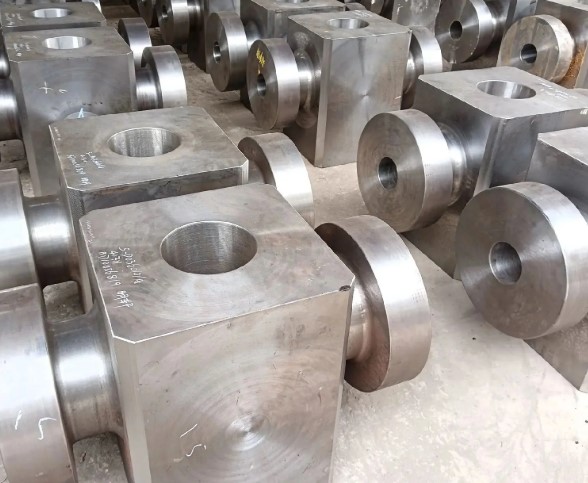
Dimensional tolerances are the most fundamental type, controlling linear measurements such as length, diameter, and thickness. For example, a forged component designed to be 100 mm in length may allow a deviation of ±0.3 mm.
Geometric tolerances control shape characteristics, including straightness, roundness, and cylindricity. These tolerances ensure that a part is not only dimensionally accurate but also conforms to the intended geometric form, which is critical for functional assembly and mechanical performance.
Surface tolerances pertain to surface roughness and finish. Forged surfaces are generally rougher than machined surfaces, so acceptable surface quality ranges are specified to ensure proper function and performance.
These tolerances address deviations caused by excess material flow and die misalignment. They are especially significant in complex-shaped components, where small variations can affect assembly, sealing, and performance.
After understanding the basic concept and types of forging tolerances, the next question naturally arises: why is it so crucial to control these allowable deviations in production? The answer is straightforward: tolerance control directly affects whether a product functions correctly, is safe to operate, and whether production costs are optimized.
In industries such as automotive, aerospace, and oil and gas, forged components are used in high-demand applications where even minor dimensional deviations can lead to serious consequences.
Take bearing housings and assemblies as an example. Bearing housings support rotating shafts, and improper tolerance control can result in misalignment, leading to excessive wear, noise, and even system failure. On automated assembly lines, dimensional consistency directly impacts assembly efficiency. For gears, deviations beyond tolerance can disrupt synchronization, compromising overall product reliability.
Forged components are often used in safety-critical applications. For instance, in blowout preventers (BOPs) used in oil drilling, inaccurately sized valves or connectors may cause leaks, endangering personnel and equipment. Similarly, aerospace components are subject to extreme operational stresses; if tolerances are not rigorously maintained, catastrophic failures may occur.
Turbine engines provide a vivid illustration. Even a deviation of ±0.001 inches (approximately 0.025 mm) in critical parts can lead to uneven thermal expansion, reducing fuel efficiency by up to 5%. For manufacturers, such performance metrics directly impact customer satisfaction, regulatory compliance, and market competitiveness.
Proper tolerance management reduces machining time, material waste, and overall manufacturing cost. If forging tolerances are well controlled, subsequent machining allowances can be minimized, saving both material and time.
Data from advanced forging facilities indicate that precision forging can reduce quality inspection time by approximately 30%. Optimizing tolerances also simplifies quality control processes, lowering resource investment in downstream inspection and rework.
Given the critical importance of forging tolerances, it is essential to understand which factors influence final dimensional accuracy. Tolerance control is not determined by a single step; it is affected by material properties, forging process parameters, die design, and post-forging treatments. Understanding these factors enables manufacturers to control quality from the source and reduce deviations. Key influencing factors include:
Different materials behave differently during forging, directly impacting dimensional precision:
- Flow characteristics: Some materials flow easily under pressure to fill the die, while others may not fully fill, causing incomplete sections.
- Thermal expansion coefficient: Materials expand and contract differently when heated and cooled. If shrinkage rates are miscalculated, final dimensions will deviate from design values.
- Mechanical properties: Some metals are prone to cracking or distortion during forging, affecting dimensional accuracy. For example, aluminum can expand unevenly during forging and requires precise temperature control to maintain tolerances within ±0.005 inches.
- Surface decarburization: Steel may experience surface decarburization at high forging temperatures, requiring additional machining allowance to remove affected layers.
Forging suppliers must select materials carefully based on design requirements and tolerance levels, considering material behavior during high-temperature deformation.
Forging temperature, deformation rate, and die design all impact tolerances:
- Temperature control: Excessively high temperatures increase material flow but may cause oxidation and dimensional instability, while low temperatures may result in uneven deformation and incomplete die filling, leading to errors. Thermal expansion and contraction during heating and cooling significantly affect precision.
- Deformation rate: Metal flow behavior changes with deformation speed; too fast or too slow can induce dimensional issues.
- Equipment precision: Advanced forging equipment with process monitoring can precisely control these parameters, minimizing size variations. Modern systems collect real-time data on temperature, pressure, and deformation rate to detect anomalies promptly and correct them.
The design and quality of dies directly influence forging tolerances:
- Precision design: Well-designed dies feature accurate dimensions, proper draft angles, and smooth surfaces to ensure uniform material flow and consistent part quality.
- Advanced manufacturing: CNC machining and electrical discharge machining (EDM) enable the production of high-precision dies that achieve required tolerances.
- Wear compensation: Dies experience wear and slight expansion during use, which must be accounted for in tolerance design. PVD (Physical Vapor Deposition) coatings can improve die wear resistance and extend lifespan. Regular laser scanning can detect wear patterns and support preventive maintenance planning.
Post-forging operations such as heat treatment, machining, and surface finishing also affect tolerances:
- Heat treatment: Thermal expansion and contraction during heat treatment can change part dimensions. Different cooling rates may lead to uneven shrinkage, causing tolerances to exceed limits if not controlled.
- Machining precision: Inaccurate machining can introduce errors. Careful planning and control of post-forging processes are necessary to ensure that each operation stays within the allowed tolerance range.
Having identified the key influencing factors, the practical question is how to effectively control these deviations. Modern manufacturing has shifted from post-process inspection to comprehensive tolerance management encompassing pre-production, in-process, and post-production stages. The main methods used in industry include:
Advanced forging plants employ real-time process monitoring systems to track key parameters such as temperature, pressure, and deformation rate. By analyzing this data, anomalies can be detected and corrected immediately.
For instance, if forging temperature deviates from the target range, the system can automatically adjust heating power or halt production for inspection. Real-time monitoring prevents quality issues from propagating and reduces the risk of producing large quantities of nonconforming parts.
Quality inspection occurs at two levels: in-process and final inspection.
In-process inspection: Measurements are taken at various forging stages to detect problems early. For example, checking dimensions between pre-forging and final forging allows timely adjustments of dies or process parameters.
Final inspection: Precision equipment such as coordinate measuring machines (CMMs) and optical measurement systems verify part dimensions. Non-conforming components are either reworked or scrapped. Aerospace components often require X-ray inspection, 3D scanning, and non-destructive testing (NDT) to ensure defect-free internal structures.
SPC collects dimensional data from large production batches to calculate process capability indices (Cp, Cpk) and evaluate the ability of the process to produce parts within tolerance.
- Cp index: Reflects potential process capability.
- Cpk index: Accounts for the deviation of process mean from the target.
If capability is insufficient, root cause analysis allows process improvement. SPC is especially effective in mass production, detecting trends before they result in significant nonconformance.
Collaboration during the design phase can improve manufacturability and tolerance adherence. Suggestions may include simplifying part geometry, increasing draft angles, and improving material flow to reduce dimensional error risks.
For features difficult to achieve through forging, machining may be recommended to balance cost, precision, and quality requirements. Early design optimization ensures that tolerance requirements are realistic and achievable, minimizing rework and production challenges.
- Aerospace: Aerospace components demand extremely high precision to ensure safety and performance. Every gram affects fuel efficiency, and critical parts like turbine blades often have tolerances within ±0.0005 inches (≈0.013 mm). Minor deviations can disrupt airflow, reduce thrust, or increase drag. Stringent process control and rigorous inspection standards are therefore essential in aerospace forging.
- Automotive: Automotive production relies on repeatability. Tolerances around ±0.01 inches (≈0.25 mm) ensure gears and shafts fit seamlessly on automated assembly lines. Poor tolerance control can cause noise, misalignment, and accelerated wear, increasing warranty costs and customer dissatisfaction. High-volume automotive production makes dimensional consistency critical to assembly line efficiency.
- Energy: In wind turbines and hydroelectric machinery, gearboxes and shafts’ tolerances affect efficiency and durability. Poor tolerance can reduce turbine efficiency by up to 8%, impacting the return on investment in large-scale projects.
- Oil and Gas: Forged components like drill stabilizers and BOPs must withstand high-pressure, corrosive environments. Dimensional accuracy directly affects sealing performance and operational safety.
Forging tolerances are not merely a manufacturing specification; they underpin performance, safety, and operational efficiency. From material selection to die design, from process control to quality inspection, every stage influences final part dimensions. Understanding and managing forging tolerances is key to ensuring successful implementation of operational strategies.
With advancements in precision forging and integrated manufacturing capabilities, the industry continues to move toward higher precision and efficiency. For procurement specialists and engineers, evaluating a forging supplier should involve assessing tolerance control capabilities, quality systems, and industry experience—not just cost. Comprehensive understanding of forging tolerances enables informed decision-making, ensuring product quality, safety, and production efficiency.