Guide to Forged Valve Manufacturing Process
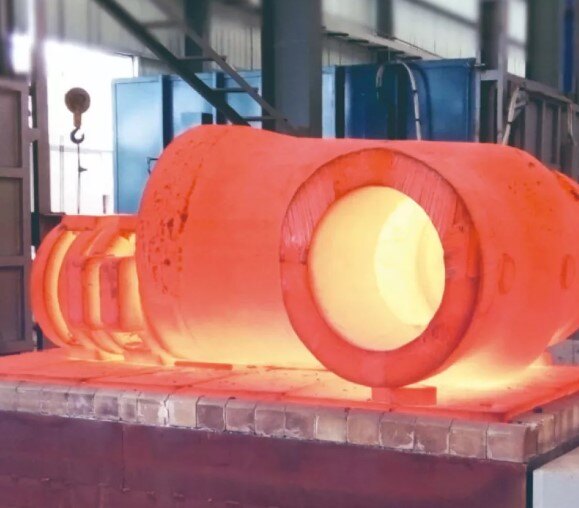
Forged valves are valve products manufactured through a forging process. In simple terms, metal is first heated to a specific temperature and then subjected to high compressive force to plastically deform it into the required valve shape. This manufacturing approach is fundamentally different from casting. Casting involves melting metal and pouring it into a mold to solidify into shape, while forging works with solid metal and reshapes it under pressure without melting.
This difference in manufacturing principle directly determines the final performance of the product. Forged valves typically feature a much denser internal structure and are free from common casting defects such as porosity, shrinkage cavities, and inclusions. As a result, they demonstrate significantly better mechanical strength, toughness, pressure resistance, and service life. Because of these advantages, industries with extremely strict safety and reliability requirements, such as oil and gas, petrochemical processing, power generation, offshore engineering, and chemical industries, widely adopt forged valves in critical pipeline systems.
A forged valve is composed of several essential components, each designed to perform a specific mechanical or sealing function within the system. The integration of these parts ensures reliable flow control under high-pressure and high-temperature conditions.
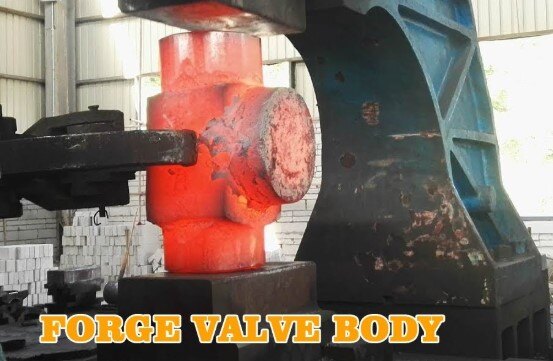
The valve body is the core pressure-containing component and can be considered the “frame” of the entire valve. It provides the internal cavity where fluid flows and where the internal closing mechanism operates. It also connects directly to pipeline systems through threaded, welded, or flanged ends. Since it bears the full pressure load of the working medium, the mechanical integrity of the valve body is the most critical factor in valve safety.
The valve stem acts as the transmission link between the external actuator (such as a handwheel or pneumatic/electric actuator) and the internal closing element. It converts rotational or linear motion into the movement of the valve plug, ball, or gate. Under high-pressure conditions, the valve stem must resist torsional stress, axial force, and frictional wear, making material strength and surface hardness extremely important.
The valve bonnet is installed on top of the valve body and forms a sealed pressure chamber together with it. It provides structural support for the valve stem and also houses sealing components such as packing. To ensure reliability, the bonnet is usually made from the same forged material as the valve body, which helps maintain consistent thermal expansion behavior and prevents leakage caused by temperature fluctuations.
The internal closing element depends on the valve type:
Ball valves use a spherical ball with a flow passage
Gate valves use a wedge-shaped or flat gate plate
Globe valves use a disc-type plug
These components are responsible for opening, closing, or regulating flow. Because they directly interact with the fluid medium, they must have excellent surface finish, hardness, and wear resistance. Forging ensures these parts have superior internal structure and mechanical strength.
Sealing elements include seat rings, packing materials, and gaskets. Although they are not always forged, their design precision and material selection are crucial for achieving leak-tight performance. These components must withstand pressure, temperature changes, and chemical corrosion over long periods of operation.
Forging is based on the plastic deformation characteristics of metals. When metal is heated to a suitable temperature range, its crystal structure becomes more mobile, allowing grains to slide and recrystallize under external force. This enables the material to change shape without cracking.
During this process, several important metallurgical improvements occur:
- Internal voids and micro-defects are compressed and reduced
- Grain structure becomes refined and more uniform
- Metal flow lines (fiber structure) align with the shape of the part
- Mechanical properties such as strength and toughness are significantly improved
- In industrial practice, forging temperature is typically divided into:
- Hot forging (>800°C): excellent plasticity, suitable for large deformation
- Warm forging (300–800°C): improved dimensional accuracy and surface quality
- Cold forging (room temperature): used for small parts with high precision requirements
Among these, hot forging is most commonly used in valve manufacturing due to its efficiency and ability to handle complex shapes.
Forging methods refer to the different industrial techniques used to shape metal into valve components under heat and pressure. Each method has its own advantages in terms of precision, cost, production efficiency, and mechanical performance. In forged valve manufacturing, the selection of forging method directly affects product quality and application suitability.
Free forging is the simplest forging method. Heated metal is placed between two flat dies (anvils) and shaped through repeated hammering or pressing. It is highly flexible and suitable for large or simple-shaped components. However, because there is no fixed mold cavity, dimensional accuracy is limited and additional machining is required afterward.
Die forging is the most widely used method in modern valve manufacturing. The heated billet is placed into a precision-machined die cavity and formed under high pressure.
Die forging can be classified into:
- Open-die forging: excess metal flows out as flash
- Closed-die forging: no flash, higher material utilization
Die forging offers several advantages:
- High dimensional accuracy
- Excellent repeatability
- Strong mechanical properties
- Suitable for mass production
It is particularly suitable for complex valve bodies and components.
Ring rolling is used to produce circular components such as valve seats, flanges, and sealing rings. A pre-formed ring blank is gradually expanded and thinned by radial and axial rollers. This process produces a continuous fiber structure without welds, resulting in excellent fatigue resistance and mechanical integrity.
The manufacturing of forged valves involves a systematic sequence of operations, each of which must be strictly controlled to ensure final product reliability.
The process begins with selecting appropriate raw materials based on application requirements:
- Carbon steel: general-purpose applications
- Stainless steel: corrosion-resistant environments
- Alloy steel: high temperature and high-pressure conditions
For oil and gas applications, materials must also resist hydrogen-induced cracking and sulfide stress corrosion cracking.
Once selected, raw materials are cut into billets. Each billet undergoes chemical composition verification and surface inspection before forging begins.
Billets are heated in a controlled furnace to approximately 1050°C–1250°C. This temperature range ensures optimal plasticity while preventing grain overgrowth or melting.
After heating, the material is quickly transferred to forging equipment. In die forging, the billet is placed into a preheated die cavity and compressed under extremely high force, often measured in thousands of tons. The metal flows and fills the mold completely, forming the near-net shape of the valve component.
Modern forging systems use CNC control to regulate pressure, stroke, and speed, ensuring consistent quality across production batches.
After forging, controlled cooling is essential to stabilize microstructure. Cooling methods include air cooling, furnace cooling, and pit cooling.
Heat treatment follows, which is critical for achieving desired mechanical properties:
- Normalizing: Heats steel above Ac3 temperature and air cools it to refine grain structure and improve machinability.
- Quenching: Rapid cooling after heating increases hardness and strength but may introduce brittleness.
- Tempering: Reheating quenched steel reduces brittleness and balances hardness with toughness.
Special treatments may also be applied for sour gas service or post-weld stress relief.
Heat-treated forgings undergo precision machining using CNC equipment.
Main machining operations include:
- Rough machining: removing excess material
- Finish machining: sealing surfaces, flow paths, threads
- Drilling: bolt holes and auxiliary ports
Sealing surface roughness is typically required to be Ra ≤ 0.8 μm to ensure tight sealing performance. Flow paths must be smooth and free of dead zones to prevent fluid stagnation and corrosion.
Quality control is a critical stage in valve manufacturing.
- Non-Destructive Testing (NDT):
- Ultrasonic testing (UT): internal cracks and inclusions
- Magnetic particle testing (MT): surface defects
- Radiographic testing (RT): internal porosity and inclusions
- Penetrant testing (PT): surface-breaking defects
Pressure Testing:
- Hydrostatic test: typically 1.5× design pressure
- Pneumatic test: typically 1.1× design pressure
- Dimensional Inspection: High-precision coordinate measuring machines ensure compliance with tolerances.
- Material Testing: Tensile, impact, and hardness tests verify mechanical performance.
Surface treatment improves durability and corrosion resistance:
- Polishing and deburring
- Phosphating for coating adhesion
- Electroplating (chromium or nickel)
- Epoxy or PTFE coatings for corrosive media
After treatment, components are cleaned and assembled. Torque control is critical during assembly to prevent damage and ensure sealing integrity. Functional tests such as operating torque and leakage tests are conducted after assembly.
Finished valves are permanently marked with:
- Model and specification
- Pressure rating
- Material grade
- Manufacturing standard
- Batch number and flow direction
Packaging is typically done in wooden crates or pallets. For critical applications, nitrogen-filled packaging may be used to prevent oxidation during storage and transportation.
- Higher Mechanical Strength: Forging refines grain structure and eliminates internal defects, significantly improving tensile strength and impact resistance.
- Superior Pressure Resistance: Dense structure ensures excellent performance under high-pressure conditions with minimal risk of leakage or rupture.
- Longer Service Life: Uniform structure enhances fatigue resistance, making forged valves suitable for cyclic loading conditions.
- Better Corrosion Resistance: Dense material structure reduces permeability of corrosive media and improves long-term durability.
- Higher Dimensional Accuracy: Near-net-shape forging reduces machining allowance and preserves fiber continuity, improving performance consistency.
Forged valves are widely used in demanding industries, including:
- Oil and gas production and refining systems
- Thermal and nuclear power plants
- Chemical and petrochemical industries
- Offshore and LNG engineering
- Aerospace and defense systems
These applications require exceptional reliability under extreme pressure, temperature, and corrosive environments.
When purchasing forged valves, the following factors should be carefully evaluated:
- Material certification (MTC)
- Forging method and deformation ratio
- Heat treatment records and hardness results
- NDT inspection reports
- Pressure test certificates
Compliance with standards such as API 602 and ASME B16.34
These documents ensure that the valve meets safety and performance requirements.
The manufacturing of forged valves is a complex, multi-stage engineering process involving material selection, heating, forging, heat treatment, machining, inspection, and assembly. Each stage plays a critical role in determining the final product’s safety, durability, and performance.
Compared with cast valves, forged valves offer significantly superior mechanical strength, toughness, and reliability, making them essential in high-pressure and high-risk industrial environments. With continuous advancements in forging technology such as precision forging, isothermal forging, and CNC-controlled forming systems, the performance and manufacturing accuracy of forged valves continue to improve. For engineers and end users, understanding the forging process is essential for proper valve selection, ensuring long-term safe and stable operation in demanding industrial systems.