News
Here, we regularly share articles about metal forging, including how the process works, news and updates from top forging companies, and trends in the industry. Whether you’re a professional, an enthusiast, or a business looking to stay informed, our column gives useful knowledge, practical tips, and industry insights to help you stay connected and up to date in the world of metal forging.
49-60 of 126 results
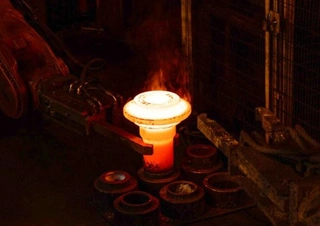
What is Upset Forging Technology
Mar 24, 2026
11
Upset forging, or heading/upsetting, is a precision metal-forming process that increases a workpiece’s diameter through controlled compression. This technique enhances strength, fatigue resistance, and dimensional accuracy, making it ideal for high-stress industrial components such as shafts, bolts, flanges, and connecting rods. The process involves heating, press forming, die shaping, heat treatment, and finishing to produce durable, high-performance parts. Widely applied in automotive, aerospace, construction, heavy machinery, and agricultural equipment, upset forging offers superior material utilization, cost efficiency, and customizability compared to other manufacturing methods.
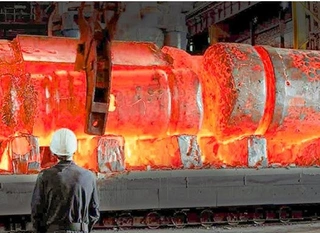
What is High Carbon Steel Forging
Mar 23, 2026
10
High carbon steel forging is a metalworking process that shapes steel through precise heating, pressing, and hammering, enhancing strength, hardness, and wear resistance. By selecting appropriate steel grades, controlling temperature, deformation, and cooling, and applying post-forging heat treatments, high-quality components with fine, uniform grain structures are produced. Modern techniques such as isothermal forging, precision dies, controlled atmospheres, and computer simulations improve efficiency, consistency, and complex part formation. Forged high carbon steel finds critical applications in heavy machinery, automotive parts, tools, dies, and mining equipment, delivering reliable performance under high stress and wear conditions.
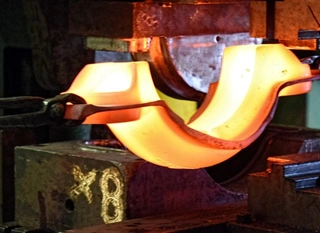
Everything You Need to Know About Drop Forging
Mar 20, 2026
19
Drop forging is a centuries-old metal forming process where heated metals are shaped in dies using impact forces, producing components with superior strength, durability, and precision. The process involves careful material selection, controlled heating, die preparation, and repeated hammering to achieve the desired shape. Drop forging includes open-die and closed-die types and various hammer configurations, offering excellent mechanical properties, high dimensional accuracy, efficient material use, and good surface quality. Widely used in automotive, aerospace, industrial machinery, rail transport, defense, and emerging sectors, it supports large-scale production with optimized costs. Proper material choice—from steel and aluminum to titanium, copper, and nickel alloys—combined with efficient die design, ensures reliable, high-performance parts, making drop forging essential for manufacturing critical, high-strength components.
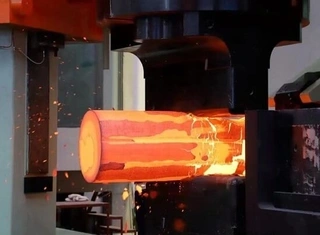
Guide to Free Forging in Modern Manufacturing
Mar 19, 2026
10
Free forging, also known as open-die forging, is a versatile metal forming process that allows metal to flow freely under repeated hammering or pressing, producing parts with superior mechanical properties, fine grain structure, and uniform internal organization. It supports a wide range of materials, including stainless steel, carbon steel, and high-performance alloys, offering cost-effective production, design flexibility, and rapid delivery. Free forging is widely used across aerospace, energy, oil and gas, automotive, and defense industries for large, customized, and high-strength components. Key cost factors include material selection, part complexity, forging method, die costs, production volume, labor, and quality control, making careful planning essential to optimize performance and efficiency.
Forged Parts vs. Machined Parts: How to Choose
Mar 16, 2026
46
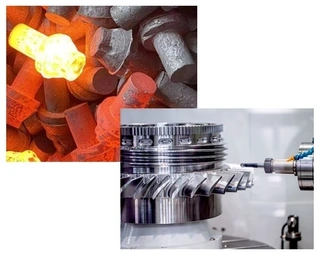
This article provides a comprehensive comparison of forged and machined parts, detailing their principles, performance, cost, material suitability, and typical applications. Forging excels in strength, fatigue resistance, and high-volume production, while machining offers precision, tight tolerances, and flexibility for complex or low-volume parts. The guide also covers combined forging and machining strategies, helping engineers and procurement professionals make informed manufacturing decisions that balance performance, cost, and production requirements.
Complete Guide to Closed Die Forging
Mar 14, 2026
33
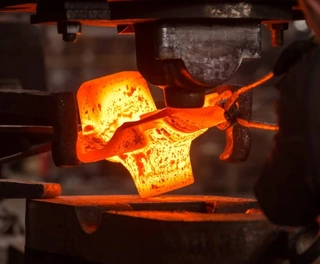
Closed die forging, also known as impression die forging, is a precise metal forming process in which heated blanks are shaped under high pressure within fully enclosed dies. This method produces parts with superior mechanical properties, high dimensional accuracy, excellent surface finish, and minimal material waste. Widely used in automotive, aerospace, energy, and heavy machinery industries, closed die forging enables near-net-shape production, reduces machining requirements, and ensures consistent quality for high-volume manufacturing of critical components.
How to Solve Martensite Retention in Large Forgings
Mar 13, 2026
41
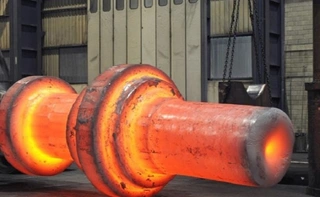
Martensite retention in large forgings is a hidden yet critical issue affecting mechanical performance and safety. It arises from uncontrolled cooling rates, alloy segregation, and insufficient forging ratios, leading to untransformed or poorly tempered martensite in the core. Traditional detection methods often miss these internal defects, posing risks of brittle fracture and fatigue failure in critical applications like nuclear, shipbuilding, and energy sectors. Advanced solutions—including smart gradient tempering, isothermal quenching, deformation-assisted phase control, optimized alloy design, and multi-stage quenching—systematically reduce martensite retention, ensuring uniform microstructure, improved toughness, and reliable service performance.
Steel Forging Quenching Media: Water vs. Oil
Mar 09, 2026
60
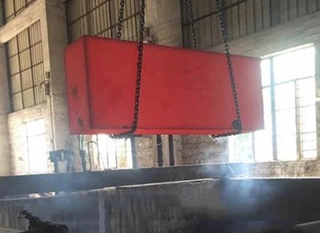
This article provides a comprehensive comparison of water and oil quenching for forgings, detailing their cooling characteristics, advantages, and disadvantages. It explains the effects on mechanical properties, microstructure, deformation, and cracking, and discusses process control, medium modifications like saltwater and alkaline solutions, and oil temperature and maintenance. Practical guidance is offered on material suitability, production scale, hardness, precision requirements, cost, safety, and environmental considerations, helping engineers select the most appropriate quenching method for industrial applications.
A Complete Guide to Aluminum Alloy Precision Forging
Mar 04, 2026
24
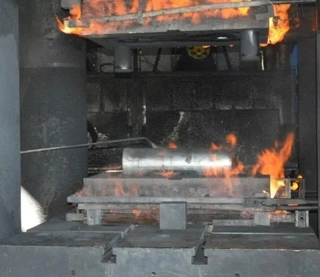
Aluminum alloy precision forging is an advanced near-net-shape manufacturing technology that enables high-precision, high-strength, and energy-efficient production of metal components. By integrating hot, cold, warm, isothermal, and composite forging processes, this technology significantly improves material utilization, reduces machining requirements, and enhances product mechanical performance. Widely applied in automotive, aerospace, electronics, and new energy industries, aluminum alloy precision forging supports modern manufacturing transformation toward lightweight, sustainable, and high-quality production.
Post-Forging Cooling in Metal Forging
Mar 02, 2026
36
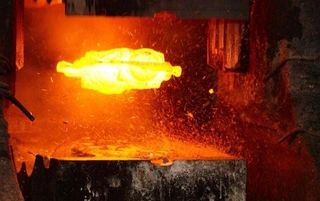
Post-forging cooling plays a crucial role in determining forging quality by influencing stress evolution, microstructure transformation, and defect formation. Improper cooling may generate thermal, transformation, and residual stresses that can lead to cracks, white spots, network carbides, and metallurgical heredity, especially in alloy steel and large forgings. Understanding stress mechanisms and applying controlled cooling technologies are essential for obtaining stable microstructures, improving mechanical performance, and ensuring safe and reliable forging production.
Warm Forging Process in Precision Manufacturing
Feb 24, 2026
76
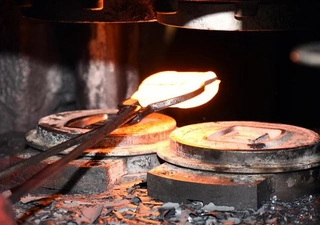
Warm forging is an advanced precision metal forming process performed within the intermediate temperature range between cold forging and hot forging. By appropriately heating the billet below the recrystallization temperature, warm forging effectively reduces deformation resistance while maintaining relatively high dimensional accuracy and surface quality. This technology combines the advantages of both cold and hot forging, offering extended die life, lower energy consumption, and improved forming efficiency. It is widely applied in the production of complex components in industries such as automotive, general machinery, and high-end precision manufacturing.
Alloy Steel Forgings: Principles, Advantages & Use Cases
Feb 14, 2026
21
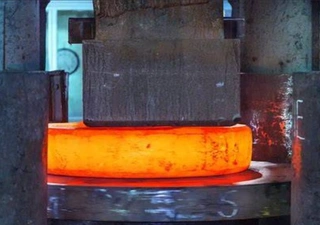
Alloy steel forgings are key industrial components produced through plastic deformation, offering superior mechanical properties, internal quality, and reliability. This article details their forging principles, composition, classification, and the role of alloying elements, along with common grades, heat treatment methods, and quality control practices. It also explores industrial applications across automotive, energy, aerospace, mining, and chemical sectors, highlighting the advantages of forging over casting and carbon steel.
Total 126 Records, 12 records per page