What to Know About Brass Forging Processes
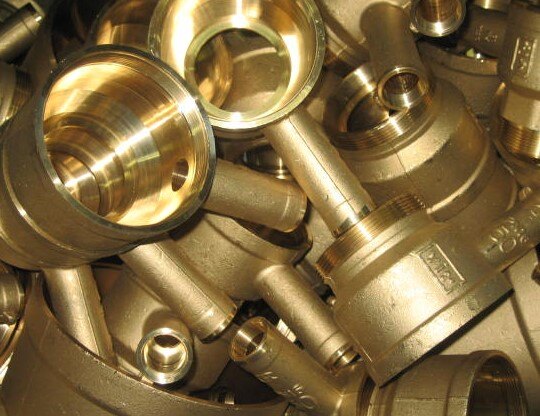
Brass forging is a metalworking process in which brass, a copper-zinc alloy, is shaped by applying pressure after heating, producing strong and durable components. Unlike casting, which melts the metal and pours it into molds, forging shapes the metal while it remains in a solid state. This process results in a denser and stronger product structure.
In practical production, manufacturers of forged brass components use this process to provide high-quality parts for various industrial applications. Brass has long held an important position in manufacturing due to its excellent comprehensive properties. It not only possesses good corrosion resistance and high electrical conductivity but can also withstand high-temperature environments. These characteristics make brass an ideal material choice for industries such as automotive, piping, electrical, and marine. Additionally, its unique golden appearance makes it popular in both decorative and functional products.
Compared with casting or machining, brass forging significantly optimizes the internal grain structure by applying high pressure in the solid state. This unique forming method not only improves the material’s mechanical properties but also brings substantial improvements in precision control, production cost, and sustainability. Specifically, the core advantages of brass forging can be summarized in the following four dimensions:
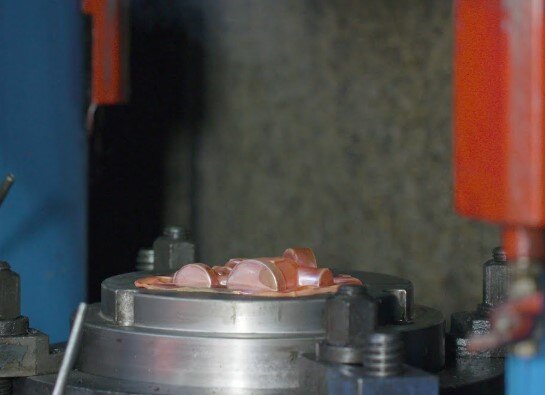
The most prominent advantage of brass forging is its ability to produce highly durable components. The forging process rearranges the metal’s internal grain structure under high pressure, forming a denser organization. This structural optimization gives the final product higher mechanical strength, enabling better resistance to wear and fatigue.
Specifically, this manifests as significantly increased tensile strength, enhanced impact resistance, and extended service life under stress or pressure. Compared with cast or machined parts, forged brass components have clear mechanical performance advantages, making them particularly suitable for high-stress applications such as valve components, gears, and fittings.
Brass forging can achieve strict tolerance control, ensuring that each component precisely fits its assembly position. This precision is especially important in the piping and electrical industries, where minor dimensional deviations can cause serious functional issues or safety hazards.
Through the forging process, manufacturers can reduce the need for secondary machining, improving production efficiency while ensuring consistent product quality.
Although the initial investment for brass forging is higher than for casting, its long-term economic benefits far exceed the cost. Forged brass parts have a longer service life and require less frequent maintenance and replacement. This means companies can reduce equipment downtime and maintenance costs, improving overall operational efficiency.
In addition, mature brass forging manufacturers can achieve large-scale, high-efficiency production while maintaining cost competitiveness. For medium- to large-volume production, brass forging provides excellent cost-effectiveness once mold development is completed.
Brass is a 100% recyclable material, and the forging process produces very little waste. In today’s industrial environment, which emphasizes sustainable development, the environmental advantages of forged brass are especially important. Choosing forged brass components not only enhances product quality but also helps companies reduce environmental impact and achieve green manufacturing goals.
Unlike casting, which melts metal before shaping, brass forging uses a solid-state forming principle, inducing plastic deformation by precisely controlling temperature and pressure. This difference in process results in forged components having a distinct advantage in density and mechanical performance. Depending on the processing temperature, brass forging mainly follows two technological routes:
Brass is suitable for forging due to its excellent ductility and malleability, allowing it to undergo substantial deformation without cracking. Brass forging mainly consists of hot forging and cold forging processes:
- Hot Forging Process: Brass is heated to 800°C–900°C (1470°F–1650°F), at which point it has good ductility, facilitating the formation of complex shapes. Hot forging is suitable for large components or applications requiring significant deformation.
- Cold Forging Process: Performed at room temperature or below 200°C (392°F). Cold forging achieves better surface quality and dimensional accuracy while enhancing mechanical strength, making it suitable for medium- and small-sized parts that require high precision.
During forging, to prevent brass from cracking, the following key factors must be strictly controlled:
- Temperature Control: Ensure heating temperature remains within a reasonable range to avoid overheating or underheating
- Equipment Selection: Use appropriate forging machines and molds
- Lubrication Treatment: Apply suitable lubricants to reduce friction
- Pressure Application: Gradually apply pressure to prevent stress concentration and cracking
Within the family of copper-based alloys, brass and bronze are the two most commonly used materials. Understanding their differences helps make the right material choice.
- Brass: Mainly composed of copper and zinc, with zinc content typically between 5% and 40%, displaying a characteristic yellow appearance.
- Bronze: Mainly composed of copper and tin, with tin content around 12%–25%. Modern bronzes may also contain aluminum, manganese, and other metals, exhibiting a reddish-brown color.
Property | Forged Brass | Forged Bronze |
Flexibility | High, easy to form complex shapes | Lower, but harder and more durable |
Hardness | Relatively soft | Higher, better wear resistance |
Corrosion Resistance | Good, suitable for freshwater | Excellent, especially suitable for marine environments |
Cost | Lower (zinc is relatively inexpensive) | Higher (tin and other alloy elements are costly) |
Forged Brass: Decorative hardware, musical instruments, piping devices, electrical components, low-load bearings—applications requiring good formability and aesthetics.
Forged Bronze: Gears, bearings, bushings, marine components, valves, pumps, heavy-duty tools—applications requiring high wear resistance and strength under heavy loads.
The main difference lies in the manufacturing process, which directly affects mechanical performance, strength, and overall quality.
Forged Brass: Formed under high temperature and pressure, producing a denser and continuous grain structure with grains aligned in the direction of the part. This structural optimization significantly enhances mechanical performance, making the material stronger, more durable, and more crack-resistant.
Standard Cast Brass: Formed by pouring molten metal into molds; the cooling process may produce a more random grain structure with potential porosity or internal defects, resulting in relatively lower strength.
Forged brass generally has a smooth surface with minimal defects, reducing the need for extensive post-processing. Cast brass surfaces may be uneven and require more machining and polishing to meet usage requirements.
Choose Forged Brass: For high-strength parts such as valves, fittings, high-stress or wear components, and pipeline and marine parts that require precision and durability.
Choose Standard Cast Brass: For decorative items, low-load mechanical parts, or cost-sensitive applications where high strength is not critical.
- Automotive Industry: Forged brass is widely used in fuel system components, radiator parts, and electrical connectors. Its excellent durability and corrosion resistance make it a reliable choice for automotive manufacturers, maintaining stable performance under harsh working conditions.
- Piping and Valves: Piping systems, valves, and fittings are traditional applications of forged brass. Forging significantly extends the lifespan of these critical components, ensuring reliable operation under high pressure and corrosive media.
- Electrical Industry: Electrical connectors, switches, and related components are often made from forged brass. The forging process ensures better conductivity and safety, meeting the strict precision and reliability requirements of electrical equipment.
- Marine Environment Applications: In marine environments, water and salt pose severe challenges to metal materials. Forged brass, with its excellent corrosion resistance, maintains stability under these harsh conditions, whereas ordinary metals may suffer serious damage.
- Other Applications: With advances in forging technology and mold design, even complex geometric brass components can be accurately formed. Custom forged parts are widely used in OEM components, gas regulators, HVAC components, and more.
Manufacturers and engineers need to consider the following factors when deciding whether to adopt brass forging:
- Production Volume: Brass forging has a clear cost advantage for medium- to large-volume production. Small batch production requires evaluating the economic feasibility of mold investment.
- Performance Requirements: Applications involving high stress, high wear, or corrosive media benefit from the performance advantages of forged brass.
- Precision Requirements: Forging provides better dimensional consistency for applications requiring strict tolerance control.
- Lifecycle Cost: Although initial investment is higher, considering maintenance, replacement, and downtime costs, forged brass generally has lower total ownership cost.
- Environmental Requirements: For companies focused on sustainable development, the eco-friendly characteristics of forged brass align with green manufacturing trends.
As a mature metalworking process, brass forging provides high-quality, high-performance material solutions for modern manufacturing. From automotive to marine engineering, from electrical equipment to architectural decoration, forged brass components play an irreplaceable role in various industries thanks to their excellent mechanical performance, precise manufacturing capability, and long-term economic benefits.
For manufacturers, engineers, and procurement decision-makers, gaining a deep understanding of the brass forging process and its advantages helps make more informed choices in project planning and material selection. With continuous advancements in forging technology and expanding application areas, forged brass will continue to play a crucial role in industrial manufacturing, providing a solid material foundation for innovation and development across industries.