How Titanium Is Forged into High-Performance Components
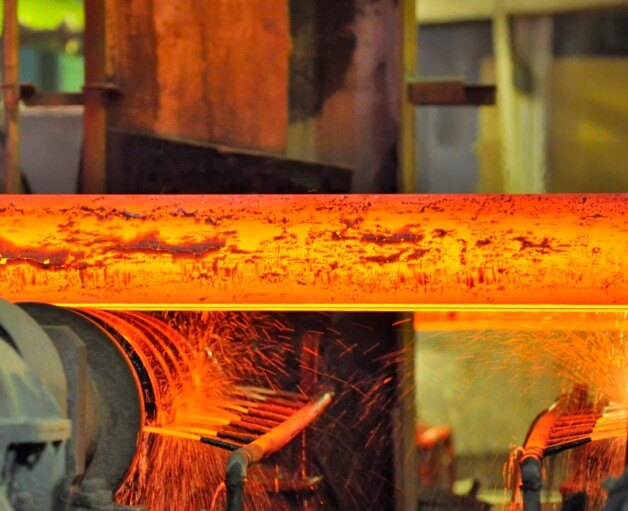
In modern manufacturing, material selection often determines the final performance and service life of a product. Titanium, due to its unique combination of properties, high strength, low density, excellent corrosion resistance, and good biocompatibility, has become one of the preferred materials in aerospace, medical devices, and high-end industrial fields. However, titanium processing is not easy. How to transform it from raw material into complex-shaped and high-performance components is an important challenge faced by the manufacturing industry.
Compared with casting and machining, titanium forging can significantly improve the internal microstructure of the material, eliminate casting defects, and avoid damage to material continuity caused by machining, thereby achieving higher strength, better fatigue resistance, and longer service life. Although titanium forging has strict process requirements and large equipment investment, its irreplaceability in the manufacturing of critical components makes it an indispensable technology in high-end manufacturing fields.
This article will start from the basic concept of titanium forging, systematically introduce the forging characteristics of different titanium alloys, main process types, key parameter control, and application fields, helping readers fully understand this important metal processing technology and providing reference for actual production and procurement decisions.
Titanium forging is a processing technique in which titanium metal is heated to a high-temperature state and then subjected to external force to cause plastic deformation. Through this process, titanium not only obtains a specific shape, but its internal structure is also optimized, thereby significantly improving toughness, strength, and hardness. This process is widely used in fields with extremely high performance requirements such as medical devices, aerospace, and automotive industries.
During the forging process, titanium materials are usually heated to about 1200°C to 1400°C. Within this temperature range, titanium has good plasticity while still maintaining structural stability, which allows the material to be formed without damaging internal performance. The heated titanium is placed into a forging die, and pressure is applied through hydraulic presses, hammering, or other equipment, causing it to deform according to the die shape while optimizing the internal grain structure.
After forging is completed, titanium parts need to be cooled slowly. The cooling process has an important influence on final performance and must be strictly controlled. If necessary, heat treatments such as annealing or aging are also performed to further improve strength, toughness, as well as fatigue and wear resistance. The final titanium forged parts have excellent strength-to-weight ratio, high durability, and good fatigue resistance, making them suitable for harsh working conditions.
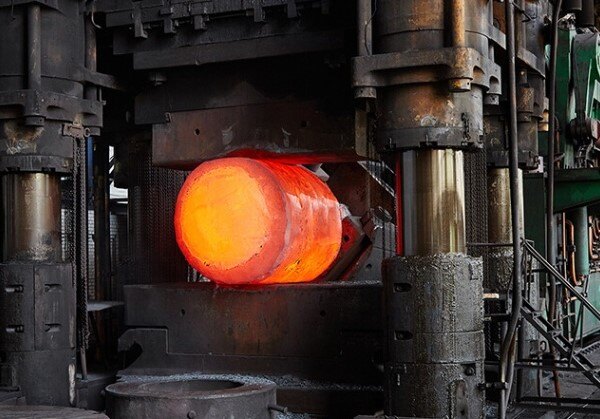
Different grades of titanium alloys require strict control of temperature ranges during forging to ensure stable performance.
Industrial pure titanium (Grade 1 to Grade 4) is usually forged at 1200°C to 1300°C. Ti-6Al-4V (Grade 5) is also forged within the same range to balance processing performance and mechanical properties. Ti-3Al-2.5V (Grade 9), due to different processing characteristics, has a slightly lower forging temperature of 1150°C to 1250°C. Ti-0.3Mo-0.8Ni (Grade 12) and Ti-6Al-4V ELI (Grade 23) and other materials are also forged within their respective high-temperature ranges to meet different application requirements.
The entire titanium alloy forging process usually includes multiple key steps.
First is material selection. Selecting the appropriate titanium alloy material according to application requirements is the basis for ensuring final product performance.
Then comes the heating process, where titanium is heated to a high-temperature state suitable for deformation, giving it plasticity. During this process, the α-phase and β-phase structures need to be controlled to improve formability and final performance.
Next is the preforming stage. A basic billet shape is obtained through preliminary forging, and then final forging is completed under pressure equipment to achieve the required structure and dimensions.
After forging, slow cooling is required to avoid internal stress.
Heat treatment is another important step. Annealing or aging treatments are performed as needed to further optimize performance.
Then machining is carried out to achieve precise dimensions and surface quality.
Finally, quality inspection (such as ultrasonic testing) is performed to ensure the parts meet relevant standard requirements.
- Hammer Forging: Hammer forging is usually performed between two flat dies or contoured dies without die cavities. The tooling is simple, flexible, has a short manufacturing cycle, and low cost. However, it has high labor intensity, difficult operation, low production efficiency, and relatively limited forging quality, with large machining allowances. Therefore, it is generally only suitable for applications with lower performance requirements.
- Open-Die Forging: Open-die forging is performed between upper and lower dies with cavities for billet deformation. Metal is restricted within the die cavity, and excess metal flows out from the die gap forming flash. Under die resistance and flash constraint, the metal is forced to fill the cavity, thereby forming the required shape.
- Closed-Die Forging: During closed-die forging, metal does not produce lateral flash perpendicular to the die movement direction during forming. The closed cavity performs both forming and guiding functions, allowing the billet to undergo plastic deformation under controlled conditions.
- Flashless Forging: Flashless forging mainly includes extrusion die forging and reverse extrusion forging. It can be used to manufacture various high-precision solid and hollow parts and can obtain a more dense internal structure.
- Multi-Action Forging: Multi-action forging adds two horizontal rams in addition to the conventional vertical punch. The ejector system is used for punching, and its ejecting pressure is usually higher than that of ordinary hydraulic press systems. During multi-action forging, the slide acts alternately or jointly in vertical and horizontal directions, causing metal to flow from the center of the cavity outward to fill the die cavity, and no obvious flash is usually produced on the parting surface.
- Local Forging: Local forging refers to forming large integral forgings by segmented or partial processing within the capacity of existing hydraulic equipment, such as segmented forging and pad forging methods. Due to the step-by-step forming method, the required equipment tonnage is smaller, and medium-sized hydraulic presses can generally be used to process large forgings.
- Isothermal Forging: Isothermal forging involves heating the die to the same forging temperature as the billet before forging, and maintaining the same temperature throughout the forging process, thereby achieving large plastic deformation under relatively small forming force. Isothermal forging is similar to isothermal superplastic forging, but the latter usually involves superplastic treatment of the billet before forging to obtain an equiaxed grain structure.
Several key parameters must be strictly controlled during titanium forging.
Forging temperature is one of the most important parameters. Generally, the forging temperature range of titanium alloys is 900°C to 1250°C. Too low temperature may cause cracking, while too high temperature leads to grain coarsening and performance degradation.
In addition, forging pressure must be applied uniformly, otherwise it will lead to uneven internal structure.
Heat treatment after forging is also important. For example, the annealing temperature of Ti-6Al-4V is usually 700°C to 850°C, which can effectively eliminate residual stress and improve microstructure performance.
Titanium alloy composition also affects forging behavior. Different alloys behave differently during heating and cooling, so appropriate grades must be selected according to application.
Titanium forging can produce higher-strength parts than casting and machining. This is because during forging, the micrograin structure inside the metal is rearranged, making grain flow more continuous and uniform, thereby significantly improving overall strength and stress resistance.
Casting is a process in which metal is melted and poured into a mold. However, during solidification, pores and microcracks may remain inside the material. These hidden defects weaken the material and make it more prone to failure under stress.
Machining can achieve high precision, but it removes a large amount of titanium material, which not only wastes expensive material but may also damage structural continuity, reducing local strength.
In contrast, titanium forging does not have the above problems. Titanium itself has high strength, corrosion resistance, and long service life, and its density is lower than steel while being able to withstand high temperatures. Therefore, in aerospace and medical industries where reliability is extremely important, forged titanium is usually preferred. Compared with cast titanium, forged titanium has fewer internal pores and stronger fatigue resistance and stress resistance.
From a material comparison perspective, aluminum forging is more suitable for lightweight parts, but its performance is inferior to titanium alloys in high-temperature and high-stress environments. The difference between stainless steel forging and casting is similar, where forged parts generally have better structural integrity and mechanical properties.
- Ti-6Al-4V (Grade 5) : Ti-6Al-4V is the most widely used forged alloy, with high strength, low density, and good corrosion resistance, suitable for aerospace, medical, and industrial fields.
- Grade 2 Commercially Pure Titanium: Grade 2 titanium has excellent corrosion resistance and good machinability, commonly used in medical and chemical industries.
- Beta Titanium Alloys: Beta titanium alloys combine high strength and high toughness, suitable for aerospace and high-stress structural components, but forging difficulty is relatively high.
- Aerospace Industry: Titanium forging is used in aerospace manufacturing for engine components, structural supports, and landing gear parts to achieve a balance between weight reduction and high strength.
- Medical Field: In the medical field, titanium forging is used for artificial joints, implants, and surgical instruments due to its good biocompatibility and resistance to corrosion.
- Industrial and Automotive Fields: In industrial and automotive applications, titanium forging is used for valves, pump bodies, and exhaust system components in high-temperature and highly corrosive environments.
Titanium forging is a manufacturing process that can significantly improve material performance. By properly selecting forging processes and controlling forging temperature and heat treatment conditions, high-strength, high-reliability, and long-life titanium alloy parts can be obtained.
Although the initial cost of titanium forging is relatively high, its long-term performance advantages are obvious, including higher strength, excellent fatigue resistance, and longer service life, making it highly valuable in aerospace, medical implants, chemical equipment, and high-performance automotive components.
For enterprises requiring high-performance titanium alloy parts, understanding the basic principles, process types, and quality control points of titanium forging helps make more informed procurement decisions and select suitable forging solutions and suppliers.