Understanding Copper Alloy Forging for Industrial Use
Copper alloys are widely used metallic materials in industrial manufacturing, finding applications across petrochemical, aerospace, automotive, and electrical and electronic sectors. As a forging supplier with extensive experience working with various copper alloys, I have come to recognize the critical role these materials play across multiple industries due to their unique properties. This article provides a detailed, accessible overview of the essential forging characteristics of copper alloys, their impact on the manufacturing process, and practical applications in various industries. Whether you are new to copper alloy forging or have experience using these materials, understanding these insights can help optimize material selection and production processes.
Copper alloys stand out among metallic materials primarily due to their distinct physical and mechanical properties. These characteristics dictate how the alloys behave during forging and directly influence the quality of the final product. Below, we detail six key forging properties of copper alloys.
Ductility refers to a material’s ability to deform under tensile stress without fracturing. Copper alloys excel in this regard. For example, brass (a copper-zinc alloy) and bronze (a copper-tin alloy) can be easily stretched and shaped during forging.
This high ductility provides significant manufacturing advantages. Complex parts can be produced with relative ease. In the petrochemical industry, components like forged stabilizers often require intricate geometries. Copper alloys can be processed into thin sheets and formed into various shapes. During multi-stage forging, the material undergoes multiple deformations, and copper alloys can accommodate these large deformations while maintaining structural integrity. Whether through hammering, pressing, or rolling, copper alloys can achieve the required dimensions and mechanical performance.
Forging generates substantial heat due to material deformation and friction with dies. If heat is not dissipated efficiently, problems such as grain growth, reduced mechanical properties, or cracking may occur. Copper alloys have a high thermal conductivity, allowing them to dissipate heat rapidly.
This property has practical implications across several aspects. First, it ensures uniform temperature distribution throughout the material, preventing localized overheating. Second, when manufacturing parts like bearing blocks, copper alloys help conduct heat away from contact surfaces, reducing friction and wear, thereby extending component life. In forging, good thermal conductivity also helps control die temperature, minimizing wear and prolonging die service life.
Compared with steel, copper alloys offer relatively high strength while remaining lighter. This characteristic is particularly valuable in aerospace and automotive industries, where weight reduction is crucial.
During forging, the internal structure of copper alloys can be optimized. Proper forging processes refine the grain structure and align it in specific directions, enhancing resistance to deformation. The resulting forged parts can withstand high operational loads while reducing overall weight. For example, blowout preventers used in oil drilling must endure high pressures. Using copper alloys allows these components to maintain pressure resistance while reducing drill load and improving operational efficiency.
Copper alloys naturally form a protective oxide layer when exposed to air, preventing further corrosion. This property is particularly important in marine and chemical environments.
For instance, forged stabilizers in the petrochemical industry must endure prolonged contact with various chemicals under harsh conditions. Copper alloys resist corrosion, ensuring long-term reliable operation. During forging, care must be taken to preserve this protective layer. Surface treatments and passivation can further enhance corrosion resistance of copper alloy forgings.
Forged parts often require machining operations such as turning, milling, and drilling to meet final dimensional and surface finish requirements. Copper alloys exhibit good machinability and can be processed with conventional tools.
This property provides several advantages. Machining time is reduced, lowering production costs. Chips produced during cutting are easy to remove, tool wear is minimal, and tools maintain longevity. For components like bearing blocks, good machinability ensures high precision on contact surfaces, enabling smooth operation.
The forging properties and final performance of copper alloys can be tailored by adjusting the type and content of alloying elements. Adding aluminum, nickel, or silicon can enhance strength, hardness, and corrosion resistance. Manganese improves forgeability at elevated temperatures, while tin increases the wear resistance of bronze, making it suitable for components with relative motion.
This flexibility allows manufacturers to select materials precisely according to specific requirements. Companies can match alloy composition to forging process demands, mechanical performance needs, and operational environments, achieving better control over both manufacturing and final product performance.
Understanding the forging characteristics of copper alloys is essential, but it is equally important to know how these properties influence the actual manufacturing process. Three key aspects—forging temperature, equipment selection, and microstructure control—are directly affected by copper alloy properties.
Thanks to their high ductility and thermal conductivity, copper alloys can be forged at relatively low temperatures. This reduces energy consumption and minimizes die wear. Selecting the forging temperature requires balancing flow characteristics, deformation resistance, and desired product performance.
Whether using hammer forging or press forging, equipment parameters must match the flowability and deformation resistance of copper alloys. Their high ductility allows complex mold cavities to be filled, but die design must account for material flow to ensure complete filling and reduce defects.
Forging affects the microstructure of copper parts. Coarse grains may suffice in some applications, but for uniform deformation and enhanced strength, a homogeneous microstructure is preferred. Controlling forging ratios, deformation speed, and temperature can achieve optimal grain orientation and organization, improving overall performance.
Copper alloy forgings, with their unique properties, play vital roles across numerous industries—from energy extraction to precision electronics and heavy machinery. Below are key application areas.
The petrochemical industry is a major user of copper alloy forgings. Components such as forged stabilizers and blowout preventers must withstand high pressure, corrosion, and complex operating conditions. The corrosion resistance, strength-to-weight ratio, and ductility of copper alloys make them ideal for these applications.
Aerospace and automotive applications demand strict weight requirements. Copper alloys’ high strength-to-weight ratio makes them practical for manufacturing aircraft and automotive components. Weight reduction contributes to lower fuel consumption and increased payload capacity.
Copper itself has excellent electrical conductivity, and copper alloys maintain this while offering mechanical strength. This makes them ideal for electrical connectors, switches, and busbars, which must meet both conductivity and mechanical requirements.
In construction, copper alloy forgings are used for decorative components, hardware, and structural elements, combining corrosion resistance with aesthetic appeal. In refrigeration, copper alloys’ thermal conductivity makes them suitable for critical components like heat exchangers and piping connections.
Copper alloy forgings are also widely used in gas treatment equipment and industrial machinery. Their corrosion resistance and strength meet operational demands in gas treatment systems, while valves, gears, and bearings in machinery benefit from their wear resistance and machinability.
From raw material to finished product, copper forgings undergo multiple stages, each impacting the final quality. Understanding the complete process clarifies how forging properties are applied and highlights key quality control points.
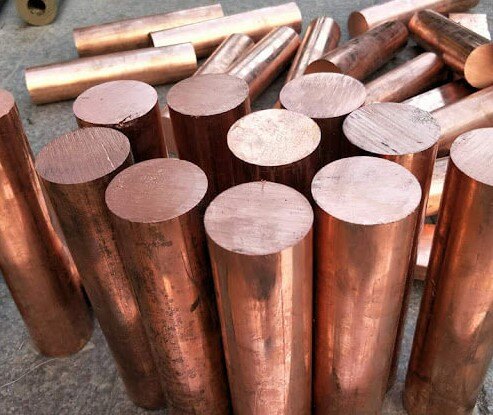
- Raw Material Preparation: High-purity copper is selected to ensure excellent electrical and thermal conductivity. The raw material is typically supplied as rods or bars, then cut into suitable lengths for forging.
- Die Design and Production: Molds or forging dies are designed and manufactured according to product specifications. Die precision directly influences final part quality. Die design must consider flow properties, shrinkage, and ease of release.
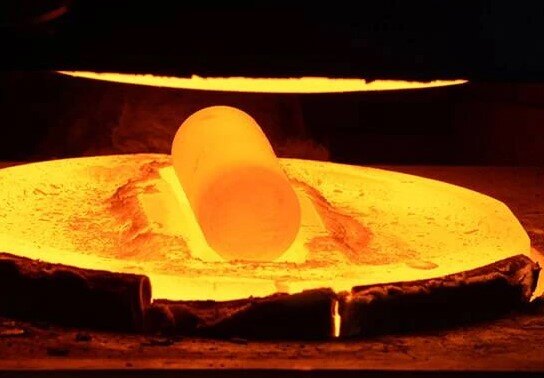
- Heating: The copper is heated to 800–900°C, softening it for plastic deformation. Precise temperature control is crucial: overheating may cause excessive grain growth, while underheating increases deformation resistance and affects forming quality.
- Forging: Heated copper is placed into dies and subjected to pressure via forging presses, deforming it plastically to fill the mold. This may be repeated multiple times until the part reaches final dimensions. Forging methods include open-die forging, hot forging, cold forging, and cross-grain forging, chosen based on geometry, size, and structural requirements.
- Cooling: Forged parts are cooled using water or air. Cooling rate affects grain structure, impacting strength, toughness, and other mechanical properties. Cooling must be tailored to meet product requirements.
- Finishing: After cooling, burrs, sharp edges, and surface defects are removed. Surface treatments such as polishing or plating may enhance appearance and corrosion resistance. Sandblasting or other finishing processes can further refine the shape to match final design dimensions.
- Heat Treatment: Forged parts often undergo heat treatment or solution treatment to dissolve residual alloy elements and achieve a uniform structure. Quenching locks the microstructure at room temperature, followed by possible low-temperature treatments to further enhance strength and hardness.
- Inspection and Testing: Inspection is the final and critical step. Non-destructive tests like ultrasonic or X-ray inspections detect internal flaws, while destructive tests, such as tensile or impact testing, verify mechanical performance. Visual inspections ensure surface quality. Only parts meeting standards are accepted; defective items are scrapped.
Copper and its alloys are highly ductile and malleable, making them relatively easy to forge. Different forging methods suit different production needs and product types. Understanding their characteristics helps select the most appropriate process.
Brass containing 38% zinc with small amounts of lead and copper is the easiest copper alloy to hot forge. It flows well at high temperatures, fills dies effectively, and produces complex shapes, taking full advantage of copper alloys’ ductility.
Cold forging is suitable for small parts. Deformation occurs at room temperature, increasing strength but reducing ductility. Subsequent annealing can restore ductility but may slightly reduce strength. Cold forging offers high dimensional accuracy and surface quality.
Zinc coating enhances durability. Forging improves microstructure and eliminates defects such as porosity from casting. Overall, copper forgings are cost-effective for mass production.
Copper alloys are essential materials in forging due to their excellent ductility, thermal conductivity, strength-to-weight ratio, corrosion resistance, machinability, and alloying flexibility. These properties influence forging parameters and directly affect product performance and service life.
From raw material preparation, die design, heating, forging, cooling, finishing, and heat treatment to inspection, every stage requires strict control. Hot forging is ideal for complex shapes, while cold forging suits small, precision components.
Whether planning to use copper forgings in production or already doing so, understanding their properties and applications helps optimize project planning and execution. Copper forgings have served industries for centuries, and as manufacturing technology advances, their application will continue to expand, providing reliable solutions across more sectors.