Complete Drop Forging Handbook for Manufacturers
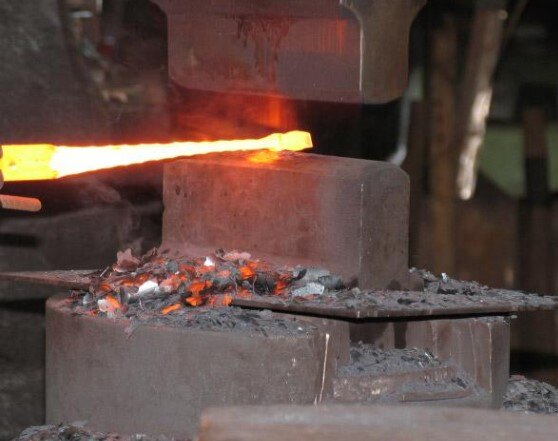
Metal drop forging is a widely used metal forming process. In this method, a workpiece is placed into a die and then hammered repeatedly until it assumes the shape of the die. The die consists of two parts: the lower die, which remains stationary, and the upper die, which is attached to a movable hammer. The hammer strikes the workpiece, causing it to deform.
Drop forging can be performed either at elevated temperatures or at room temperature. This manufacturing technique has been part of the metal forming industry for hundreds of years. While the fundamental principle of the process has remained unchanged, the associated machinery and technology have seen significant advancements. Today, drop forging has evolved into a high-precision manufacturing process.
Similar to other forging techniques, drop forging significantly enhances the material properties of finished components. Metal parts processed through drop forging exhibit superior strength, toughness, and durability compared to those produced without forging.
In forging machines, the primary tools that deform the workpiece are hammers and presses. Drop hammers and mechanical presses can achieve similar shaping outcomes, but their modes of force application differ fundamentally. Forging hammers apply impact through continuous strikes, whereas mechanical presses apply sustained pressure. Based on how the hammer is mounted and interacts with the workpiece, forging hammers can be categorized into several types.
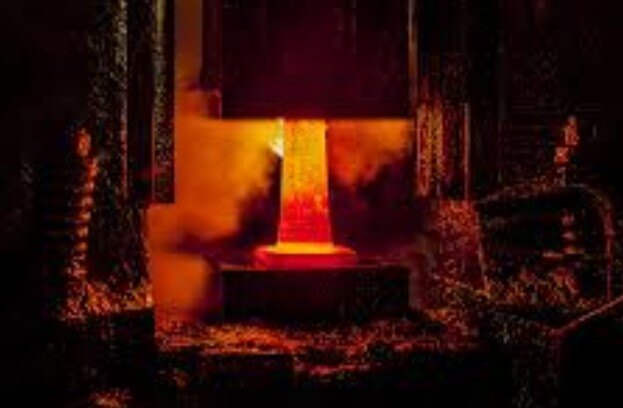
This is the simplest configuration of a drop forging hammer. In this setup, the lower die is fixed on the anvil, while the upper die is attached to the drop hammer. The hammer transfers high kinetic energy to the workpiece, which rests between the lower die and the anvil. The anvil must be extremely sturdy to absorb the hammer's energy, typically weighing ten to twenty times more than the hammer head.
Similar to the single hammer setup, the double-acting hammer accelerates the drop using air or steam. These hammers, sometimes referred to as hydraulic or pneumatic forging hammers, are highly powerful and have gradually replaced the simpler hammer configurations in modern industrial applications.
Counterblow hammers lack a traditional anvil. Instead, they feature two hammer heads mounted on opposing rams. The rams move in opposite directions, enabling precise forging of large workpieces. Counterblow hammers are the most complex and capable of delivering extremely high forging energy, making them suitable for high-performance industrial operations.
Drop forging can be categorized into open-die and closed-die forging based on the position and configuration of the dies.
In open-die forging, the dies do not fully enclose the workpiece. The metal deforms in an open space. The operator places the workpiece on the die and hammers it repeatedly, adjusting its position between strikes until the desired shape is achieved.
Open-die forging offers several advantages, including increased part strength, improved grain structure, and the maintenance of continuous grain flow throughout the metal.
Closed-die forging, also known as impression-die forging, employs dies shaped like enclosed cavities mounted on a robust anvil. The metal is placed inside the die, and the hammer repeatedly strikes the workpiece to force the material to fill the die cavity. Often, a series of dies is required to complete complex shapes.
Although closed-die forging requires higher initial investment in equipment, it offers lower unit costs as production volumes increase, making it more economical. Consequently, it is commonly used in the automotive and tooling industries.
Drop-forged components share the common advantages of forged products, including excellent surface finish, enhanced mechanical properties, recyclable flash, and directional grain flow that strengthens the metal.
Industries that extensively use drop-forged parts include:
- Automotive manufacturing
- Aerospace engineering
- Defense industry
- Agricultural machinery
- Material handling equipment
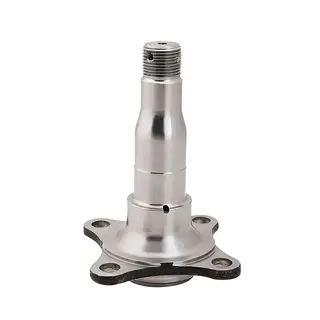
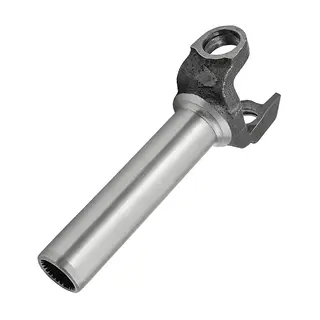
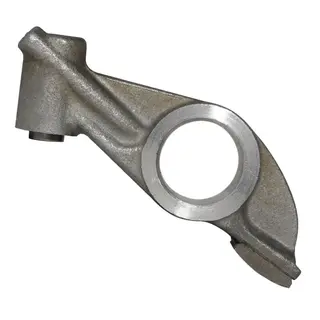
Typical products include railway components, crankshafts, levers, gears, connecting rods, wrenches, pedal cranks, and gear blanks. These components are indispensable in industrial production due to their exceptional strength, durability, and reliability.
Metal drop forging is a common manufacturing method, but what makes the parts produced by this process exceptionally strong and durable? Two fundamental reasons explain this.
The core process of drop forging involves heating a metal billet, placing it in a die, and applying high pressure through hammering or pressing, forcing the metal to conform to the die shape. During this process, the metal's grain flow realigns according to the part’s geometry.
High-quality drop forging produces parts with greater strength, toughness, and reliability. Grain structure is crucial; for instance, parts machined directly from rods or plates develop unidirectional grain flow. Changes in contour can interrupt the grain, exposing grain ends and making the metal more susceptible to fatigue and corrosion.
In drop forging, the grain flow is intentionally directional, enhancing the part’s strength and toughness while preventing exposure of grain ends, reducing wear and damage risk.
Drop forging ensures that parts are free from internal voids or porosity, which could cause sudden failure under stress or impact. By eliminating internal weaknesses, drop forging produces highly uniform grain size throughout the part.
Directional grain, void-free metal, and uniform grains collectively make drop-forged parts highly reliable, especially for critical applications such as aircraft, automotive, marine, and engine components where safety is paramount.
Uniform grain also ensures predictable material behavior during service, improved consistency during heat treatment and machining, and reduced inspection and production costs, ultimately delivering stronger, more durable, and higher-quality components.
Drop forging not only improves mechanical properties but also provides strategic advantages in manufacturing.
Rearranging the grain structure significantly enhances overall part integrity. Optimized metal flow enables parts to withstand high impact and stress, critical in aerospace, automotive, and heavy machinery applications.
Drop-forged parts have fewer surface defects. Compressed and densified metal resists physical impact and wear, ensuring longer service life for critical mechanical and vehicle components.
Drop-forged components often require minimal secondary machining and surface treatment, reducing production costs. Longer service life also lowers replacement frequency, cutting maintenance expenses.
Drop forging allows production of complex shapes with precise conformity to design specifications. This flexibility enables engineers to meet specific performance requirements without compromising strength or integrity, especially for custom projects.
While drop forging produces high-strength and precisely shaped parts, defects can occur, affecting product integrity, increasing costs, and potentially causing customer dissatisfaction.
Surface defects include cracks, scale, and folds, typically found on external surfaces.
Internal defects, such as inclusions, porosity, and unfilled regions, occur inside the metal.
Dimensional deviations may result from poor die alignment or inadequate process control, causing parts to fail tolerance specifications.
- Improper heating: Uneven or insufficient heating creates temperature gradients, leading to cracks or incomplete forging.
- Poor die design: Dies not tailored to specific metals or part geometries can cause folds, cold shuts, or dimensional errors.
- Insufficient lubrication: Inadequate lubrication increases friction, causing surface defects and accelerating die wear.
- Improper hammer force: Excessive or insufficient striking prevents complete die filling or produces excessive flash.
Several measures can effectively minimize defects.
- Advanced Material Selection: Analyze mechanical properties, grain structure, and chemical composition to ensure the material suits drop forging, reducing internal defect risks and ensuring uniformity.
- Precision Die Design: Use CAD software to design specialized dies, simulate forging operations, predict potential issues, and optimize die geometry, preventing folds, cold shuts, and dimensional errors.
- Controlled Heating and Temperature Management: Employ precision temperature-controlled furnaces, monitor temperature distribution during the forging cycle, and avoid overheating or insufficient heating.
- Optimized Lubrication System: Use appropriate lubricants for different metals and forging conditions to reduce friction, protect dies, and prevent surface defects.
- Strict Quality Control: Quality inspection should span the entire production process. Employ non-destructive testing such as ultrasonic or penetrant inspection and monitor forging parameters in real time to ensure product consistency and reliability.
Common forging defects include surface cracks, folds, cold shuts, porosity, and dimensional deviations. Preventive methods include:
- Controlling heating rates
- Applying appropriate hammer force
- Optimizing die design
- Using high-quality materials
- Regular die maintenance
Automation, real-time data analysis, and computer-aided manufacturing enable instant detection and correction, improving production efficiency and cost-effectiveness.
Combining drop forging with sheet metal processes allows production of complex assemblies while maintaining mechanical performance and dimensional accuracy. Surface treatments such as grinding, shot peening, and chemical treatment remove scale, smooth edges, and enhance corrosion resistance, preparing components for subsequent machining or assembly.
Although drop forging differs from metal stamping, certain defect types, such as folds or cracks, may appear in both due to misaligned dies or improper material handling. Applying drop forging experience to stamping improves product quality, enabling defect-free production across processes.
Metal drop forging, with its controlled grain structure and uniform material properties, produces parts that combine strength, toughness, and reliability. This centuries-old process has been refined by modern equipment and technology into a high-precision, efficient manufacturing method. While defects can occur during forging, proper material selection, optimized die design, controlled heating and lubrication, and comprehensive quality control effectively prevent them. Drop forging remains an indispensable technique in modern industry, particularly for applications demanding high strength and reliability.