A Complete Guide to Low Carbon Steel Forging Technology
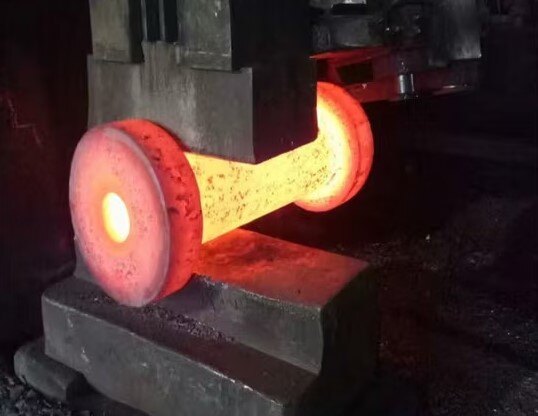
Low carbon steel forging is one of the most widely used metal forming technologies in modern manufacturing. With a carbon content typically ranging from 0.04% to 0.25%, low carbon steel offers excellent ductility, toughness, and weldability. These characteristics make it highly suitable for forging into components with complex shapes across a wide range of industries.
This article provides a comprehensive overview of low carbon steel, starting from its material properties and working principles, followed by a detailed explanation of its chemical composition. It further introduces the three main forging processes—open die forging, closed die forging, and roll forging—and explains how heat treatment processes such as annealing, normalizing, quenching, and tempering enhance material performance. In addition, it covers quality control methods including nondestructive testing, dimensional inspection, and mechanical performance testing. Finally, it explores the key application areas of low carbon steel forgings in automotive, aerospace, machinery manufacturing, and oil and gas industries.
Low carbon steel is a type of steel with a relatively low carbon content, typically ranging from 0.04% to 0.25%. Compared with high carbon steel, its carbon content is significantly lower, which gives it distinct and advantageous material properties. Low carbon steel plays an important role in industrial production primarily because it combines low cost, wide applicability, and excellent processing performance.
Due to its low carbon content, low carbon steel has better ductility than high carbon steel and is much easier to weld, cut, and form. As a result, it is widely used in construction structures, automotive manufacturing, and everyday consumer products. In addition, it offers moderate tensile strength and good plasticity, allowing it to meet the requirements of a wide range of structural and engineering applications while maintaining reliable performance in different operating environments.
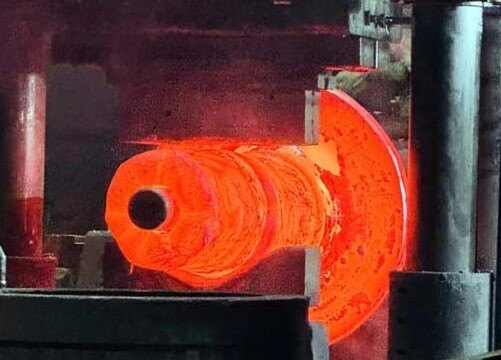
Low carbon steel is mainly composed of iron, carbon, and small amounts of alloying elements and impurities. Each element plays a specific role in determining material properties.
- Iron (Fe): Iron is the fundamental component of low carbon steel, typically accounting for more than 98% of its composition. It forms the basic metallic framework of the material. Iron is abundant, low in cost, and easy to form and weld, making it widely used in construction rebar, structural components, and general engineering applications. However, pure iron is relatively soft and prone to corrosion, requiring alloying to improve performance.
- Carbon (C): Carbon is the most critical element influencing steel properties. In low carbon steel, its content generally ranges from 0.04% to 0.25%. Lower carbon content results in better softness and machinability but lower strength. A controlled amount of carbon improves hardness and strength while maintaining good weldability and formability. This is why low carbon steel is widely used in applications such as automotive body panels, where forming performance is essential.
- Phosphorus (P): hosphorus is present in trace amounts, usually not exceeding 0.04%. It can increase strength and hardness to some extent; however, excessive phosphorus makes the steel brittle at low temperatures, increasing the risk of cracking during welding and cold working. Therefore, its content must be strictly controlled.
- Sulfur (S): Sulfur content is generally kept below 0.05%. While it can improve machinability by forming manganese sulfide inclusions, sulfur also causes hot shortness, making steel more prone to cracking during high-temperature processing. As a result, sulfur is considered an impurity and must be carefully controlled.
- Silicon (Si): Silicon content typically ranges from 0.1% to 0.3%. It mainly acts as a deoxidizing agent during steelmaking, reducing oxygen content and preventing porosity and internal defects. Silicon also improves strength, hardness, and magnetic properties, making it important in electrical steels. However, excessive silicon increases brittleness and must be controlled.
- Manganese (Mn): Manganese content typically ranges from 0.25% to 1.65%. It is one of the most important alloying elements in low carbon steel. Manganese acts as a deoxidizer and desulfurizer, improves strength, wear resistance, and hardenability, and enhances toughness while reducing the harmful effects of sulfur. It is widely used in structural steel, mechanical components, and automotive applications to improve overall performance.
Due to its excellent plasticity, good weldability, and relatively low cost, low carbon steel is widely used in forging applications. Forging processes are critical for shaping materials into desired geometries. The main forging methods include open die forging, closed die forging, and roll forging.
Open die forging involves deforming metal between two flat or simply shaped dies. It is suitable for producing large forgings such as shafts, bars, and rings with relatively simple structures. This method offers high flexibility and is widely used for non-standard or custom components.
Closed die forging, also known as impression die forging, involves placing metal into a die cavity with a specific shape. This process is capable of producing complex components with high dimensional accuracy. It is widely used in automotive, aerospace, and machinery industries for parts such as connecting rods, crankshafts, and gears. Compared with open die forging, it provides better dimensional consistency and surface quality.
Roll forging uses rotating rolls to continuously compress metal, reducing its cross-sectional area while increasing its length. It is commonly used for producing long components such as bars, shafts, and tubes. This process improves material utilization and enhances mechanical properties by refining grain flow along the deformation direction.
Heat treatment is a critical step in improving the performance of forged low carbon steel components. Common processes include annealing, normalizing, quenching, and tempering.
Annealing involves heating the material to a specific temperature followed by slow cooling. Its main purpose is to relieve internal stresses, improve ductility, enhance machinability, and refine grain structure. It is often used as a preliminary treatment or before further machining.
Normalizing involves heating steel above its critical temperature and cooling it in air. This process improves strength and hardness while enhancing microstructural uniformity. It is commonly used for low carbon steel forgings requiring balanced strength and toughness.
Quenching and tempering is a combined process used to optimize mechanical properties. Quenching rapidly cools the material to increase hardness and strength, while tempering reduces internal stress and improves toughness. This balance makes it suitable for components requiring high wear resistance and strength.
Quality control ensures that forged components meet design specifications and industry standards.
NDT methods include ultrasonic testing, magnetic particle inspection, and radiographic testing. These techniques detect internal defects such as cracks and porosity without damaging the component, ensuring structural integrity.
Dimensional inspection ensures accuracy using tools such as calipers, micrometers, and coordinate measuring machines (CMM). It verifies that forged parts meet required tolerances.
Mechanical testing includes tensile testing, hardness testing, and impact testing. These methods evaluate strength, hardness, and toughness to confirm suitability for real-world applications.
Low carbon steel forging offers several key advantages:
Due to its high ductility and plasticity when heated, the material flows easily during forging, enabling accurate shaping. Compared to high carbon steel, it requires less forging energy, reducing cost and energy consumption. Additionally, forged low carbon steel retains good toughness, providing excellent resistance to impact and fatigue during service.
Low carbon steel forgings are widely used across multiple industries due to their balanced performance and cost efficiency.
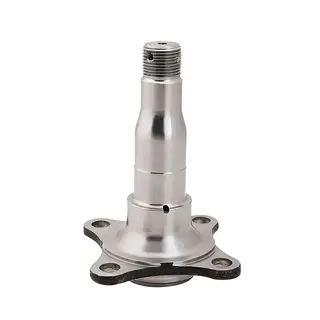
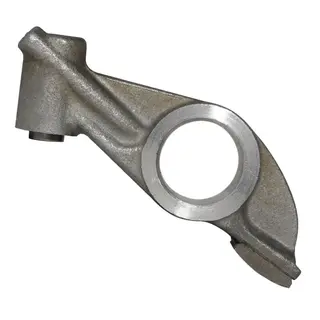
- Automotive Industry: In automotive applications, low carbon steel forgings are used in crankshafts, connecting rods, steering knuckles, and suspension components. These parts require strength, toughness, and wear resistance to withstand complex operating conditions.
- Aerospace Industry: In aerospace applications, they are used in landing gear components, engine supports, and structural parts, where high strength-to-weight ratio and fatigue resistance are critical.
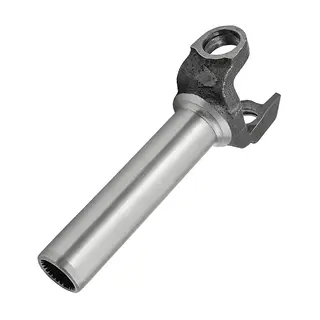
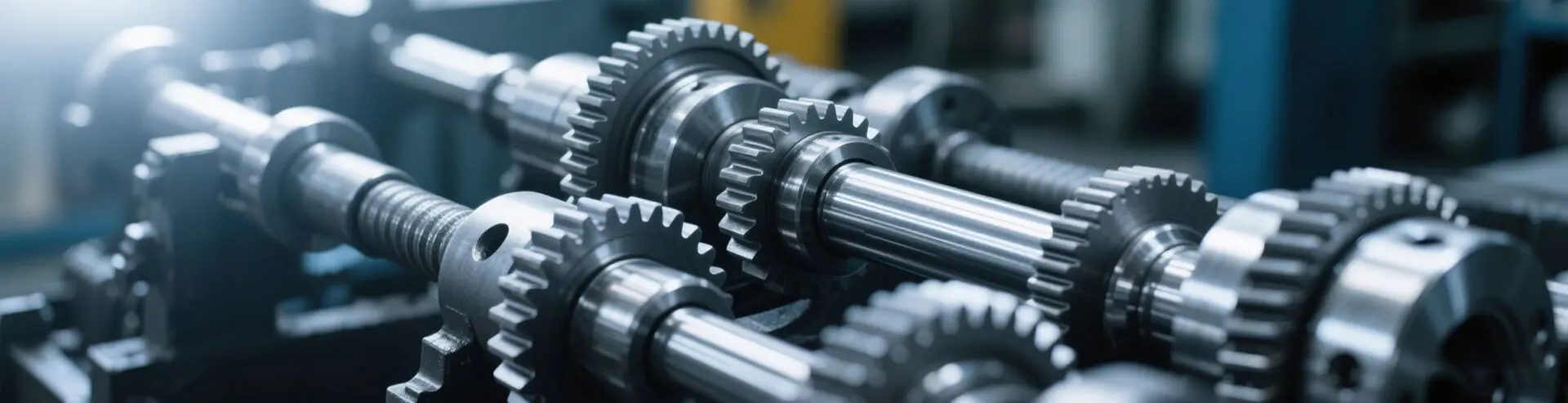
- Machinery Manufacturing: In machinery manufacturing, low carbon steel forgings are used for gears, shafts, and couplings, where dimensional accuracy and operational stability are essential.
- Oil and Gas Industry: In the oil and gas sector, they are used in structural pipe fittings, high-strength stabilization components, and bearing housings, ensuring durability under harsh working conditions.
As a professional forging supplier, a wide range of low carbon steel forging solutions are available, supported by advanced forging equipment and an experienced engineering team. High-quality forged products are manufactured to meet diverse industrial requirements, particularly in oil and gas structural fittings, high-strength petrochemical stabilizer components, and bearing housings. These products are widely used in oil and gas, automotive, aerospace, and machinery industries.
Low carbon steel forging is an indispensable process in modern industrial manufacturing. Due to its excellent formability and low carbon content, it is well suited for producing complex, high-quality components.
From material composition analysis to forging process selection, from heat treatment optimization to quality inspection, every stage plays a crucial role in determining final product performance. With continuous advancements in industrial technology, low carbon steel forging continues to evolve through improved process control, enhanced heat treatment systems, and advanced quality inspection techniques.
As a result, the performance and application scope of low carbon steel forgings continue to expand. For industries requiring components with high strength, good toughness, and excellent machinability, low carbon steel forging remains an economical and highly reliable solution.