An Introduction to Metal Forging in the Railway Industry
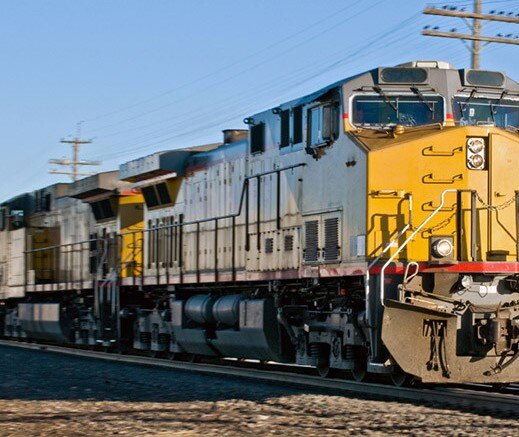
Every day, thousands of trains rush across railway tracks at high speed, carrying millions of passengers and vast quantities of freight. Few people stop to consider what allows these massive steel giants, each weighing hundreds of tons, to operate safely and reliably for decades. The answer lies in seemingly ordinary metal components: axles, wheels, couplers, brake discs, and more. These are not simple blocks of metal, but high-performance parts manufactured through precision forging processes. Forging, an ancient metalworking technique, remains one of the most critical manufacturing methods in railway equipment production today. Through heating, compression, and plastic deformation, ordinary metals are transformed into reliable components capable of withstanding extreme loads.
This article provides a detailed introduction to the types of forging processes used in the railway industry, the key components produced through metal forging, and the technological advantages that make forging indispensable for modern railway safety and efficiency.
Railways are a vital part of modern transportation infrastructure. Whether for passenger travel or bulk freight transport, both enterprises and the public rely heavily on this system. As global railway markets continue to expand, increasing attention is being placed on efficiency, capacity, passenger comfort, and freight capability. Within this industrial ecosystem, forged components are essential parts of railway and locomotive systems.
Railway components must endure long-term operation, heavy loads, and constantly changing environmental conditions. During high-speed operation, friction between wheels and rails, torsional stress on axles, and tensile and compressive forces on couplers all place extremely high demands on component performance. Therefore, the use of reliable forging technology to produce high-performance parts is of critical importance to the development of modern rail systems.
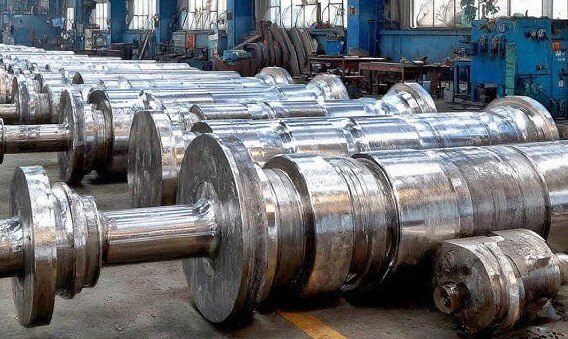
Forging is a manufacturing process in which metal is heated and subjected to compressive force to cause plastic deformation, forming a desired shape. Compared with other manufacturing methods, forging significantly enhances the strength and durability of metals. It eliminates casting-related defects such as internal porosity, improves microstructural uniformity, and preserves continuous metal flow lines, resulting in superior mechanical properties compared to cast components of the same material.
Depending on design requirements and material properties, forging is generally divided into hot forging and cold forging. Harder or high-strength metals are typically processed using hot forging, while softer metals such as copper, aluminum, and brass may be formed using cold forging. In the forging process, metal billets are first cut to size, heated to an appropriate forming temperature, and then shaped under pressure using presses or hammers within dies. After forging, railway components often undergo additional processes such as trimming, machining, or heat treatment to meet final dimensional and performance requirements.
Different railway components require varying levels of strength, precision, geometric complexity, and production efficiency. Therefore, different forging processes are selected based on service conditions, batch size, and material characteristics. The following are four representative forging methods widely used in the railway industry.
Open die forging is a basic forging method in which a metal billet is compressed between two flat dies to achieve deformation. This process is commonly used for producing large railway components such as wheelsets, axles, and couplings.
Open die forging allows significant deformation of the material, refining the grain structure and greatly improving mechanical performance. Due to its excellent strength and toughness, it is particularly suitable for components subjected to high stress and impact loads during train operation.
This process offers strong equipment versatility and flexibility, making it suitable for producing components of various shapes and sizes, especially large parts or small-batch, single-piece production.
Closed die forging involves placing metal into a die cavity with a predefined shape. This method is ideal for producing complex railway components such as connectors, fasteners, and brackets.
Compared with open die forging, closed die forging provides higher dimensional accuracy and better surface quality, reducing the need for secondary machining. It also improves material utilization and reduces waste, thereby optimizing production costs.
Due to its high precision and consistency, closed die forging is suitable for mass production of standard parts. In China, closed die forging technology for high-speed railway contact network components has reached a leading domestic level.
Upset forging is a process in which localized compression increases the cross-sectional area of a workpiece. It is commonly used for manufacturing railway bolts and other fastening components.
Upset-forged parts exhibit excellent tensile strength and fatigue resistance, making them suitable for high-stress applications. This process is particularly effective for producing short-length, large-diameter components and is widely used in railway fastening systems. Many fastening elements, such as nuts used in railway systems, are manufactured using hot forging processes.
Rolling forging is a continuous forming process in which metal bars pass through a series of rollers to gradually achieve the desired shape. This method is commonly used in the production of steel rails, which require extremely high consistency in cross-section and material properties.
Rolling forging produces continuous and uniform metal flow structures while ensuring high dimensional accuracy and structural integrity, thereby improving track safety and durability. Modern rail production is dominated by rolling processes, with productivity levels 8 to 10 times higher than traditional forging methods, meeting the stringent straightness requirements of high-speed rail systems.
Forging technologies are not abstract industrial concepts but are directly applied to the most critical load-bearing and transmission components of trains. From axles and wheels that support the entire train weight to couplers connecting carriages and brake system components ensuring safety, each forged part plays an irreplaceable role under extreme conditions.
Axles are among the most critical forged components in railway systems. They not only support the entire weight of trains and cargo but also transmit locomotive power to the wheels.
Forged axles are widely used because they can withstand extremely high stress and heavy loads. The forging process produces a uniform grain structure, enhancing strength and fatigue resistance, thereby reducing fracture risk during long-term operation.
With the rapid development of high-speed and heavy-haul railways, axle materials require high purity, high performance, and uniform microstructure. High-quality axle steel produced through continuous casting processes has been widely supplied and exported to multiple countries.
Railway wheels are also critical forged components. During operation, wheels endure enormous pressure and friction, requiring high strength and reliability.
Forged wheels exhibit improved hardness and toughness, making them more resistant to wear. Additionally, forging ensures high dimensional accuracy, which is essential for smooth and safe train operation. In modern manufacturing, automated forging production lines for high-speed railway wheels have enabled large-scale production.
Couplers connect railway carriages and ensure the structural integrity of the train. During acceleration, braking, and speed changes, couplers must withstand complex tensile and compressive forces.
Forged couplers provide higher structural strength and reliability, effectively resisting deformation and fracture, thereby ensuring stable inter-carriage connections and safe train operation.
Brake system parts, such as brake discs and brake calipers, are also commonly manufactured through forging. During braking, these components operate under extremely high pressure and temperature conditions.
Forged brake components offer better strength, heat dissipation, corrosion resistance, and wear resistance, thereby improving braking efficiency and extending service life. In some designs, forged steel replaces cast steel in brake beam structures, eliminating casting defects and improving overall structural integrity.
Connecting rods are key components in locomotive engines, transmitting the reciprocating motion of pistons to the crankshaft. Forged connecting rods offer higher strength and rigidity, ensuring stable and efficient power transmission under high loads and vibration.
Bearings support rotating components such as axles and wheels. Forged bearings provide higher load capacity, lower friction, and excellent fatigue resistance, making them essential for long-term stable train operation.
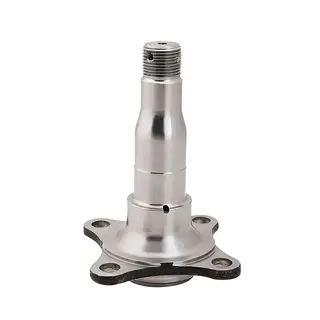
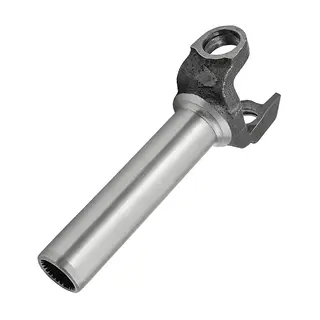
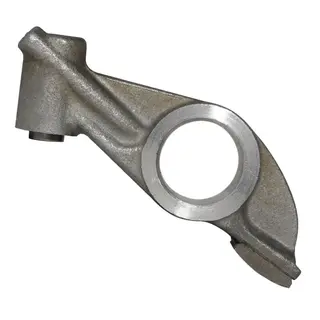
Forging is also used to produce a wide range of additional railway components, including ball joints, cam parts, end covers, clutch components, large discs, flanges, gear parts, valve components, hand brake system parts (such as ratchets, levers, and cams), pins, rod ends, drive shafts, spindles, sprockets, and fork joints.
The upper center plate is an important freight wagon component installed on the center beam and working with the lower center plate on the bogie. It bears complex dynamic and static loads during operation. Modern railway wagons widely use forged steel center plates, with continuous improvements in heating methods, die design, and material utilization.
Forging plays a central role in railway manufacturing due to its multiple technical and economic advantages compared to casting and machining processes.
Forged parts exhibit higher strength, toughness, and fatigue resistance due to their dense and uniform grain structure, making them ideal for components exposed to repeated loads and harsh environments.
Forging enables lightweight design while maintaining strength, reducing train weight and improving energy efficiency. Aluminum alloy forgings are increasingly used in railway systems due to their light weight and corrosion resistance.
Although initial tooling costs are high, forging reduces material waste and machining requirements, resulting in lower long-term production and maintenance costs.
Forging allows customized production of components with specific dimensions and performance requirements, meeting diverse global railway standards.
Due to intense deformation during processing, forged components rarely contain defects, ensuring high reliability. They are also easier to weld and integrate into complex assemblies.
Forging technology plays a fundamental role in the railway industry, significantly improving the performance, reliability, and safety of key components. From axles and wheels to couplers and brake parts, forged components form the backbone of modern railway systems.
By enhancing microstructural density and mechanical properties, forging ensures that railway systems can operate safely and reliably under high loads and long service cycles. As railway technology continues to evolve toward higher speeds and heavier loads, forging will remain an indispensable manufacturing foundation supporting global rail transportation development.