Open Die Forging and Closed Die Forging: How to Select
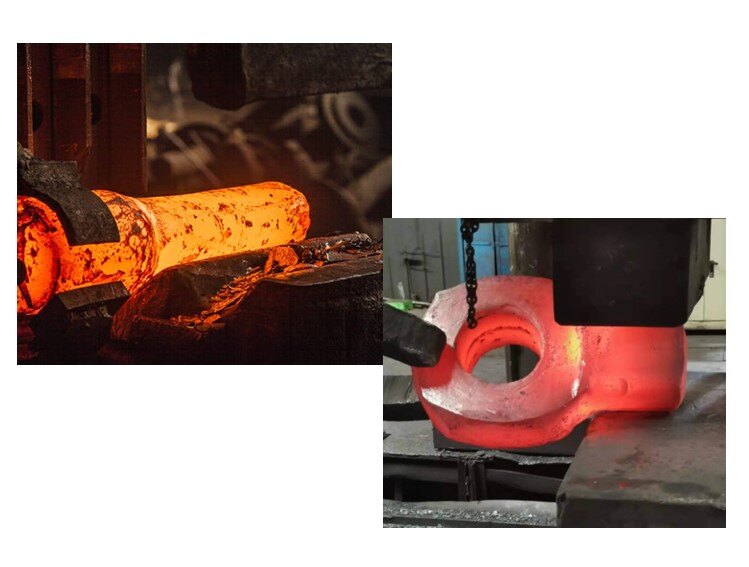
In the metal processing industry, steel forging is a fundamental and highly important forming process. By applying pressure to cause plastic deformation of metal, forging significantly improves the internal microstructure of the material and enhances the strength and durability of components. Among the many forging methods, open die forging and closed die forging are two of the most widely used processes. Although both are based on the principle of plastic deformation of metals, they differ significantly in process flow, equipment requirements, application scenarios, and cost-effectiveness. This article provides a detailed comparison of these two forging methods from multiple perspectives to help readers gain a comprehensive understanding of their characteristics and suitable applications.
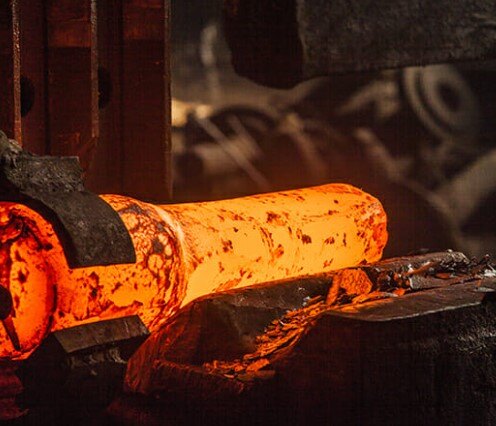
Open die forging, also known as free forging, refers to a process in which a heated metal billet or ingot is placed between two flat dies or anvils and gradually formed by applying compressive force through hammering or pressing. During this process, the dies do not fully enclose the metal, allowing it to flow and expand freely to a certain extent. Operators can guide the deformation direction manually or using specialized tools, thereby flexibly adjusting the shape and size of the workpiece.
The key characteristic of open die forging is its openness. Because the dies are not fully enclosed, the metal has a high degree of freedom during deformation, making the process highly flexible. In addition, open die forging typically requires multiple repeated forging operations, gradually shaping the metal into the desired geometry.
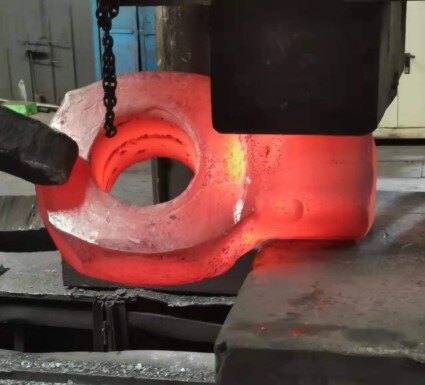
The typical process of open die forging includes the following steps:
- Heating of Material: The metal billet is heated to an appropriate forging temperature to improve its plasticity and deformability. Different materials require different heating temperatures, which must be carefully controlled based on material properties.
- Initial Deformation: The heated billet is placed between two flat dies, and pressure is applied using a hammer or hydraulic press. This reduces the height of the billet while increasing its cross-sectional area, laying the foundation for further shaping.
- Drawing Out (Elongation) : Through repeated compression and turning, the metal is gradually elongated into the required length and shape. Operators continuously adjust the position and force direction according to design requirements.
- Final Shaping and Dimensional Control: Near the final stage, fine adjustments are made to achieve the required geometry and dimensions, ensuring compliance with design specifications.
- Cooling and Heat Treatment: After forging, the workpiece undergoes controlled cooling and necessary heat treatment to optimize its mechanical properties and microstructure.
Open die forging equipment is relatively simple, mainly including forging hammers, hydraulic presses, and mechanical presses. Forging hammers provide impact force suitable for large deformation, hydraulic presses offer steady pressure for large components, and mechanical presses are suitable for high-efficiency mass production.
The tooling used is usually simple flat dies or basic-shaped dies. These are low-cost, reusable, and suitable for different workpiece shapes, resulting in relatively low tooling investment.
Closed die forging, also known as impression die forging, uses two precision-machined dies with cavities that accurately define the final shape of the component. A heated billet is placed between the dies, and high pressure is applied so that the metal fully fills the die cavity, producing components with high dimensional accuracy and complex geometries.
Unlike open die forging, closed die forging completely encloses the metal within the dies. Under high pressure, the metal is forced to flow into every corner of the cavity. This highly controlled forming method enables the production of highly precise and complex parts.
The closed die forging process is more complex and includes the following steps:
- Material Preparation: The required material volume is calculated based on die cavity size. The billet is cut accordingly to ensure full cavity filling with minimal waste.
- Heating: The billet is heated in a furnace to forging temperature. Temperature and time must be precisely controlled to avoid overheating or uneven heating.
- Die Preparation: Dies are preheated before forging to reduce thermal shock and extend die life. The die cavity must also be inspected for cleanliness and damage.
- Forging Forming: The heated billet is placed in the lower die, and the upper die applies high pressure. The metal flows and fills the cavity completely. Excess metal may form flash at the die parting line.
- Flash Removal and Finishing: After forging, flash is removed and the part is cleaned and dimensionally corrected as needed.
- Heat Treatment and Surface Treatment: Depending on performance requirements, further heat treatment and surface finishing are applied to achieve desired mechanical and surface properties.
Closed die forging requires high-speed presses, hydraulic presses, or mechanical presses capable of delivering high and stable pressure. These machines are more precise and often more automated than those used in open die forging.
The tooling consists of precision-machined dies designed for specific parts. Each product typically requires a dedicated die set. Die design must consider metal flow, temperature distribution, and pressure transfer, making tooling costs relatively high.
Although both processes rely on plastic deformation, they differ fundamentally in execution. Open die forging uses open dies and free metal flow, while closed die forging relies on enclosed dies and high-pressure controlled forming. These differences result in variations in precision, complexity, efficiency, material utilization, and cost.
Open die forging uses simple dies that do not fully enclose the metal, while closed die forging uses fully enclosed precision cavities. Closed die forging completely isolates the metal from air during deformation, whereas open die forging exposes the metal partially, which may lead to oxidation.
Open die forging has relatively low dimensional accuracy and often requires secondary machining. Surface finish is generally rougher. Closed die forging offers high precision, near-net-shape forming, and significantly better surface quality.
Open die forging is suitable for simple geometries such as shafts, blocks, or rings. Closed die forging is capable of producing complex shapes such as gears, connecting rods, and turbine blades.
Open die forging has lower material utilization due to free deformation and higher machining allowance. Closed die forging offers higher material efficiency despite some flash loss.
Open die forging is slower and depends heavily on operator skill, making it suitable for small batches. Closed die forging is highly efficient and ideal for mass production.
Open die forging has low tooling costs and low initial investment. Closed die forging requires expensive dies and higher upfront investment but becomes cost-effective in large-scale production.
- Advantages of Open Die Forging: Open die forging offers high flexibility, low tooling cost, suitability for large components, wide material adaptability, ease of repair, and cost advantages in small batch production.
- Disadvantages of Open Die Forging: It has lower precision, limited capability for complex shapes, lower efficiency, rough surface quality, higher material waste, and strong dependence on operator skill.
- Advantages of Closed Die Forging: Closed die forging provides high precision, excellent surface quality, ability to form complex shapes, high material efficiency, high production rate, and improved mechanical properties.
- Disadvantages of Closed Die Forging: It involves high tooling cost, limited design flexibility after die manufacturing, high initial investment, size limitations for very large parts, faster die wear, and higher energy consumption.
Open die forging is widely used in railway, aerospace, heavy machinery, energy, construction, automotive, and shipbuilding industries, mainly for large components such as shafts, rolls, flanges, and structural parts.
Closed die forging is widely used in automotive, aerospace, energy, medical, machinery, and oil and gas industries for precision parts such as engine components, turbine blades, valves, connectors, and medical instruments.
Selection depends on multiple factors:
- Complexity: simple shapes → open die; complex shapes → closed die
- Production volume: small batch → open die; mass production → closed die
- Size: large parts → open die; small to medium → closed die
- Precision: low requirement → open die; high precision → closed die
- Cost: low investment → open die; long-term efficiency → closed die
- Material: wide range → open die; good plasticity required → closed die
- Lead time: urgent → open die; planned production → closed die
In many industrial applications, both processes are combined. Open die forging can be used for pre-forming, followed by closed die forging for final shaping. This improves die life, reduces material waste, and lowers overall cost. In some cases, different sections of a part may be formed using different methods.
Open die forging and closed die forging are two essential metal forming processes, each with distinct advantages and application areas. Open die forging offers flexibility, low cost, and suitability for large and simple components, while closed die forging provides high precision, efficiency, and capability for complex geometries.
The choice between the two depends on multiple engineering and economic factors. In modern manufacturing, both methods are often used complementarily to achieve optimal performance, cost efficiency, and product quality.
With continuous advancements in automation, intelligence, precision engineering, and green manufacturing, both forging technologies will continue to play an irreplaceable role in modern industry, providing high-quality metal components for a wide range of applications.