Guide to Free Forging in Modern Manufacturing
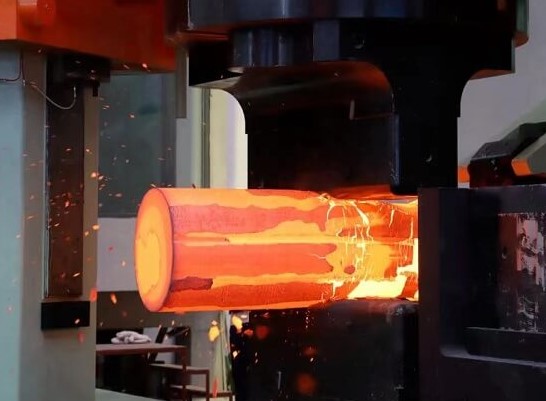
Free forging, also known as open-die forging or free-die forging, is a metal forming process that does not rely on fixed dies. Unlike closed-die forging, free forging uses simple upper and lower dies to repeatedly hammer or press the metal workpiece, without fully enclosing the material. This process allows the metal to flow freely during shaping, gradually achieving the required shape and dimensions through multiple deformations.
During the free forging process, the metal is heated to an appropriate temperature (typically between 500°F and 2400°F) and then placed between the upper and lower dies for compression. Operators can adjust the position and orientation of the workpiece as needed, gradually forming it through continuous strikes. This flexibility makes free forging an ideal choice for manufacturing large, customized parts.
The reason free forging holds an important position in industrial manufacturing is due to its unique process characteristics. Because it does not rely on fixed dies, the metal can flow freely during shaping, and this flexibility brings multiple practical benefits. From improving mechanical performance to optimizing cost control, from material adaptability to shortening delivery cycles, the advantages of free forging run through every stage of production. The following sections provide a detailed analysis of how these core advantages create value for different industries.
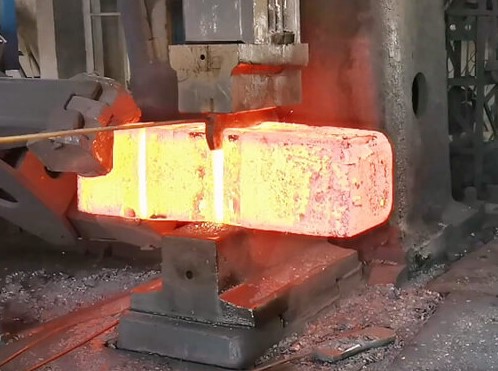
One of the most notable advantages of free forging is its ability to significantly enhance the mechanical performance of forged parts. During high-pressure deformation, the metal’s grain structure is optimized, with grain flow distributed according to the part’s contours, thereby improving strength, toughness, and fatigue resistance.
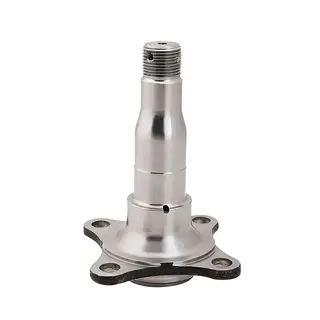
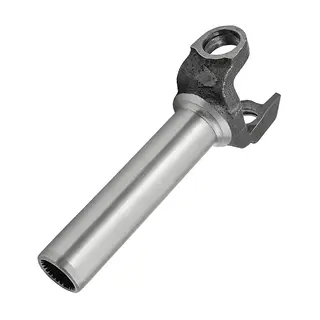
Parts produced by free forging have finer grain size and more uniform internal structure. This structural improvement allows parts to withstand higher stress loads, making them particularly suitable for critical components that operate in high-stress environments over long periods. For example, automotive axles and crankshafts manufactured through free forging can maintain stable performance under long-term high-load operation without failure.
The free forging process can handle a wide variety of metal materials, including stainless steel, carbon steel, and various alloy materials. This material compatibility allows free forging to meet the specific needs of different industries.
Stainless steel forging is particularly common in industries with high corrosion resistance requirements, such as food processing and marine industries. Stainless steel forgings resist rust and chemical corrosion, providing long service life in harsh environments. Carbon steel forgings, on the other hand, are known for high strength and low cost, widely used in construction, machinery, and general engineering fields. In addition, materials such as aluminum, titanium, and nickel-based alloys can also be processed by free forging into high-performance parts.
Although free forging provides high-quality results, in many cases it remains an economically efficient option. Because universal dies can be reused, initial die costs are relatively low. Compared to closed-die forging, free forging does not require expensive custom dies for each part.
Moreover, material waste during free forging is usually less than in other manufacturing processes. When machining large parts from solid metal, significant scrap may be generated, while free forging shapes metal more efficiently, saving raw material costs. For small-batch production or one-off customized products, the economic advantages of free forging are even more apparent.
In terms of delivery time, free forging is also relatively fast. Once the requirements are determined, the forging process can start immediately, without waiting for complex die fabrication. This is especially beneficial for urgent projects. For example, if a power plant urgently needs replacement parts, free forging can quickly produce them, allowing the plant to resume operation as soon as possible.
Free forging offers significant design flexibility. If design adjustments are needed during production, free forging is easier to implement compared to other manufacturing methods. If minor modifications to the part’s shape or dimensions are required, they can be made during the forging process without incurring high costs or long delays. This flexibility enables closer collaboration between suppliers and customers, ensuring that the final product fully meets expectations.
Free forging has a well-established quality control system. From inspecting raw material impurities to verifying final part specifications, inspection procedures are strictly enforced at every stage. Common inspection methods include ultrasonic testing, magnetic particle inspection, and hardness testing, ensuring the integrity and reliability of forged parts.
Understanding the factors that influence free forging costs is important for decision-making and cost management.
- Material Selection and Utilization: Material selection is a key factor in determining free forging costs. Prices vary significantly among metals. Steel is the most commonly used material, but high-strength alloy steels, due to the addition of extra alloying elements, cost more than ordinary carbon steel. Titanium, due to its high strength-to-weight ratio and complex extraction and processing methods, is significantly more expensive than steel. Material utilization is also an important component of cost. Not all raw material is converted into the final part weight; some is lost as flash. The part’s size and shape affect flash volume, and complex shapes often require more material to fill the die cavity, reducing material utilization and increasing costs.
- Part Complexity: Parts with complex geometry, grooves, or thin walls are more difficult to forge than simple, symmetrical parts. They may require multiple forging operations, special tooling, and more precise process control. Strict dimensional tolerances also increase production costs. Achieving high-precision tolerances often requires more precise forging equipment, additional machining, and rigorous quality control measures.
- Forging Method and Equipment: Free forging methods include open-die forging and closed-die forging. Open-die forging is suitable for simple shapes and large parts, while closed-die forging is suitable for complex parts. Closed-die forging has higher die and preparation costs but produces parts with high dimensional accuracy and excellent surface quality. The capacity and scale of forging equipment are also significant factors. Large forging presses or hammers used to produce heavy parts require more energy, labor, and management costs.
- Die Costs and Lifespan: Dies and tooling account for a large proportion of free forging costs. Die design and manufacturing are complex, requiring precise matching of part shapes and high-strength materials to withstand high temperatures and pressures. Custom dies for special parts are particularly expensive. Dies wear during repeated use, and frequent replacement increases production costs.
- Production Quantity: Production quantity directly affects cost. Generally, the higher the production quantity, the lower the unit cost. Large-scale production allows fixed costs such as dies and equipment setup to be spread over more parts, reducing the unit cost. For example, if a die costs $10,000, producing 100 parts results in a die cost of $100 per part, whereas producing 1,000 parts reduces the cost to $10 per part.
- Labor and Management Costs: Forging is a technical industry that requires skilled operators, die makers, and quality control personnel. High wages for skilled workers increase overall costs. Management expenses, such as facility rent, utilities, insurance, and equipment depreciation, are also allocated to each part.
- Quality Assurance and Inspection: Forged parts often require multiple inspections and testing procedures, including non-destructive methods such as ultrasonic testing, magnetic particle inspection, and X-ray testing to detect internal defects like cracks and porosity. Inspection equipment, test materials, and the time required for testing all add to overall costs.
Free forging plays an important role in several key industries:
- Aerospace: The aerospace industry has extremely high performance requirements for parts. Free forging can produce large structural components with special size and performance requirements, such as turbine shafts and landing gear components. These parts must maintain reliability under extreme conditions, and the excellent grain structure and mechanical properties provided by free forging meet this need.
- Energy and Power: In power generation equipment manufacturing, free forging is used to produce large generator shafts, turbine rotors, pressure vessel components, and other parts. These components are often large and complex, and free forging can handle forgings weighing hundreds of tons, meeting the stringent reliability requirements of the power industry.
- Oil and Gas: The oil and gas industry requires equipment capable of withstanding high pressure, high temperature, and corrosive environments. Forged valves, flanges, and drill collars offer excellent strength and durability, enabling long-term stable operation in harsh downhole and offshore conditions.
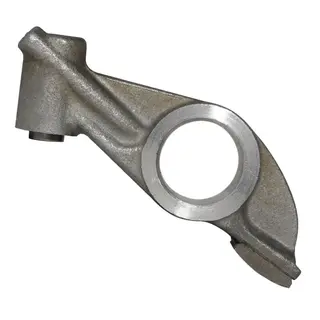
- Automotive and Heavy Machinery: Key automotive components such as axles, crankshafts, and connecting rods, as well as large structural parts for heavy machinery, are widely produced using free forging. These parts must withstand high-stress loads, and the superior mechanical properties provided by free forging ensure the safe operation of vehicles and equipment.
- Defense and Nuclear Industry: In industries where safety is critical, the reliability of components is non-negotiable. Free forged parts have proven their value in these high-risk environments, with high strength and durability ensuring long-term operation under extreme conditions without compromising safety.
Free forging is suitable when:
- Large, heavy parts are required
- Part shapes are relatively simple
- Small-batch production or custom one-off parts are needed
- Delivery time is critical
- Budget constraints require lower die costs
Closed-die forging is suitable when:
- High-precision, complex parts are required
- Large-scale production is planned
- Dimensional tolerances are strict
- Minimizing subsequent machining is desired
As a crucial manufacturing process in modern industry, free forging offers significant advantages in the strength, durability, and customizability of parts. Whether in aerospace, energy, oil and gas, or automotive industries, free forging provides high-performance solutions that meet stringent requirements. By carefully selecting materials, optimizing design, controlling production volume, and collaborating with experienced forging suppliers, companies can ensure product quality while effectively controlling costs. For industrial applications requiring large, high-strength, customized metal parts, free forging is undoubtedly a reliable choice.