How to Solve Martensite Retention in Large Forgings
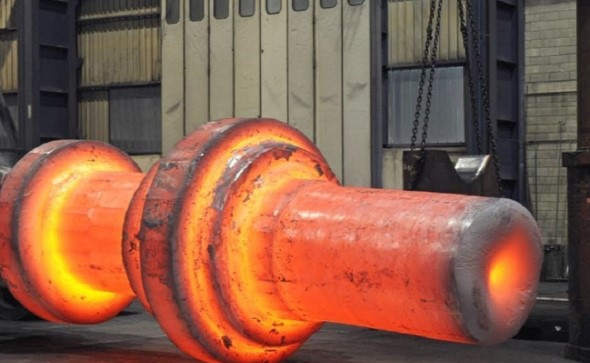
In the heat treatment of large forgings, martensite retention is a frequently overlooked yet profoundly impactful issue. Simply put, martensite retention refers to the presence of untransformed or insufficiently tempered martensitic structures in a workpiece after quenching. Unlike surface cracks, these retained structures are not easily detectable but can create significant hidden hazards during service.
Martensite is a hard and brittle metallic phase formed by the rapid cooling of austenite. Ideally, by controlling the cooling rate and subsequent tempering process, a balanced microstructure can be achieved. However, in large forgings, non-uniform chemical composition, or improper process parameters, martensite retention may occur—some regions fail to transform completely, while others are insufficiently tempered, creating weak points in the material.
The danger of martensite retention lies in its concealment. Conventional nondestructive testing often fails to detect internal martensite, yet over long-term service, it can lead to brittle fracture, fatigue failure, or other catastrophic outcomes. In critical sectors such as nuclear power, shipbuilding, and energy, the quality of large forgings directly affects equipment safety and human life.
To address martensite retention, it is crucial to understand its origins. In practice, martensite retention is rarely caused by a single factor; it is the result of multiple interacting process conditions. Analysis of numerous failure cases has identified three primary causes: uncontrolled cooling rates, segregation of alloying elements, and insufficient forging ratios. These factors are independent yet interconnected, forming the core sources of martensite retention.
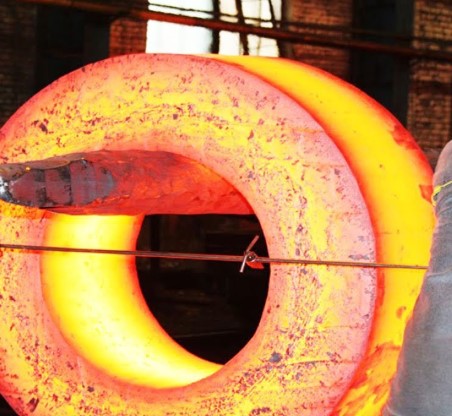
Cooling rate is critical in determining whether martensite forms and tempers fully. In large forgings, uneven cooling due to section thickness is the primary challenge.
When a forging's cross-section exceeds 300 mm, the cooling rate at the core may drop below 3°C/s. This rate lies in the mixed transformation zone of bainite and martensite, causing incomplete phase transformation. Large amounts of untransformed austenite may remain at the core, or coarse martensitic plates may form during subsequent cooling.
Real-world examples highlight the severity of this issue. Inspection of a nuclear power flange forging revealed only 3% martensite at the surface—within standard limits—but as much as 19% twinned martensite remained at the core due to insufficient cooling. Worryingly, conventional ultrasonic testing did not detect this anomaly, leaving the defect completely hidden inside the material.
The discrepancy arises from heat conduction behavior. The surface cools rapidly due to direct contact with the quenching medium, while heat at the core must traverse thick metal layers, slowing and destabilizing the cooling process. Traditional bulk quenching methods cannot resolve this conflict.
Modern alloy steels commonly contain elements like chromium and molybdenum to form carbides, enhancing strength and corrosion resistance. However, uneven distribution during smelting and solidification can create "segregation traps."
Cr, Mo, and similar elements tend to concentrate at grain boundaries, forming localized high-concentration zones. These areas have significantly higher hardenability than the base matrix, potentially generating hidden martensite even if the overall cooling rate is properly controlled. This hidden martensite consists of fine grains difficult to detect under optical microscopy yet exhibits high hardness.
An analysis of turbine rotor forgings illustrates this problem. Chromium segregation bands up to 50 µm thick were observed; even standard quenching produced hidden martensite within these bands. Local hardness variations reached HRC 8 units, creating stress concentration and fatigue crack risk during high-speed rotation.
Segregation originates in the ingot solidification process. Solute elements redistribute at the solid-liquid interface during cooling, forming dendritic segregation. Subsequent forging and heat treatment can mitigate but not entirely eliminate this compositional inhomogeneity.
Forging is not only a shaping process but also critical for refining internal microstructure. The forging ratio—the ratio of pre- to post-deformation cross-sectional area—directly determines whether cast structures can be sufficiently broken down.
Cast structures contain pronounced dendritic segregation with periodic compositional variations. Insufficient forging fails to fully crush these dendrites, leaving segregated bands as preferred martensite nucleation sites. During quenching, these zones exhibit different transformation behavior, forming unstable martensite.
Comparative trials on marine crankshaft forgings provide clear evidence. At a 1.5× forging ratio, 8% martensite remained between dendrites; increasing the ratio to 3× reduced residual martensite to 0.3%. This difference underscores the importance of adequate forging.
Forging ratio effects are hereditary: if cast defects are not eliminated during forging, later heat treatment cannot compensate, and the residual microstructural defects persist throughout the manufacturing process, ultimately affecting service performance.
In response to these causes, materials engineers have developed a range of innovative solutions, including controlled tempering, phase transformation interventions, and deformation-assisted treatments, forming a systematic approach to resolving martensite retention.
Traditional tempering uses uniform heating, resulting in nearly identical temperatures across a forging. For large forgings, this becomes problematic: the surface may reach tempering temperature while the core remains cooler, or the core reaches target temperature while the surface is over-tempered.
Smart gradient tempering uses electromagnetic induction for zoned heating. The skin effect concentrates heat at the surface, while the core remains cooler. By precisely controlling power and frequency, the core can be maintained 80–120°C hotter than the surface. This gradient ensures sufficient tempering time at the core, promoting decomposition of retained austenite into stable tempered martensite.
In a gear forging case study, martensite retention dropped from 7% to 0.5% using this method, achieving highly uniform microstructure. The technology includes dynamic soak time adjustment: for every 100 mm increase in thickness, tempering time is extended by 25 minutes. Additionally, nitrogen protection during 400°C isothermal tempering keeps diffusible hydrogen below 2 ppm, mitigating hydrogen embrittlement.
Isothermal quenching avoids martensite formation altogether. Traditional quenching cools below Ms (martensite start) temperature, producing martensite before tempering; isothermal quenching maintains the temperature 20–50°C above Ms, forcing bainitic transformation.
Bainite offers higher toughness and lower residual stress than martensite. At isothermal conditions, supercooled austenite transforms into lower bainite, preventing plate-like martensite formation.
In bearing ring forgings, 2-hour isothermal treatment at 280°C eliminated plate martensite, yielding uniform bainitic microstructure. Efficiency can be further enhanced with ultrasonic treatment: mechanical vibrations accelerate atom diffusion, promoting bainite nucleation. Experiments show ultrasonic assistance increases bainitic transformation by 40% and shortens transformation time by 35%, improving both quality and throughput.
This technique exploits plastic deformation to control martensite transformation thermodynamically and kinetically.
During post-forging residual heat in the austenite range, applying 0.5–1.2% microstrain introduces numerous dislocations without triggering dynamic recrystallization, stabilizing austenite. Stabilized austenite lowers martensite start temperature and reduces transformation driving force during cooling, suppressing martensite formation.
In high-speed rail axle forgings, roll straightening at 800°C increased retained austenite to 15%, reducing martensite formation by 72% during subsequent cooling, resulting in a more balanced microstructure. Nb microalloying pins grain boundaries, preventing coarsening and ensuring the microstrain effect persists through cooling.
In addition to process innovations, optimizing alloy composition and precise control of quenching media are crucial.
Adjusting alloying elements can widen the bainite formation window, favoring bainite over martensite. Raising Ni content from 0.8% to 1.5% delays pearlite transformation and extends bainite formation time. Adding 0.03% Ti fixes free nitrogen, preventing AlN precipitation, which would otherwise act as nucleation sites for undesired martensite.
For forgings larger than 500 mm, a single quenching medium cannot accommodate all cooling stages. Water–air–mist staged quenching provides controlled, sequential cooling.
Stage 1: Water quenching for 30 s to bypass pearlite nose temperature.
Stage 2: Air cooling allows partial bainite formation (~20%) as a buffer.
Stage 3: Mist cooling suppresses final martensite formation, reducing residual stresses.
This multi-stage approach implements a "fast–moderate–gentle" cooling rhythm, using the optimal method at each temperature range.
Modern heat treatment increasingly relies on numerical simulations. Coupled thermal, stress, and phase transformation models predict microstructure evolution, identifying high-risk zones for martensite retention. This enables targeted adjustment of cooling and tempering parameters before processing.
Detecting martensite retention is challenging. Conventional ultrasonic testing primarily identifies cracks or inclusions, insensitive to microstructural variations. Significant martensite at the core may remain undetected if no strong interface reflections exist.
Comprehensive evaluation requires multiple techniques:
- Metallography: Core sampling to quantify martensite content (destructive but direct).
- Hardness Testing: High hardness of martensite allows indirect mapping; HRC fluctuations above 5 indicate concern.
- X-ray Diffraction: Measures retained austenite content, reflecting martensite transformation completeness.
- Ultrasonic Backscatter: Differentiates microstructure via ultrasonic backscatter, promising nondestructive detection of inhomogeneities.
Martensite retention in large forgings is a complex issue involving heat transfer, phase transformations, mechanics, and materials science. Understanding its formation, uncontrolled cooling, alloy segregation, and inherited forging defects, allows targeted process interventions.
Innovations such as smart gradient tempering, isothermal quenching, and deformation-induced transformation, combined with optimized alloy design and precise quenching, provide a systematic solution. Recognizing the three-stage martensite transformation mechanism helps predict high-risk zones and optimize process windows.
In high-end sectors such as nuclear power, aerospace, and energy, strict quality standards make eliminating martensite retention both a technical challenge and a safety responsibility. With numerical simulation and advanced online detection, it is increasingly feasible to predict and control heat treatment processes accurately, fundamentally addressing the hidden hazards posed by retained martensite.