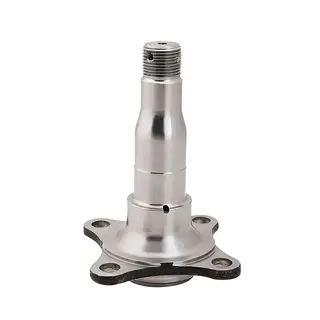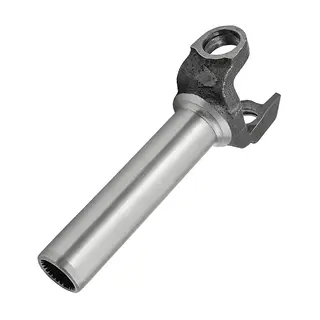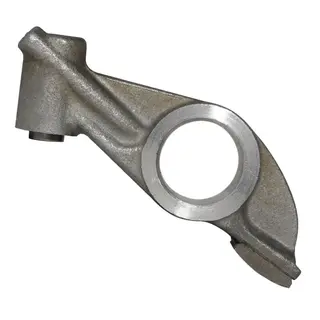
What is High Carbon Steel Forging
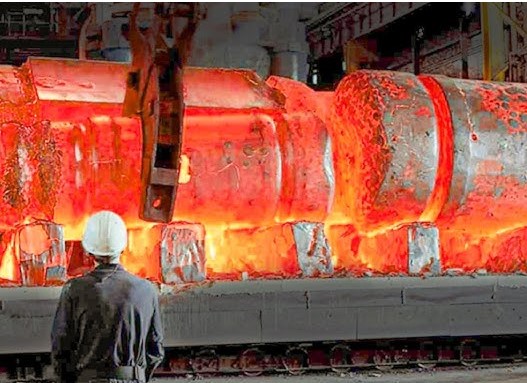
High carbon steel forging is a metalworking process that alters the shape of steel through heating and applying pressure. High carbon steel contains between 0.6% and 1.0% carbon, a proportion that allows the steel to achieve excellent hardness and wear resistance after heat treatment. During forging, the steel is heated to a high temperature and then subjected to plastic deformation through pressing or hammering, ultimately forming the required component shape.
Compared to ordinary casting or machining, forging can significantly improve the internal structure of steel. Through forging, porosity in the steel is eliminated, the grain structure becomes denser and more uniform, and the interatomic bonding force is stronger. These changes directly enhance the strength, toughness, and fatigue resistance of the components, making high carbon steel forgings core materials in heavy industry, automotive manufacturing, and machinery equipment.
Selecting the appropriate high carbon steel material is the first step for successful forging. Different steel grades vary significantly in carbon content, hardness, toughness, and machining difficulty, and must be matched to specific application scenarios.
1018 Steel falls into the category of low-carbon steel, with a lower carbon content, making it relatively easy to forge and weld. This steel has good ductility and toughness, but its hardness and wear resistance are relatively limited. It is suitable for general mechanical parts, low-stress components, and prototype products, performing well in situations where extremely high hardness is not required.
1060 Steel contains approximately 0.6% carbon, placing it in the medium-carbon steel range. It achieves a good balance between hardness and toughness and can be further optimized through heat treatment processes such as quenching and tempering. This steel is suitable for industrial parts that need to withstand certain loads and is commonly used for heavy-duty components.
1050 Steel is also classified as medium-carbon steel, with performance between low-carbon and high-carbon steel. It balances forgeability and hardness, suitable for components requiring both strength and toughness, with a wide range of applications.
1095 Steel is a representative high carbon steel, containing approximately 0.95% carbon. This steel has high hardness and strong wear resistance but relatively low toughness, and it requires stricter forging and heat treatment techniques. A notable disadvantage is its welding difficulty, but the knives, springs, and wear-resistant parts made from it exhibit excellent performance.
In addition to the basic grades, alloying elements are often added in practical applications to improve steel performance. Manganese can enhance hardenability and wear resistance, chromium improves corrosion resistance and structural stability, and vanadium helps refine grains. Sulfur and phosphorus are harmful impurities; excessive content reduces toughness and increases the risk of cracking, requiring strict control.
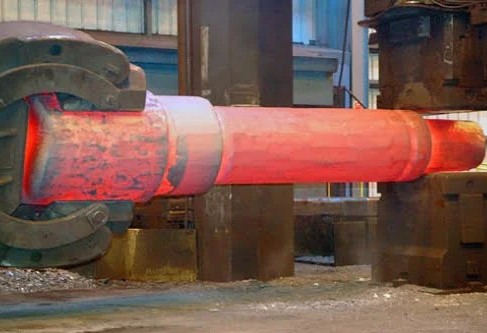
High carbon steel forging is generally divided into three key stages: heating, forming, and cooling. The parameters of each stage directly affect the quality of the final product.
Heating is the starting point of high carbon steel forging, aimed at giving the steel sufficient plasticity for subsequent forming. The heating temperature of high carbon steel is usually controlled between 1000°C and 1250°C, depending on the carbon content and alloy composition.
Temperature control requires balance. Excessively high temperatures cause grain coarsening and surface oxidation, reducing material performance; excessively low temperatures result in insufficient plasticity, increasing the risk of cracking and placing excessive load on equipment. The optimal forging temperature range of high carbon steel is narrower than that of medium- or low-carbon steel, generally between 950°C and 1150°C, imposing higher requirements on temperature control.
Uniform heating is also crucial in practical production. Inconsistent temperatures across different parts of the workpiece can lead to uneven deformation, internal stresses, or even cracks. Induction furnaces and controlled gas furnaces are commonly used to achieve uniform heating, as they can precisely control heating rates and temperature distribution.
During forming, mechanical forces are applied to the steel through pressing or hammering, causing plastic deformation and obtaining the target shape. Common forming methods include open-die forging, die forging, and edge forging.
Open-die forging is suitable for small-batch, customized production. It does not require dedicated molds, offers high design flexibility, but relies heavily on operator experience, has relatively low production efficiency, and higher costs.
Die forging uses pre-made molds to constrain metal flow, achieving high forming precision and good material utilization, suitable for large-scale production. The disadvantages include high mold manufacturing costs and prominent wear issues under high temperature and high pressure.
Press forging is a widely applied industrial technique, offering good production consistency, especially for large components. Although hammer forging has lower automation, it still has application value in high-end or special-performance forgings. Through repeated impacts, hammer forging can effectively refine grains and improve mechanical properties of components.
During forming, the degree of deformation and strain rate are two critical parameters. Proper deformation can destroy casting structures and refine grains; multiple-pass forging is more favorable than a single large deformation for achieving uniform structure. Strain rates are typically controlled between 0.01 and 10 s⁻¹; rates that are too high cause work hardening, while too low may result in incomplete recrystallization.
The purpose of the cooling stage is to allow the forged piece to achieve a stable structure, avoiding thermal stresses and cracks. High carbon steel is sensitive to cooling rates; rapid cooling can lead to concentrated internal stresses and increased brittleness.
In practical production, slow cooling methods such as air cooling, sand-layer cooling, or furnace annealing are commonly used. Post-forging heat treatment is also essential, including normalizing, annealing, quenching, and tempering. Properly designed heat treatment paths can eliminate internal stresses from forging, optimize grain structure, and achieve the best balance between hardness and toughness.
Although high carbon steel forging technology is relatively mature, practical production still faces multiple technical challenges.
High carbon steel has a narrow forging temperature window. Precise control of heating rate, forging temperature, and cooling path is essential for producing high-quality forgings. Temperature fluctuations directly affect material flow characteristics, microstructure evolution, and defect formation. Maintaining uniform temperature is especially difficult in parts with complex structures or varying thickness.
High temperature and high pressure accelerate mold wear. Mold materials need to have good high-temperature resistance and compressive strength. Reasonable mold design with proper draft angles and fillet radii improves metal flow. Preheating molds to 200°C–350°C can reduce thermal shock and extend mold life. Using lubricants such as graphite or molybdenum disulfide reduces friction, prevents sticking, and improves surface quality, but these measures also increase production costs.
The final performance of forgings highly depends on grain structure and carbide distribution. Unstable heating, cooling, or deformation can cause abnormal structures such as coarse grains or carbide segregation, reducing strength and wear resistance. Modern forging increasingly relies on real-time monitoring systems to track microstructure evolution, which requires combining traditional metallurgy knowledge with advanced computational simulation.
Traditional processes depend on craftsmen’s experience, leading to product quality fluctuations. Automated production improves consistency between batches but may sacrifice some microscopic performance advantages. Achieving a balance between automation and process expertise remains an ongoing industry challenge.
To overcome the poor formability of high carbon steel, the industry has developed several advanced techniques.
Isothermal Forging keeps the mold and workpiece at the same temperature during forming, significantly reducing deformation resistance, improving material flow, and is suitable for manufacturing complex precision components.
Precision Forging optimizes mold design and process parameters, producing near-final size forgings, reducing subsequent machining, and improving material utilization.
Controlled Atmosphere Forging heats and forms the steel in a protective atmosphere to prevent oxidation and decarburization, preserving surface quality.
Computer Simulation and Process Optimization use finite element analysis and other techniques to predict metal flow, temperature distribution, and microstructure evolution, helping engineers optimize process parameters before production and reduce trial-and-error costs.
The common goal of these technologies is to achieve efficient forming of complex structures while ensuring mechanical properties, reducing energy consumption, and minimizing environmental impact, aligning with sustainable manufacturing requirements.
Properly forged and heat-treated high carbon steel components play key roles across multiple industrial fields.
In heavy machinery manufacturing, high carbon steel forgings are used to produce high-stress shafts, gears, bearings, and couplings. Forging eliminates internal porosity and improves component reliability and lifespan under cyclic loads.
In the automotive industry, high carbon steel is widely used to manufacture springs, drive shafts, and engine components. These parts must operate stably under high torque and vibration for long periods, and the fiber-like grain structure produced by forging effectively enhances fatigue strength.
In the tools and die industry, knives, punches, and dies made from high carbon steels such as 1095 have excellent wear resistance and maintain stable performance under harsh conditions.
In energy and mining equipment, high carbon steel forgings are used to manufacture crusher hammers, mill liners, and other wear-prone parts, where wear resistance directly affects maintenance cycles and production efficiency.
High carbon steel forging is a metalworking process with strict technical requirements, involving material selection, temperature control, deformation optimization, and heat treatment. By precisely controlling heating between 1000°C and 1250°C, strain rates between 0.01 and 10 s⁻¹, and using proper cooling and heat treatment processes, high-quality forgings with fine, uniform grains and stable properties can be obtained.
Although challenges such as narrow temperature windows, rapid mold wear, and microstructure control exist, advanced techniques such as isothermal forging, precision forging, and computer simulation continue to improve process quality and product performance. Selecting appropriate steel grades, optimizing forging parameters, designing molds effectively, and performing scientific post-forging heat treatment are key to ensuring excellent mechanical performance and durability.
The ultimate goal of high carbon steel forging is to establish a comprehensive parameter system adaptable to different designs and applications, enabling manufacturers to produce high-quality forgings while reducing costs and environmental impact. Achieving this goal requires deep integration of metallurgy, materials science, automation, and computational technology, driving traditional forging processes toward intelligent and sustainable development.