A Complete Guide to Aluminum Alloy Precision Forging
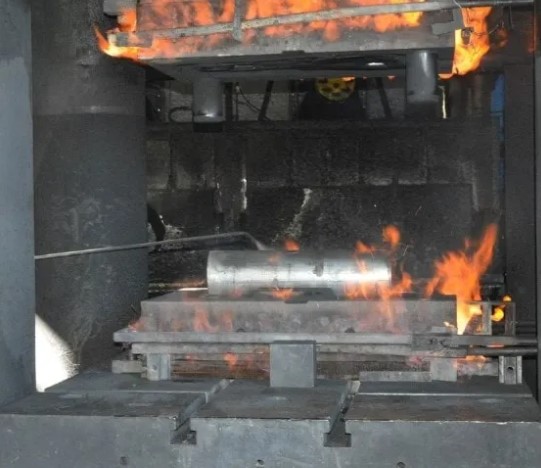
In modern manufacturing, precision forging technology has become a core driver of industrial upgrading. As an important branch of this technology, aluminum alloy precision forging demonstrates significant application potential in automotive, aerospace, electronics, and telecommunications industries due to its unique material advantages and process characteristics. This article provides a systematic overview of the basic concepts, main process types, technical advantages, and practical applications of aluminum alloy precision forging to help readers gain a comprehensive understanding of this advanced manufacturing technology.
Precision forging, also known as near-net-shape forging, refers to advanced forming technology that produces parts requiring little or no subsequent machining after forging. This technology represents an important development direction in modern manufacturing toward high efficiency, high precision, and energy conservation.
Aluminum alloy precision forging is specifically designed for precision forming of aluminum alloy materials. Aluminum alloys are ideal materials for precision forging due to their low density, high strength, good corrosion resistance, and excellent thermal and electrical conductivity. Through precision forging processes, aluminum alloy parts can achieve near-net-shape forming, meaning the forged geometry and dimensions closely approach final product specifications.
Precision forging plays a crucial role across the manufacturing industry. It is not only an essential process in traditional sectors such as automotive manufacturing, mining machinery, energy equipment, and construction engineering, but also a core technology in high-end manufacturing fields including aerospace and defense equipment. The adoption of precision forging for aluminum alloy components significantly reduces raw material and energy consumption, lowers machining steps and equipment investment, improves production efficiency and product quality, and reduces overall manufacturing costs, thereby enhancing product market competitiveness.
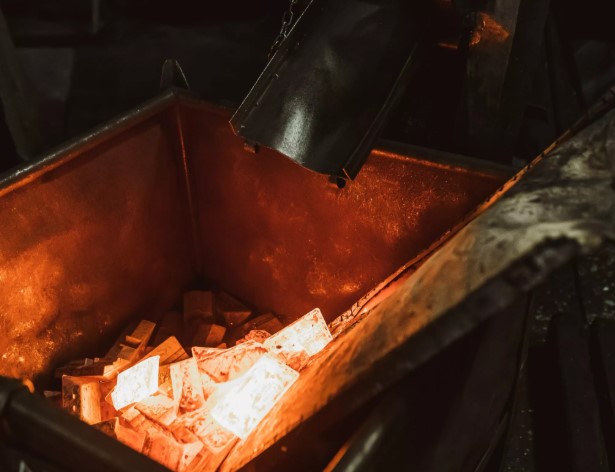
Based on forming temperature, aluminum alloy precision forging can be divided into four major categories: hot precision forging, cold precision forging, warm precision forging, and isothermal precision forging. Each process has unique technical characteristics and application ranges.
Hot precision forging refers to precision forging performed above the recrystallization temperature of metals. For aluminum alloys, typical hot forging temperatures generally range from 400°C to 500°C.
The main advantage of hot precision forging is the low deformation resistance and good plasticity of the material, which facilitates the forming of complex die-forged shapes. Under high-temperature conditions, aluminum alloy flowability improves significantly, allowing the material to fill complex mold cavities and making it suitable for manufacturing parts with intricate geometric features.
However, hot precision forging also has several technical limitations. Due to high processing temperatures, aluminum alloy surfaces are prone to strong oxidation, forming oxide scales that degrade surface quality and reduce dimensional accuracy. In addition, high-temperature environments impose stringent requirements on die materials, resulting in shorter die life. Heating and temperature control equipment are also required, increasing process complexity and production cost.
Cold precision forging is performed at room temperature and mainly includes cold heading and cold extrusion technologies.
Cold precision forging offers several significant advantages. First, since processing occurs at room temperature, part dimensions are easier to control, avoiding thermal deformation errors caused by high temperatures. Second, forged parts exhibit higher mechanical strength and superior surface quality, typically achieving surface roughness values between Ra0.4 and Ra1.6. Third, cold forging induces work hardening, increasing hardness and strength beyond that of the original material, which improves load-bearing capacity.
However, cold precision forging also faces technical challenges. At room temperature, aluminum alloys have relatively low plasticity and high deformation resistance, requiring large forming forces and highly rigid die equipment. For complex geometries, cold forging usually cannot complete forming in a single operation and often requires multiple processing stages with extremely demanding die design and manufacturing precision. Therefore, cold precision forging is more suitable for relatively simple and symmetric aluminum alloy parts such as standard components and connectors.
Warm precision forging is performed within a temperature range below recrystallization temperature but above room temperature. For aluminum alloys, warm forging temperatures are typically selected between 200°C and 350°C.
Warm precision forging combines the advantages of both cold and hot forging while avoiding many of their disadvantages. Compared with cold forging, warm forging significantly improves aluminum alloy plasticity and reduces deformation resistance, enabling the formation of more complex geometries and reducing forming steps. Compared with hot forging, the lower temperature reduces oxidation, allowing better surface quality and higher dimensional accuracy, often eliminating or minimizing subsequent machining.
Temperature control is the key factor in warm precision forging. The selected temperature must ensure good metal plasticity while preventing severe oxidation. This process is particularly suitable for manufacturing moderately complex aluminum alloy parts requiring high precision, such as automotive chassis components and engine parts.
Isothermal precision forging refers to a forming process in which the billet and die are maintained at a constant temperature throughout forming. Originally developed for difficult-to-deform materials such as titanium and magnesium alloys, this technology has been increasingly applied in aluminum alloy precision forging.
The primary advantage of isothermal forging is temperature stability. By precisely controlling billet heating temperature within a specific range, the forming process maintains constant temperature conditions, significantly reducing die deformation and wear caused by thermal fluctuations. For aluminum alloys, which are highly sensitive to forming temperature, isothermal forging greatly improves formability and produces forged parts with uniform microstructure and excellent mechanical performance.
Isothermal forging requires substantial equipment investment and strict process control and is mainly used in high-end aerospace aluminum alloy components and complex thin-walled structural parts.
As industrial products demand higher part complexity and precision, single forging processes are often insufficient. Composite precision forging technology has emerged by integrating multiple forging methods or combining forging with other forming processes to expand processing capability and improve product quality.
Multi-action forging, also known as closed-die forging, is one of the most advanced precision forging technologies. This technique uses one punch to perform unidirectional extrusion inside a closed cavity or two punches for bidirectional compression, allowing metal to form near-net-shape parts without flash formation.
The core value of closed-die forging lies in extremely high material utilization. Since a closed die structure is used, metal flows under high pressure to fill the cavity without producing flash, achieving material utilization rates exceeding 90%. Moreover, complex profiles can be formed in a single operation, achieving large deformation and eliminating most subsequent machining processes, thus significantly reducing manufacturing costs.
Closed-die forging is especially suitable for producing complex, high-precision aluminum alloy parts such as complicated housings and irregular connectors, and is widely used in aerospace and automotive industries.
The key feature of flow-distribution forging is the design of material diversion channels in the die or billet forming region. During forming, when the cavity is filled with metal, part of the material flows into diversion channels, improving filling performance in difficult-to-form regions.
The main advantages of flow-distribution forging include simplified die structure without the need for complex closed devices, excellent forming results for gear-type or ribbed components, high dimensional accuracy that reduces or eliminates secondary machining, and improved die stress conditions, extending die service life.
This technology is widely used in precision forming of aluminum alloy gears, spline shafts, and ribbed plate components.
Composite forming refers to the integration of multiple forging methods or the combination of forging with other material forming technologies such as casting, welding, and powder metallurgy.
Traditional processes face significant limitations in material processing and part geometry. Composite technology adopts a complementary strategy that combines the strengths of multiple processes while expanding the range of machinable products. For example, performing hot or warm forging for preforming followed by cold forging finishing can achieve high precision and excellent surface quality while maintaining good formability. Combining forging and welding techniques can also be used to manufacture large-scale complex aluminum alloy structural components.
Aluminum alloy precision forging technology demonstrates significant advantages in several aspects:
- Cost Advantage: Precision forging enables near-net-shape forming, significantly reducing raw material consumption and subsequent machining volume. Compared with conventional machining, precision forging can save 30%–50% of material and reduce processing costs by 40%–60%.
- Efficiency Advantage: Forging is a bulk forming process that allows complex shapes to be formed in a single operation with fast production cycles. Automated precision forging lines can achieve production rates of dozens of pieces per minute or higher.
- Environmental and Energy Benefits: Precision forging reduces machining operations and cutting fluid usage while lowering energy consumption and waste emissions. In addition, aluminum alloys are 100% recyclable, aligning with green manufacturing principles.
- Accuracy Advantage: Modern precision forging technology can control dimensional tolerances within IT8–IT11 and surface roughness between Ra0.8 and Ra3.2, meeting the precision requirements of most industrial parts, with some processes achieving even higher precision levels.
- Performance Advantage: The forging process improves the internal microstructure of aluminum alloys by refining grains and eliminating casting defects, resulting in higher strength, toughness, and fatigue life compared to cast or machined parts.
Based on the above technical advantages, aluminum alloy precision forging is widely used across multiple industrial sectors:
- Automotive Industry: Critical components such as engine pistons, connecting rods, wheels, steering knuckles, and control arms are commonly manufactured using aluminum alloy precision forging to achieve vehicle lightweighting and improve fuel efficiency and driving performance.
- Aerospace Industry: High-performance aerospace aluminum alloy components such as aircraft structural parts, engine components, and landing gear parts are typically produced using advanced processes such as isothermal forging.
- Electronics and Communication: Metal casings and heat sinks for consumer electronics products such as smartphones and laptops are increasingly manufactured using cold or warm forging processes to achieve lightweight and high-strength structures.
- Rail Transit: Structural and connecting components for high-speed trains and metro vehicles use aluminum alloy precision forging to meet lightweight and high-strength requirements.
- New Energy Sector: Emerging applications such as electric vehicle battery housings, motor casings, and charging station components provide vast market opportunities for aluminum alloy precision forging.
As an important component of advanced manufacturing technology, aluminum alloy precision forging continues to evolve alongside industrial progress. From traditional hot and cold forging to modern warm and isothermal forging, and from single-process forming to composite forming technologies, the technical system is becoming increasingly sophisticated and application fields are expanding.
Facing the demand for manufacturing transformation and upgrading, aluminum alloy precision forging will play an increasingly important role in improving material utilization, reducing energy consumption, and enhancing product performance. For manufacturing enterprises, a deep understanding of this technology and rational selection of process routes will help improve product quality and market competitiveness while achieving sustainable development.