Complete Guide to Closed Die Forging
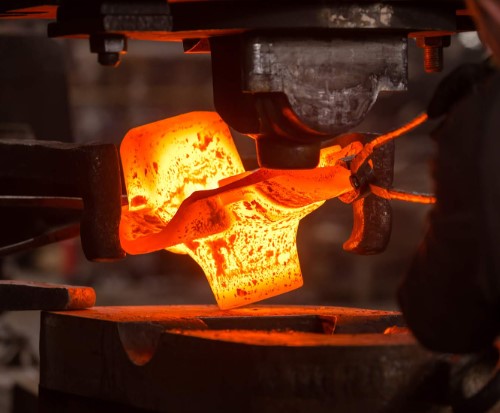
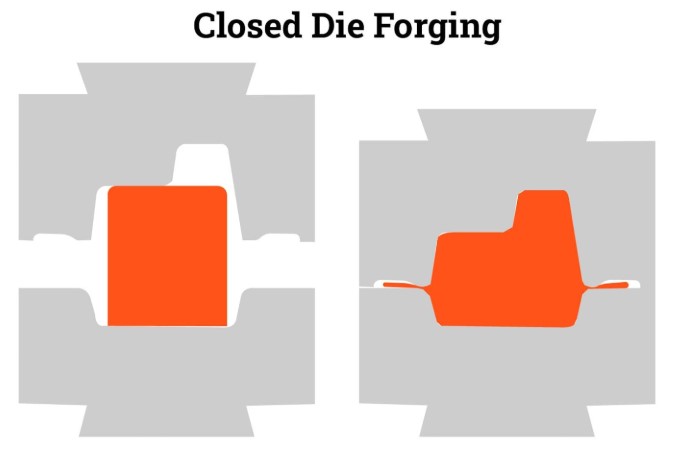
Closed die forging, also referred to as impression die forging within the industry, is a precise and highly controlled metal forming process. In this method, a heated metal blank is placed into a fully enclosed die cavity, where it is subjected to high pressures to achieve a final shape that closely conforms to the mold's geometry. Unlike open die forging, which allows metal to deform freely, closed die forging employs dies with complete cavity profiles. This ensures the metal flows under pressure to entirely fill the cavity, producing parts with high dimensional accuracy and excellent mechanical properties. The core principle of closed die forging lies in the “closed” nature of the die: the upper and lower halves of the die combine to form a fully enclosed cavity. When a heated blank is pressed within this cavity, the metal behaves almost like a fluid, filling every contour and detail. The complete confinement of the material ensures repeatable precision, uniformity, and reliability in the finished components.
Understanding the operational steps of closed die forging is critical for appreciating its capabilities. The process is highly structured, with each stage influencing the quality, performance, and efficiency of the final product.
Closed die forging begins with the careful selection of metal blanks. Commonly used materials include carbon steel, alloy steel, stainless steel, aluminum alloys, copper alloys, and titanium alloys. The chosen blank must be heated to the appropriate forging temperature to achieve sufficient plasticity for deformation without cracking. For most steel alloys, this temperature typically ranges from 1100°C to 1250°C.
The heating process requires precise control. If the temperature is too low, the metal's resistance to deformation increases, making it difficult to fill the die and risking die or part damage. Conversely, overheating can compromise the material's microstructure, reducing toughness and strength. Modern forging facilities typically employ induction furnaces or gas-fired furnaces with automated temperature monitoring to ensure uniform heating and accuracy.
Dies are the heart of closed die forging, usually fabricated from high-grade tool steels to endure extreme mechanical and thermal stress. Before forging, dies are preheated to reduce thermal shock and prolong their service life.
Proper lubrication is equally essential. Lubricants minimize friction between the die and metal, ensuring smoother flow and complete cavity filling. Additionally, they provide thermal insulation to protect die surfaces from rapid temperature fluctuations.
The forming stage is the central step of the process. The heated blank is quickly transferred to the press and positioned in the lower die. The upper die is then driven down by the press with immense force. Closed die forging typically requires pressures ranging from several hundred tons to tens of thousands of tons, depending on the part's size and complexity.
Under such high pressure, the metal is forced to flow and fill the die cavity completely. Excess material is expelled through designated flash grooves, forming a peripheral “flash.” The flash serves multiple purposes: it ensures full cavity filling, cools quickly to provide counterpressure, and helps metal flow into fine die features.
For complex geometries, multiple forging steps are often required:
- Preforming: Roughly distributes the metal into a shape similar to the final part.
- Intermediate Forging: Gradually shapes the part into near-final form.
- Finishing: Achieves precise contours and dimensions in precision dies.
This multi-step approach controls material flow, reduces the likelihood of defects, and ensures uniform density.
After forging, the flash must be removed, typically through trimming or machining processes. The forged part may then undergo heat treatment—such as normalizing, quenching, or tempering—to achieve desired mechanical properties like hardness, toughness, and strength.
Due to the high dimensional accuracy of closed die forging, many parts are produced in near-net shape, requiring minimal machining. This significantly reduces manufacturing time and cost, making closed die forging highly efficient for high-volume production.
Closed die forging requires high-tonnage presses capable of generating sufficient force for shaping. The two main types of industrial forging presses are mechanical and hydraulic presses.
Mechanical presses convert rotational motion into linear motion via crank-linkage mechanisms. They are characterized by fixed stroke lengths, high operating speeds, and the ability to deliver multiple strokes per minute. Mechanical presses are ideal for medium-to-small parts in high-volume production, such as automotive components, due to their efficiency and repeatability.
Hydraulic presses use pressurized fluid to drive the ram. Although slower than mechanical presses, they offer stable, controllable force and can maintain maximum pressure throughout the stroke. Hydraulic presses are particularly suited for large or complex parts, as the extended dwell time allows metal to fully fill intricate die cavities.
Press tonnage selection depends on part projection area, material flow stress, complexity, and required deformation. Small precision parts may require only a few hundred tons, whereas large aerospace structural components may demand tens of thousands of tons of press capacity.
- Superior Mechanical Properties: Closed die forging significantly enhances a material's mechanical properties. During forging, the internal grain structure of the metal is refined, elongated, and aligned along the part's contours, forming continuous flow lines. This optimized grain structure provides excellent strength, toughness, and fatigue resistance. Unlike casting, which may contain porosity or shrinkage defects, closed die forging produces dense, homogeneous parts suitable for high-stress and safety-critical applications, including automotive chassis components, aerospace engine parts, and heavy machinery.
- High Precision and Near-Net Shape: Closed die forging achieves tight dimensional tolerances, often within ±0.5 mm. This near-net-shape capability reduces the need for post-machining, cuts material waste, and shortens production time. For high-volume production, this translates into significant cost savings.
- Excellent Surface Finish: Parts forged in closed dies exhibit smooth, well-defined surfaces due to complete cavity confinement. High-quality surface finish not only improves part aesthetics but also supports subsequent surface treatments, such as anodizing, plating, or coating. For aluminum and other light alloys, the dense forged surface is crucial for achieving superior finishing results.
- High Material Utilization: Closed die forging minimizes material waste, with the only scrap being the flash, which can be recycled. Material utilization is typically 20–40% higher than casting or machining, making it particularly advantageous for expensive alloys like titanium or nickel-based superalloys.
- Consistent Production: Once die design and process parameters are established, closed die forging delivers highly consistent quality across large production volumes. This repeatability is vital for industries requiring reliable performance in every component.
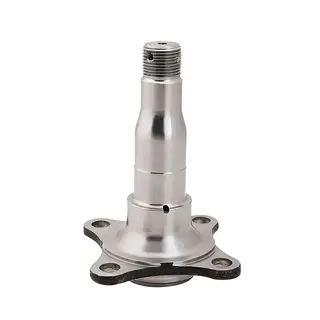
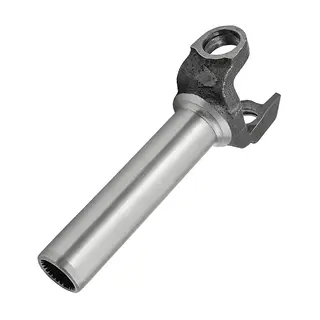
- Automotive Industry: Closed die forging is essential for manufacturing critical automotive components such as crankshafts, connecting rods, gear blanks, half-shafts, and steering knuckles. Forged parts offer superior fatigue performance under vibration, impact, and cyclic loading. With the trend toward lightweight vehicles, aluminum alloy forgings are increasingly used in chassis and suspension systems.
- Aerospace Industry: The aerospace sector demands extremely high-performance parts. Landing gear components, turbine disks, blades, and structural connectors are commonly produced through closed die forging. Precision forging of titanium and high-temperature alloys reduces material waste and machining costs, providing near-net-shape parts suitable for critical aerospace applications.
- Energy and Heavy Machinery: Closed die forging produces components for oil and gas equipment, power generation machinery, and mining tools. High-strength, wear-resistant parts such as drill bits, valve bodies, flanges, and bearing housings benefit from the process's ability to deliver durability and reliability under extreme conditions.
- Rail and Transportation Equipment: Rail vehicle axles, couplers, braking system components, and lifting hardware are often forged. These safety-critical components rely on the high reliability and long service life achievable with closed die forging.
- General Industrial and Agricultural Machinery: Hydraulic system components, fasteners, tools, and wear-resistant parts for agricultural machinery are efficiently produced using closed die forging, particularly in high-volume applications.
- Closed vs. Open Die Forging: Open die forging allows free metal flow and is suitable for large parts or low-volume production. Closed die forging, using dedicated dies, restricts material flow and is ideal for medium-to-small parts requiring high precision and surface quality. The choice depends on part size, batch volume, and tolerance requirements.
- Closed Die Forging vs. Casting: Casting is ideal for highly complex geometries, particularly hollow components, but may contain internal porosity or shrinkage defects. Closed die forging produces dense, continuous-grain structures with superior strength, toughness, and fatigue life. For high-stress applications, forging is more reliable, although casting remains advantageous for intricate or thin-walled components.
- Closed Die Forging vs. Machining: Machining achieves shape precision by removing material, disrupting the metal's grain structure and reducing material utilization. Closed die forging retains optimized grain flow, improves strength, and reduces waste, making it more cost-effective for large-scale production. Modern manufacturing often combines forging with minimal machining to achieve final tolerances efficiently.
- Aluminum Alloys: Lightweight, strong, corrosion-resistant; requires controlled deformation and temperature to avoid cracking; often heat-treated for hardness.
- Carbon and Alloy Steel: Common forging materials with a balance of strength and toughness; alloying elements enhance strength, wear, and corrosion resistance.
- Stainless Steel: High corrosion resistance; requires higher pressures and temperatures due to stronger deformation resistance.
- Copper Alloys: Excellent conductivity and corrosion resistance; suitable for valves, pump bodies, and electrical components.
- Titanium Alloys: High strength-to-weight ratio, excellent temperature resistance; requires protective atmosphere and careful die maintenance; ideal for aerospace applications.
Closed die forging involves significant initial die investment (often tens of thousands of dollars) and long lead times, making it less suitable for small production runs. However, in large-volume production, material savings, reduced machining, and high efficiency result in lower per-part costs. For high-strength and precision applications, the total lifecycle cost of closed die forging often undercuts casting plus machining or full machining approaches.
Key criteria include:
- Technical Capability: Ability to design and manufacture dies, develop forging processes, and control quality.
- Equipment: Adequate press tonnage, heating systems, heat treatment, and inspection facilities.
- Industry Experience: Proven track record in relevant applications and knowledge of industry standards.
- Quality Systems: ISO9001, IATF16949 (automotive), AS9100 (aerospace) certifications.
- Delivery Capability: Sufficient capacity and reasonable lead times.
Closed die forging is a mature and advanced metal forming technology capable of producing parts with excellent mechanical properties, tight tolerances, and high surface quality. Its advantages make it indispensable across automotive, aerospace, energy, and transportation sectors.
Although high die costs and volume requirements limit its suitability for small batches, the process's benefits, enhanced performance, material savings, and simplified machining, make it the preferred choice for high-volume, high-quality metal components. Advances in precision forging, isothermal forging, and digital simulation continue to expand its applications, ensuring closed die forging remains a cornerstone of modern manufacturing.
For engineers and procurement professionals, understanding closed die forging allows for early consideration of forging in the design phase, optimizing performance, cost, and reliability. For high-strength, high-reliability, large-volume parts, closed die forging is a compelling and cost-effective solution.