What is Upset Forging Technology
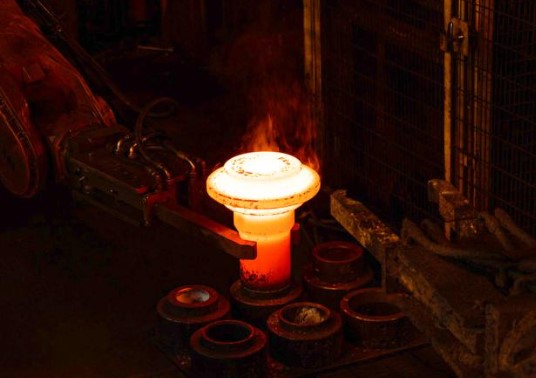
Upset forging, also referred to in the industry as heading or upsetting, is a precision metal-forming process used to increase the cross-sectional area of a metal workpiece by compressing its length. In simple terms, a heated metal rod is compressed from one or both ends, causing it to widen and shorten, achieving the desired shape and dimensions. This process is particularly effective for parts whose length is significantly greater than their width, such as shafts, bolts, flanges, and connecting rods.
Unlike conventional forging methods, upset forging allows for precise control over deformation in specific regions rather than uniformly shaping the entire workpiece. This precision makes it the preferred method for producing high-stress, high-durability components that require both strength and consistency.
Although upset forging may seem complex, it follows a standardized workflow. From raw material preparation to the final finished component, the process involves precise control of temperature, pressure, and the degree of deformation to ensure that the final product meets strict design specifications. The following sections detail each stage of the process:
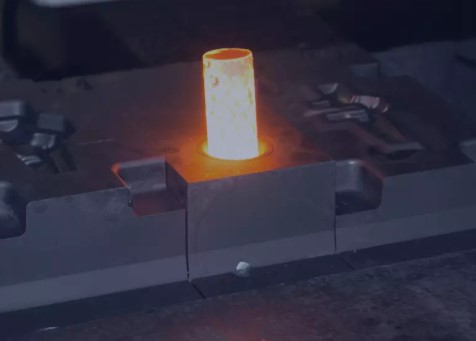
The first step in upset forging is to prepare the metal billet, which is typically rod stock or round steel. The billet is then heated to a controlled temperature, generally ranging from 1050°C to 1250°C, depending on the type of metal being used.
Heating the metal serves a critical function. At elevated temperatures, metals become more ductile and easier to shape, similar to working with soft clay or dough. However, the temperature must be carefully controlled. If the metal becomes too soft, it may lose structural integrity and strength, making it prone to cracking or deformation beyond intended limits. Conversely, if the temperature is too low, the metal will resist shaping, increasing the risk of defects. Therefore, finding the optimal balance between softness and strength is essential to ensure successful forging.
Once the metal reaches the desired temperature, it is securely mounted in forging equipment. The primary types of presses used are:
Mechanical Presses: These operate at high speeds, making them suitable for large-volume production. They provide efficient, rapid forming but may have slightly less precise pressure control.
Hydraulic Presses: Slower than mechanical presses but offer superior precision, hydraulic presses are ideal for complex shapes or specialized materials.
After securing the billet, the press applies substantial pressure to one end of the metal. This pressure forces the metal to expand radially while shortening longitudinally. This controlled deformation increases the diameter of the workpiece and achieves the desired geometric dimensions. The process is highly repeatable, ensuring consistency across multiple parts.
Dies are essential in determining the final shape of the forged component. This step, often called die forging, involves compressing the metal within a precisely shaped die cavity. Dies are generally made of high-strength steel alloys capable of withstanding the high pressures and temperatures associated with the forging process.
Modern die designs are highly sophisticated, often employing computer simulations to predict metal flow and cooling patterns. This ensures that the final component adheres precisely to dimensional tolerances and design specifications. Regular die maintenance is crucial; any wear or damage can lead to dimensional inaccuracies or defects in the forged components.
After forging, the component typically undergoes heat treatment processes such as normalizing, quenching, and tempering. These treatments further enhance the strength, toughness, and fatigue resistance of the metal.
Finally, CNC (Computer Numerical Control) machining ensures precise dimensions, smooth surface finishes, and accurate geometrical features. The combination of forging, heat treatment, and precision machining results in parts with excellent consistency, mechanical performance, and reliability.
- Improved Strength and Durability: Upset forging optimizes the internal grain structure of metals. During deformation, grains realign along the direction of applied force, creating a favorable grain flow that enhances wear resistance and fatigue strength. Parts produced using upset forging are capable of withstanding heavy loads and repeated stress, making them ideal for high-stress applications.
- High Material Efficiency and Cost Reduction: Unlike cutting or machining, upset forging deforms material instead of removing it, minimizing waste. High material utilization translates to lower raw material costs. Furthermore, the rapid forming process allows for higher production rates, reducing labor and operational costs.
- Dimensional Accuracy and Consistency: Controlled deformation ensures that each part meets tight dimensional tolerances. High repeatability guarantees consistent component performance, a crucial factor in precision industrial applications such as automotive engines and aerospace assemblies.
- Versatility Across Industries: Upset forging can accommodate small fasteners as well as large structural components. Its adaptability makes it suitable for automotive, aerospace, construction, heavy machinery, energy, and agricultural industries.
- Superior Metallurgical Properties: Controlled deformation and subsequent heat treatment improve grain structure, increasing part reliability and fatigue resistance. Upset-forged components have longer service lives and lower risk of failure under cyclic loads.
- High Customizability: Parts can be tailored for specific shapes, dimensions, and mechanical properties, addressing unique industrial requirements.
- Sustainability and Energy Efficiency: Upset forging consumes relatively low energy compared to other metal-forming techniques. High material utilization reduces scrap generation and minimizes environmental impact, supporting sustainable manufacturing practices.
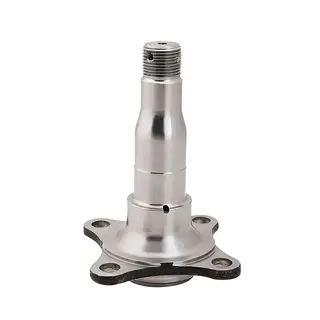
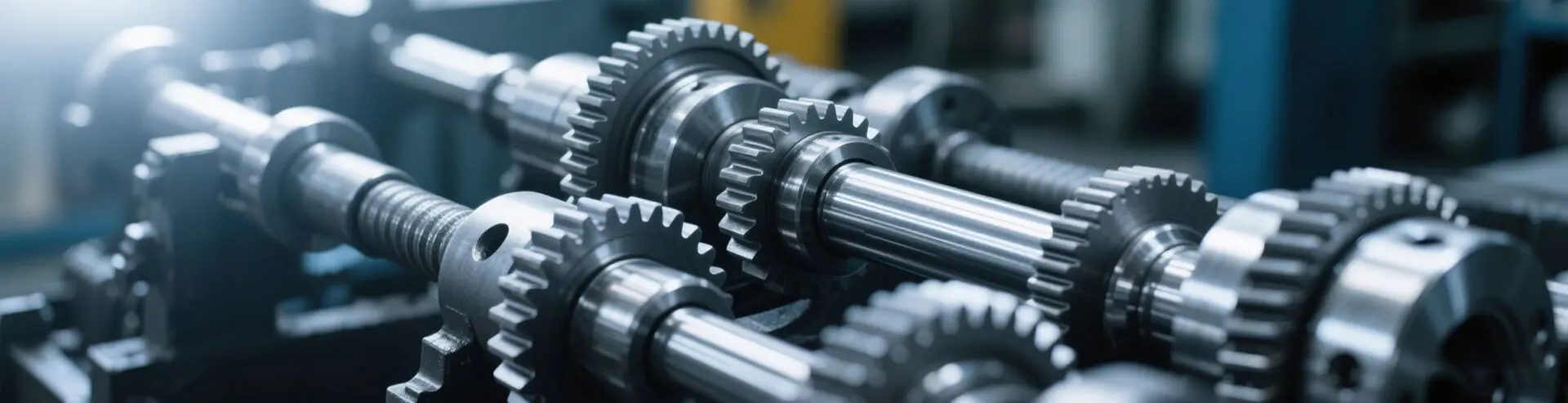
- Automotive Industry: Upset forging is widely used in the production of shafts, bolts, large screws, gears, and engine components. These parts are critical to vehicle safety and performance, requiring high strength and precision. The forging process ensures reliability under harsh operational conditions.
- Aerospace Industry: Aerospace components must endure extreme stresses and temperature variations. Upset forging produces critical fasteners and structural parts, such as aircraft engine components and landing gear elements. Component reliability directly impacts flight safety.
- Construction and Mining: Bolts, structural connectors, and specialized tools forged through upset forging exhibit exceptional durability, making them suitable for heavy-duty environments with high wear and load requirements.
- Energy and Heavy Machinery: Power generation equipment, oil drilling platforms, and heavy construction machinery rely on upset-forged shafts, flanges, and connecting rods to ensure mechanical stability and long-term operational reliability.
- Agricultural Machinery: Tractors, harvesters, and other agricultural equipment require robust components. Upset forging provides parts that can withstand harsh working conditions and repeated stress.
- Bolts and Fasteners: High-strength bolts, nuts, and specialized fasteners
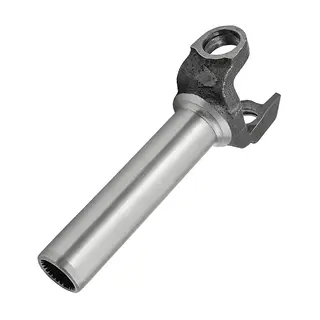
- Shafts: Power transmission shafts
- Flanges: Pipe and equipment connectors
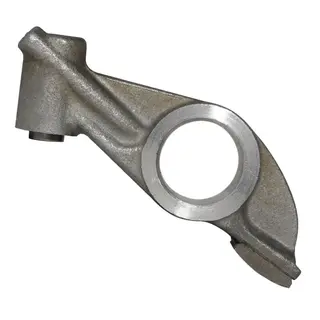
- Connecting Rods: Engine and mechanical linkages
- Rod-End Assemblies: Structural connection parts
- Axles: Load-bearing components for vehicles and machinery
These parts benefit from enhanced grain flow and fatigue resistance, offering superior durability compared to standard machined components.
While both are metal-forming processes, upset forging and cold heading differ significantly:
Performed at high temperatures (1050°C–1250°C)
Improves grain flow and mechanical properties
Suitable for large, heavy-duty parts
Produces stronger, more reliable components
Performed at room temperature
Mainly used for small fasteners
Fast and efficient for mass production
Cost-effective for small-volume, high-speed production
In general, upset forging is selected for high-strength, critical components, while cold heading is ideal for large-scale production of small parts.
Upset forging can be applied to a wide range of metals:
- Medium Carbon Steel (1045/C45): Cost-effective choice for shafts and general structural parts
- High-Strength Alloy Steel (4140/42CrMo): Superior fatigue resistance for high-stress applications
- Alloy Structural Steel (40Cr, 35CrMo): Stable performance with excellent hardenability
- Stainless Steel (304, 316, 410): Corrosion-resistant parts for marine and specialized environments
- Special Warm-Forging Steels: Optimized for precise deformation control
Material selection depends on application requirements, mechanical performance, and subsequent heat treatment processes.
Upset forging is the optimal manufacturing choice when:
- Cross-sectional strength must be increased
- High fatigue resistance is required
- Material efficiency is a priority
- Dimensional consistency is critical
- Reliable batch repeatability is needed
- Manufacturing key structural or power-transmission components
To ensure consistent part quality, modern manufacturers implement the following measures:
- Temperature Monitoring: Ensures optimal plasticity during heating and forging
- Pressure Control: Guarantees correct deformation levels
- Die Maintenance: Prevents dimensional deviation due to wear
- Heat Treatment Monitoring: Ensures strength and toughness meet standards
- Dimensional Inspection: CNC and precision measurement for accuracy and surface quality
Upset forging is a mature and efficient metal-forming technology that transforms billets into high-strength, high-precision components through controlled heating and compression. Its versatility makes it indispensable across industries such as automotive, aerospace, construction, energy, and heavy machinery.
Compared to other manufacturing methods, upset forging offers high material utilization, low production costs, and superior mechanical performance. Whether producing heavy-duty structural components or precision power-transmission parts, upset forging provides reliable and consistent solutions. For companies aiming to manufacture high-quality metal parts, understanding the principles and advantages of upset forging is crucial for making informed production decisions and enhancing market competitiveness.