Types and Applications of Steel Forgings
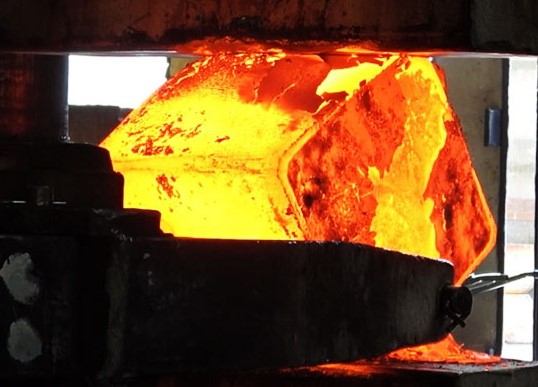
In modern industrial systems, steel forgings are among the most critical basic components, and their performance directly affects the safety, reliability, and service life of equipment. Formed through plastic deformation, steel forgings can significantly improve the internal microstructure of metals, enabling materials to achieve higher strength, toughness, and fatigue resistance. As a result, they are widely used in fields with extremely high requirements for load-bearing capacity and reliability. With the continuous development of industrial technology, the types of forgings, material systems, and forming processes have evolved steadily, gradually forming a comprehensive application framework that spans multiple industries and operating conditions. Understanding the types of steel forgings and their application characteristics is an essential foundation for gaining deeper insight into the core capabilities of modern manufacturing.
Forgings are not a single, uniform category. Based on different processing methods and application scenarios, they can be divided into various types. Each type has its own unique characteristics and purposes, meeting the needs of different industrial sectors. Below, we take a closer look at the classification of forgings and explore how they play key roles across industries.
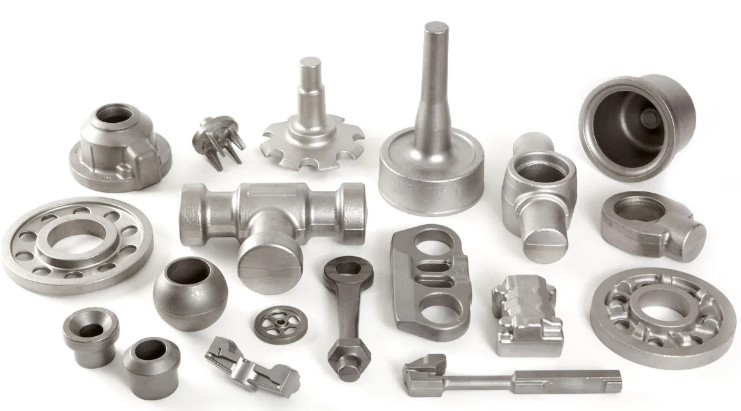
According to the temperature at which forging is performed, forgings can be classified into cold forging, warm forging, and hot forging.
- Cold Forging: Cold forging is carried out at room temperature and does not require heating the metal billet, which helps save energy. Its main advantages are high dimensional accuracy and excellent surface quality. However, cold forging places high demands on the plasticity of the metal, as deformation at room temperature is relatively difficult. Therefore, it is mainly used for small, precision components, such as gears for watches and other fine mechanical parts.
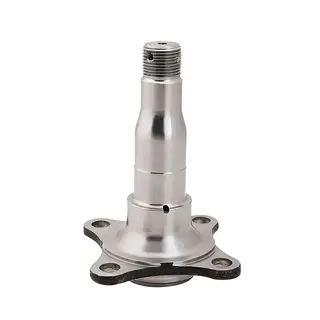
- Warm Forging: Warm forging is performed at temperatures between room temperature and the metal’s recrystallization temperature. It combines some of the advantages of both cold forging and hot forging. Warm forging can reduce deformation resistance to a certain extent while still maintaining relatively good dimensional accuracy. It is suitable for producing forgings with more complex shapes and can reduce subsequent machining operations. For example, certain automotive components, such as steering knuckles, are often manufactured using warm forging.
- Hot Forging: Hot forging is carried out at temperatures above the recrystallization temperature of the metal billet. At such temperatures, the metal exhibits excellent plasticity and can be deformed easily. Hot forging is capable of producing large-scale and complex-shaped forgings, such as large marine crankshafts and generator main shafts. One drawback of hot forging is that the dimensional accuracy of the forged parts is relatively lower, and additional machining is usually required to achieve the final dimensions.
Different industrial sectors impose different requirements on forgings, leading to further classification based on application fields.
- Aerospace Forgings: The aerospace industry places extremely high demands on forgings. These components are mainly made from materials such as titanium alloys and nickel-based superalloys. Typical examples include turbine disks for aircraft engines and landing gear cylinders. Such components must withstand enormous loads and extreme temperature conditions. To improve material utilization, multi-directional die forging processes are often adopted. For instance, the wing spar forging of the Boeing 787 is produced using integral forming technology, which not only reduces structural weight but also enables the component to withstand significant aerodynamic loads.
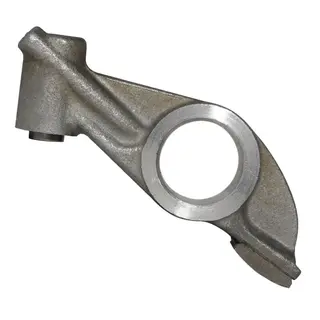
- Automotive Forgings: Automotive forgings are primarily used in engine components and key transmission parts. Engine crankshafts manufactured by precision die forging can achieve very high dimensional accuracy, ensuring engine performance and service life. Connecting rod forgings often utilize non-quenched and tempered steel technology, reducing machining energy consumption. With the rapid development of new energy vehicles, connecting forgings used in integrated die-cast chassis structures are also continuously pushing manufacturing limits.
- Energy Equipment Forgings: In the energy equipment sector, nuclear power forgings are particularly important. They are commonly made from materials such as 18-8 austenitic stainless steel to form critical safety barriers. For example, the pressure vessel shell flange forgings used in nuclear power plants are extremely heavy and require multiple heat treatment cycles to eliminate residual stress and ensure long-term performance in service. In hydropower applications, large turbine shafts are produced using special forging processes to enhance impact toughness at the core.
- Mechanical Manufacturing Forgings: The mechanical manufacturing industry requires a wide variety of forgings. Key components of heavy machinery, such as excavators and cranes—including buckets and booms—rely on forgings to provide sufficient strength and durability. These forgings are typically produced through open-die forging or die forging processes to meet diverse shape and size requirements.
- Open-Die Forging: Open-die forging is a highly flexible forging process that does not rely on dies. Instead, metal billets are deformed through hammering or pressing. Its main advantage lies in the ability to produce large forgings, such as ultra-large marine crankshafts. Through repeated upsetting and drawing cycles, grain refinement can be achieved, thereby improving the overall performance of the forging.
- Die Forging: Die forging uses dedicated dies to shape the metal billet. By means of enclosed die cavities, near-net-shape forming can be achieved, significantly reducing subsequent machining requirements. For example, automotive steering knuckles can be formed in a single die-forging operation, greatly improving production efficiency. Die forging offers high precision and is suitable for producing complex-shaped forgings with strict dimensional tolerances.
- Isothermal Forging: Isothermal forging is a specialized forging process in which the die temperature is precisely controlled to maintain a relatively stable temperature throughout the forging operation. This approach improves forging quality and reduces defects. For instance, aerospace titanium alloy blade forgings produced through isothermal forging can achieve excellent dimensional accuracy and surface quality.
Multi-directional die forging is an advanced forging technique in which multiple independent actuators apply coordinated pressure. This makes it possible to manufacture forgings with complex internal cavity structures. Rocket engine nozzle forgings, for example, can be integrally formed using this process, significantly enhancing component performance and reliability.
Radial Forging: Radial forging is a process in which metal deformation is achieved through high-frequency, pulsating impacts. This process produces well-aligned metal flow lines, improving resistance to stress corrosion. Titanium alloy bars produced by radial forging can achieve very high length-to-diameter ratios, making them suitable for manufacturing high-strength components.
Forgings are widely used across virtually all industrial sectors, and their importance is self-evident. From high-precision aerospace components to critical automotive engine parts and core energy equipment components, forgings provide a solid foundation for modern industrial development through their outstanding performance and reliability. The following examples illustrate the practical applications of forgings in different fields and further highlight their indispensable role in modern industry.
In the aerospace field, forgings are extensively used. For example, the main wing spars of large commercial aircraft are forged from high-strength aluminum alloys. Through advanced forging and heat treatment processes, these wing spars achieve high strength, high toughness, and excellent fatigue resistance, ensuring flight safety and reliability. With ongoing technological advancements, forging processes such as isothermal forging and superplastic forging are increasingly used to manufacture complex, integrally formed aerospace forgings, reducing part counts and improving structural performance.
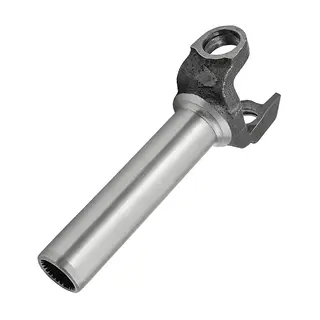
In automotive manufacturing, forging processes are mainly used to produce key components such as engine crankshafts, connecting rods, and gears. Taking the engine crankshaft as an example, forged crankshafts exhibit excellent strength and wear resistance, enabling them to withstand the high torque and impact loads generated during engine operation. In recent years, driven by demands for energy efficiency and lightweight design, forging technologies have continued to innovate. Powder forging, for instance, improves material utilization, reduces production costs, and supports vehicle lightweighting goals.
In the energy industry, forging processes are used to manufacture critical components for large power generation equipment, such as steam turbine rotors and generator main shafts. As the industry moves toward higher efficiency and cleaner energy solutions, increasingly stringent requirements are placed on forging materials and processes. This drives the development of higher-performance forging materials and more advanced forging technologies to meet the demanding quality and reliability standards of large-scale power equipment.
In the mechanical manufacturing sector, forgings also play a vital role. Key components of heavy machinery, such as excavators and cranes, including buckets and booms, depend on forgings to deliver sufficient strength and durability. These components are typically produced using open-die forging or die forging processes to accommodate varying shapes and sizes.
In the medical field, the application of biocompatible titanium alloy forgings has led to new breakthroughs in medical implants. Their gradient porous structures promote bone cell growth and extend the service life of artificial joints. This material innovation not only improves treatment outcomes for patients but also reduces the incidence of postoperative complications.
Through these application examples, it is clear that forgings play a crucial and wide-ranging role across industrial sectors. They not only enhance equipment performance and reliability but also provide strong support for the advancement of modern industry.
Forgings play an indispensable role in modern industry. Through diverse forming processes and material systems, they meet the demand for high-strength and high-reliability components across a wide range of industries. From aerospace and automotive applications to energy equipment and mechanical manufacturing, forgings are everywhere. As technology continues to advance, the performance of forgings and the sophistication of their manufacturing processes will keep improving, providing a strong and enduring foundation for industrial development.