Large Steel Forging Production: Challenges & Quality Control
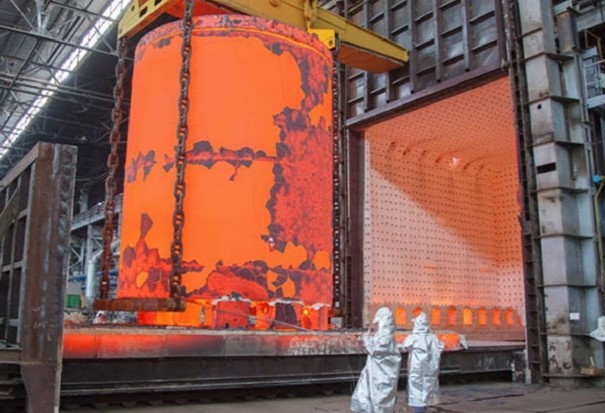
In modern industry, large steel forgings are an indispensable part of many critical pieces of equipment. From nuclear reactor forgings in nuclear power plants to large shaft components in heavy machinery, the quality of these large forgings directly affects the safety and reliability of the equipment. However, producing high-quality large steel forgings is not easy; it involves complex process flows, precise equipment operation, and strict quality control. This article will explore in depth the production process of large steel forgings, the challenges faced, and how to ensure excellent performance of the final product through effective process control and quality inspection.
The production of large steel forgings is a multi-step complex process, mainly including key processes such as smelting, ingot casting, solidification, forging, and heat treatment.
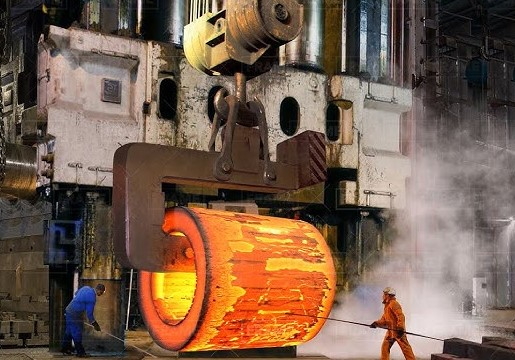
Smelting is the first step in producing large steel forgings, aiming to produce molten steel with high purity and uniform composition. In this process, electric furnaces are usually used for steelmaking, followed by ladle refining to further improve the quality of the molten steel. However, even with advanced smelting technology, some defects such as porosity, inclusions, and segregation are still unavoidable in the ingots.
Ingot casting is the process of pouring molten steel into molds to form ingots. During casting, the flow and cooling of molten steel have an important impact on the quality of the ingot. If there is a lack of crystallization nuclei during casting, it may lead to excessively coarse grains, which will affect subsequent forging processes.
The solidification process of steel ingots plays a decisive role in the formation of internal structures and defects. During solidification, molten steel gradually cools and solidifies, but defects such as porosity, inclusions, and segregation may occur. Especially for large steel ingots, due to their large volume, the solidification time is longer, and the possibility of defects is greater. For example, using the electroslag remelting ingot process can improve the internal quality of the steel ingot, but the grains may grow directionally and become coarse, which also brings difficulties to subsequent forging.
Forging is the only shaping process in the production of large steel forgings. Through forging, the ingot can be processed into a forging with the required shape and size. The key to the forging process is controlling the formation of defects to ensure that the forging does not exceed limits during inspection. During forging, factors such as material properties, inclusion characteristics, deformation temperature, stress state, strain rate, and amount of deformation all significantly affect the generation of inclusion-related cracks.
Temperature control during forging is particularly critical. Temperature changes not only affect the material’s deformability but also determine the behavior of inclusions and the mode of crack formation. If the temperature is too high, the steel may overheat and lose strength; if the temperature is too low, the steel may not deform properly, resulting in incomplete forging or internal stress.
Pressure is also an important factor in the forging process. Excessive pressure may cause the forging to crack, while insufficient pressure may prevent the part from achieving the intended shape or density. In addition, strain rate is equally important; a high strain rate may prevent full recrystallization of the metal microstructure, causing work hardening and increasing the risk of cracks.
After forging, the steel parts usually need to undergo heat treatment to improve mechanical properties such as hardness, toughness, and strength. Heat treatment is a complex process that needs to be carefully designed according to the specific characteristics of the part. Heat treatment of large steel forgings is particularly challenging because the size and shape of the part make uniform heating and cooling difficult to achieve.
If heat treatment is uneven, it may lead to differences in microstructure, causing warping, cracking, or fluctuations in mechanical properties. For example, if the exterior of a large forging cools too quickly while the interior remains hot, internal stresses will be generated, which may cause cracking later. Therefore, the heat treatment process must be carefully designed according to the specific characteristics of each part, which may include the use of special furnaces, fixtures, and cooling methods to ensure as uniform heat treatment as possible.
Producing large steel forgings faces many challenges that run through every stage of production, from raw material selection to transportation and quality control of the final product.
One of the primary challenges in manufacturing large steel forgings is selecting suitable steel. Different applications require different types of steel with specific properties. For example, manufacturing high-temperature forged steel parts requires steel that can maintain strength at elevated temperatures. The quality of the steel is equally important, and it must be purchased from reliable suppliers to ensure compliance with required standards. Low-quality steel may lead to a series of problems, such as cracking, porosity, and poor mechanical performance. Even minor defects in the raw material can cause the entire forging to fail, wasting significant time and resources.
Manufacturing large steel forgings requires heavy equipment, including giant forging presses, furnaces, and other specialized machinery. These devices are expensive and have high maintenance costs. If any equipment fails, the entire production process may be forced to halt.
Molds are also a critical part. Forging molds must be extremely precise and capable of withstanding high pressure and high temperature. Designing and manufacturing these molds is a complex and costly task. Mold wear directly affects forging quality. If molds are not properly maintained, the forging dimensions may be inaccurate, causing parts to not fit correctly during final assembly.
Controlling the forging process is a real challenge. Many variables must be considered, such as temperature, pressure, and deformation rate. The temperature of the steel during forging is crucial; too high or too low will cause problems. Pressure is also a key factor; too high or too low affects forging quality. Deformation rate is equally important, as the speed at which steel deforms during forging affects its microstructure and mechanical properties.
Various sensors and monitoring systems are used to control these variables as much as possible, but even with these advanced tools, perfect control remains very difficult. Small changes in raw materials, equipment, or environment can affect the final results.
Ensuring the quality of large steel forgings is an ongoing challenge. Various tests and inspections must be conducted at each stage of production. This includes nondestructive testing methods such as ultrasonic testing, magnetic particle testing, and X-ray inspection to detect internal defects. Mechanical performance tests such as tensile testing, hardness testing, and impact testing are also conducted to verify the forging’s mechanical properties. These tests are time-consuming and costly, but are essential to ensure that parts meet customer requirements.
In addition, detailed records of the manufacturing process and test results must be kept, which is crucial for traceability and quality control. If a defect is found in the forging, the production process must be traced to determine the root cause.
Handling large steel forgings is not easy. These parts are heavy and bulky, making handling and transportation challenging. Cranes, forklifts, and other specialized equipment are required to move parts within the factory. When transporting to customers, new challenges arise. Reliable transport companies with experience and appropriate equipment must be used. Parts must also be properly packaged and secured to prevent damage during transportation. Transporting large steel forgings is expensive, especially over long distances. There is also the risk of delays due to adverse weather, traffic, or customs issues.
In the steel forging industry, finding and retaining skilled labor is a major challenge. Producing large steel forgings requires highly specialized skills and experience. Workers must master complex equipment operation, forging process control, and quality inspection skills. Skilled labor in this field is scarce, making it difficult to find suitable employees. Once found, competitive compensation and benefits must be provided to retain them. Training new employees is also time-consuming and costly, as it takes years for a worker to fully master all skills required for large steel forging production.
To ensure the quality of large steel forgings, a series of effective quality control and improvement measures must be implemented. These measures span all stages of production, from raw material procurement to final inspection and transportation.
During raw material procurement, suppliers must be strictly screened, and proof of quality that meets standards must be provided. Incoming steel undergoes rigorous inspections, including chemical composition analysis, mechanical testing, and nondestructive testing, to ensure compliance with production requirements. Any quality issues must be promptly addressed with suppliers.
During production, continuously optimizing and innovating forging processes is key to improving product quality. For example, using advanced simulation software to analyze the forging process can optimize parameters and reduce defect formation. Exploring new forging techniques, such as isothermal forging and precision forging, can also improve the accuracy and quality of forgings.
Regular maintenance of equipment and molds ensures they remain in good working condition. Equipment maintenance plans include regular inspections and replacement of critical components to reduce failures. Molds must be used and maintained according to operational procedures, and worn molds repaired promptly to ensure accuracy and lifespan.
A strict quality inspection system should be established during production to control every stage. After forging, comprehensive nondestructive testing and mechanical performance tests are conducted to ensure compliance with standards. A quality traceability system should record all production information, including raw materials, process parameters, and test results, enabling rapid identification of issues and corrective actions.
Employee training and development improve professional skills and quality awareness. Regular technical and quality training ensures employees master advanced production techniques and quality control methods. Employees are encouraged to participate in technical innovation and quality improvement initiatives to enhance motivation and initiative.
The production of large steel forgings is a complex and challenging process involving multiple stages and numerous factors. Through strict quality control and process optimization, the quality and performance of large steel forgings can be effectively improved. During raw material procurement, suppliers must be strictly screened and inspected; during production, forging processes must be continuously optimized, and equipment and molds properly maintained; during quality inspection, strict testing and traceability systems must be implemented; and employee training and development must be emphasized to enhance professional skills and quality awareness. Only through such measures can the quality of large steel forgings be ensured, meeting customer requirements and providing reliable support for modern industrial development.