Quenching Cracks in Forgings: Causes, Solutions & Prevention
In modern industrial manufacturing, quenching cracks in forgings are a widely recognized and highly concerned issue. Quenching cracks not only impair the appearance quality of components but can also seriously compromise their mechanical performance and service life. This article provides an in-depth discussion of the causes of quenching cracks in forgings and proposes effective prevention strategies, aiming to help production personnel better understand and address this problem.
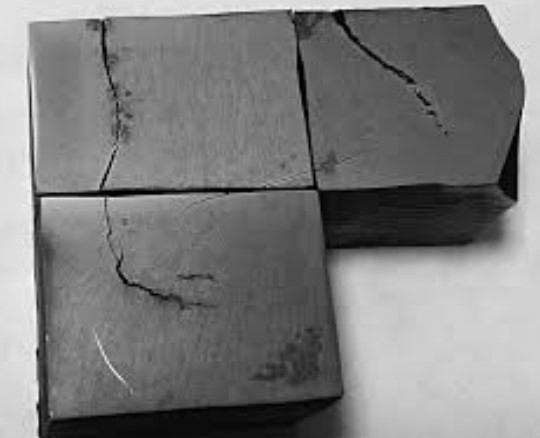
Quenching cracks are a type of macroscopic crack primarily caused by macroscopic stresses. They usually appear as visible cracks on the surface or within the interior of a workpiece. The orientation and distribution of these cracks vary depending on the shape, structure, and quenching process of the component. The formation of quenching cracks is a complex process involving the interaction of multiple factors.
Before exploring how to prevent quenching cracks in forgings, it is essential to understand their underlying causes. The formation of quenching cracks is a complex process influenced by a variety of interacting factors. These include not only the quality of raw materials and the structural design of the workpiece, but also the control of quenching process parameters and the quality of machining operations. Only by comprehensively understanding these causes can effective preventive measures be developed to fundamentally reduce the occurrence of quenching cracks.
The quality of raw materials is one of the most important factors affecting the formation of quenching cracks. If the raw material contains surface or internal defects such as cracks or non-metallic inclusions, these defects can act as crack initiation sites during quenching, leading to crack propagation. For example, inclusions disrupt the continuity of the material, reduce its strength and toughness, and make it more susceptible to cracking under quenching-induced stresses.
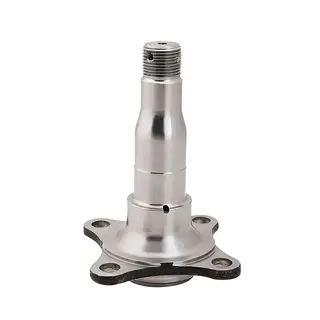
The structural design of a workpiece plays a critical role in its quenching performance. If there are abrupt changes in cross-sectional dimensions or the presence of sharp corners and edges that cause stress concentration, significant internal stresses can develop during quenching, leading to crack formation. For instance, in shaft forgings, improper design of shoulder transitions can easily result in stress concentration during quenching, thereby promoting crack initiation.
Quenching temperature is one of the key parameters in the quenching process. If the quenching temperature is too high, the workpiece may become overheated, leading to grain coarsening. This reduces the toughness of the material and increases the likelihood of quenching cracks. In addition, inaccurate temperature readings from instruments, resulting in actual quenching temperatures exceeding the set values—can produce similar adverse effects. Conversely, if the quenching temperature is too low, the desired quenching effect may not be achieved, which can also negatively affect the performance of the workpiece.
The cooling rate during quenching is another important factor influencing the formation of quenching cracks. If the cooling rate is too fast, a large temperature gradient can develop between the interior and exterior of the workpiece, generating high thermal stresses that may lead to cracking. Furthermore, improper selection of the quenching medium or cooling method can also contribute to crack formation. For example, using a quenching medium with excessively strong cooling capacity for complex-shaped parts may increase the risk of quenching cracks.
Machining defects such as tool marks and burrs left on the surface of a workpiece can create stress concentration points. During quenching, these stress concentration sites can serve as crack initiation points, leading to the formation of quenching cracks. Therefore, machining quality has a significant impact on the occurrence of quenching cracks.
After quenching, workpieces typically contain high levels of residual internal stress. If tempering is not performed in a timely manner, these residual stresses may cause the workpiece to crack. Tempering effectively reduces internal stress and improves the mechanical properties of the workpiece, thereby reducing the likelihood of quenching crack formation.
After gaining a thorough understanding of the causes of quenching cracks, the focus shifts to how this problem can be effectively prevented. Preventing quenching cracks requires a comprehensive approach that considers multiple influencing factors. The following prevention strategies cover all stages from raw material selection to process control, and are intended to help production personnel better manage and reduce the occurrence of quenching cracks.
Selecting high-quality raw materials is the foundation for preventing quenching cracks. During procurement, strict quality control should be applied to ensure that raw materials are free from surface and internal defects such as cracks and inclusions. In addition, rigorous inspection procedures, such as chemical composition analysis and metallographic examination, should be conducted to ensure that the materials meet production requirements.
When designing workpiece structures, abrupt changes in cross-sectional dimensions and stress concentration areas should be avoided as much as possible. For example, for shaft-type components, sudden dimensional changes at shoulders should be minimized, and smooth fillet transitions should be used to reduce stress concentration. For complex-shaped parts, split designs may be considered, with assembly performed after heat treatment to reduce the likelihood of quenching cracks.
During quenching, the temperature must be strictly controlled within an appropriate range. Temperature-measuring instruments should be regularly calibrated to ensure accurate readings. For workpieces of different materials and specifications, suitable quenching temperatures should be selected based on their specific characteristics. For example, steels with higher carbon content should generally be quenched at slightly lower temperatures to reduce the risk of quenching cracks.
Selecting an appropriate quenching medium and cooling method is one of the key measures for preventing quenching cracks. For complex-shaped parts, quenching media with relatively lower cooling capacity—such as oil quenching or step quenching—should be used to reduce thermal stress during quenching. In addition, quenching cooling equipment should be properly designed to ensure uniform heat dissipation during cooling and to avoid cracking caused by uneven cooling rates.
Machining quality should be strictly controlled to avoid leaving rough and deep tool marks or burrs on the surface of workpieces. Machining equipment should be regularly inspected and maintained to ensure proper operation. After machining, workpieces should undergo surface inspection and finishing to remove defects and reduce the likelihood of quenching crack formation.
After quenching, workpieces should be tempered promptly to reduce internal stress and improve mechanical properties. The tempering temperature should be selected based on the material and performance requirements of the workpiece and should generally be maintained within an appropriate range. For example, the tempering temperature for carbon steel components is typically between 500 °C and 650 °C. Tempering time should also be reasonably adjusted according to the thickness and shape of the workpiece to ensure effective tempering results.
After thoroughly analyzing the causes of quenching cracks, it is equally important to address how to effectively prevent them in actual production. Preventing quenching cracks requires a multi-faceted approach that takes into account various influencing factors and adopts scientific and rational measures to ensure that cracks do not occur during the quenching process.
In actual production, quenching and tempering process parameters should be strictly controlled within reasonable ranges. A comprehensive process management system should be established to closely monitor all stages of production, ensuring the stability and consistency of process parameters.
Inspection and monitoring of workpieces should be strengthened throughout the production process to promptly identify and address potential crack risks. For example, non-destructive testing methods such as magnetic particle inspection and ultrasonic testing can be performed before and after quenching to detect surface and internal cracks. If cracks are found, timely corrective measures, such as grinding or repair welding, should be taken to prevent further crack propagation.
The skill level and operating habits of personnel have a significant impact on the formation of quenching cracks. Therefore, training and management of operators should be strengthened to improve their technical skills and quality awareness. In addition, a sound evaluation and assessment system should be established to regularly review and appraise operator performance, ensuring consistent production quality and process stability.
Quenching cracks are one of the most common defects in forging production, and their formation is influenced by multiple factors, including raw material quality, workpiece structural design, quenching process parameters, and machining quality. By reasonably selecting raw materials, optimizing structural design, precisely controlling quenching parameters, improving machining quality, and performing timely tempering, the occurrence of quenching cracks can be effectively prevented. In actual production, strict control of process parameters, enhanced inspection and monitoring, and greater emphasis on operator training and management are essential to ensure process stability and product quality, thereby improving the performance and service life of workpieces.
In summary, preventing quenching cracks requires a comprehensive approach that considers all influencing factors. Only through scientifically sound process design and rigorous quality control measures can the formation of quenching cracks be effectively reduced, product quality and performance improved, and reliable assurance provided for industrial production.