Stainless Steel Forging Quality Inspection
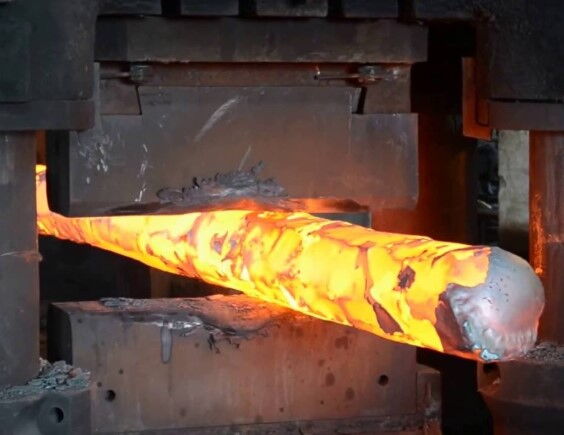
In modern industrial production, stainless steel forgings are widely used in critical positions of various machines due to their excellent performance. The quality of these key components directly affects the overall performance and safety of the machines. Therefore, ensuring the internal quality of stainless steel forgings is extremely important. However, since the internal quality of stainless steel forgings cannot be inspected through intuitive methods, specialized physical and chemical inspection techniques must be used. This article will provide a detailed introduction to various methods for inspecting the quality of stainless steel forgings, including mechanical property testing, non-destructive testing, macro and microstructure inspection, and chemical composition analysis, helping readers fully understand how to ensure the high quality of stainless steel forgings.
Stainless steel forgings are usually used in critical parts of machines, such as engine crankshafts, gears, connecting rods, and so on. These components endure enormous stress and complex working conditions during operation, so their internal quality must meet high standards. Defects in internal quality may cause parts to crack, break, or experience other failures during use, leading to serious safety accidents. For example, in the aerospace field, a minor defect in a forging could result in catastrophic failure of the entire aircraft. Therefore, strictly inspecting the internal quality of stainless steel forgings is an important guarantee for ensuring reliable machine operation.
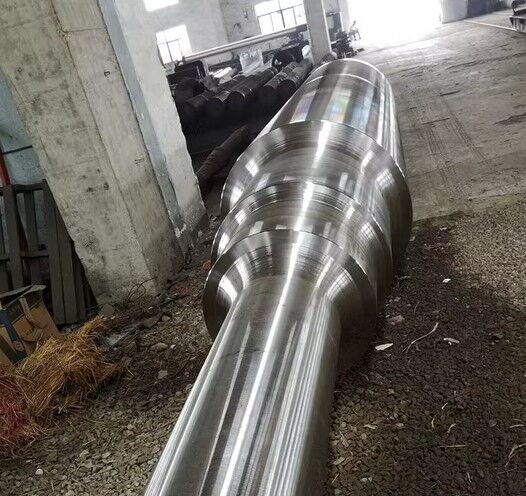
Mechanical properties are one of the important indicators for measuring the quality of stainless steel forgings. Depending on the specific requirements of the product, mechanical property testing mainly includes hardness testing, tensile testing, impact testing, and fatigue testing.
Hardness is the ability of a material's surface to resist deformation and is an important indicator for measuring the softness or hardness of a metal material. There is a certain intrinsic relationship between hardness and other mechanical property indicators, so other mechanical properties can be estimated based on hardness values. The advantage of hardness testing is that it does not require special specimen preparation and does not damage the test piece, so it is widely used in production. Common hardness testing methods include Brinell hardness (HB), Rockwell hardness (HRC), Vickers hardness (HV), and Shore hardness (HS), each with corresponding hardness testers.
- Brinell Hardness (HB): Suitable for measuring medium-hard materials. The hardness value is calculated by applying a specified test load for a set time, then removing the load and measuring the diameter of the indentation on the specimen surface.
- Rockwell Hardness (HRC): Suitable for measuring harder materials. The hardness value is determined by measuring the depth of the indentation, with simple operation and rapid measurement.
- Vickers Hardness (HV): Suitable for measuring very hard or very thin materials. The hardness value is calculated by measuring the diagonal length of the indentation, providing higher precision.
- Shore Hardness (HS): Mainly used for measuring large workpieces or thicker materials. The hardness value is determined by measuring the propagation speed of impact elastic waves.
Tensile testing is performed by applying a tensile load to a specimen of a certain shape using a tensile testing machine to measure mechanical property indicators such as proportional elongation stress, yield point, tensile strength, elongation, and reduction of area. These indicators reflect the material's deformation and fracture characteristics under tensile forces. For example, tensile strength is the maximum stress the material can withstand during stretching, while elongation reflects the material's plastic deformation capability.
Impact testing is performed by striking a notched specimen with a high-speed pendulum to obtain the impact toughness of the metal. Impact toughness reflects the material's resistance to fracture under impact load. For example, low-temperature impact testing can assess the toughness of materials in cold environments, which is especially important for components used in such conditions.
Fatigue testing involves subjecting the metal to alternating or repeated stress until failure, measuring its fatigue limit and fatigue strength. The fatigue limit is the maximum stress under infinite cycles of alternating stress without fracture, while fatigue strength is the maximum stress under a finite number of alternating cycles without fracture. Fatigue testing is critical for evaluating the reliability of components during long-term use.
Non-destructive testing (NDT) is a method for detecting internal and surface defects without damaging the specimen. Common NDT methods include radiographic testing, ultrasonic testing, magnetic particle inspection, liquid penetrant testing, and eddy current testing. For stainless steel forgings, ultrasonic testing and magnetic particle inspection are the most commonly used methods.
Ultrasonic testing uses ultrasound with a frequency generally above 20,000 Hz, which reflects and refracts at interfaces of different materials. If defects of different materials exist in a solid, ultrasound will produce reflection and attenuation at the defect location. By analyzing the waveform signal, the presence of defects can be determined. Ultrasonic testing is suitable for medium to large forgings and is one of the important non-destructive inspection methods.
Magnetic particle inspection is mainly used to detect surface and near-surface subsurface cracks, pores, non-metallic inclusions, and other defects in forgings. This method requires simple equipment, is easy to operate, and has high inspection sensitivity, making it commonly used for medium and small forged parts in mass production. The basic principle of magnetic particle inspection is to use the aggregation of magnetic particles in a magnetic field to reveal defects.
Macro and microstructure inspection evaluates internal quality by observing and analyzing the structural characteristics of forgings.
Macrostructure inspection usually involves visual observation or low-magnification microscopes (generally below 30×) to analyze the low-magnification structural characteristics of forgings. Common methods include low-magnification etching, fracture testing, and sulfur printing.
- Low-Magnification Etching: Uses chemical etchants on the specimen surface to reveal structural characteristics. This method can detect cracks, folds, shrinkage cavities, porosity, segregation, white spots, looseness, non-metallic inclusions, flow lines, grain size, and distribution defects.
- Fracture Testing: Observing the fracture characteristics of the specimen to judge internal quality. Fracture testing can detect white spots, lamination, internal cracks, graphite carbon, overheating, overburning, and other defects.
- Sulfur Printing: Mainly used to check the uniformity and content of sulfur. By contacting the specimen surface with sulfur printing paper, the sulfur distribution is revealed on the paper.
Microstructure inspection uses an optical microscope to examine the microstructure of various stainless steel grades. Inspection items include inherent grain size, actual grain size, non-metallic inclusions, microstructures such as decarburized layers, uneven eutectic carbides, overheating, overburning structures, and other required microstructures. Microstructure inspection allows for more detailed evaluation of internal quality and identification of potential microscopic defects.
Chemical composition analysis tests the components of stainless steel forgings through chemical analysis or spectroscopic analysis. With advances in technology, chemical and spectroscopic analysis methods have continuously improved. Modern spectrometers not only analyze spectra faster but also with much higher accuracy. The advent of plasma optical spectrometers has greatly increased analytical precision, reaching levels of 10^-6. This method is particularly effective for analyzing trace harmful elements such as Pb, As, Sn, Sb, Bi, etc., in high-temperature alloy stainless steel forgings.
To more accurately evaluate the quality of stainless steel forgings, destructive testing methods should be combined with non-destructive testing. Destructive testing methods include low-magnification inspection, fracture inspection, high-magnification microstructure inspection, chemical composition analysis, and mechanical property testing. These methods allow direct observation of the internal structure and performance of the forgings. Non-destructive testing can quickly and efficiently detect surface and internal defects without damaging the specimen. By comprehensively applying these methods, the quality of stainless steel forgings can be fully evaluated, ensuring their reliability and safety in practical use.
The quality inspection of stainless steel forgings is a complex and important process. By employing multiple inspection methods, including mechanical property testing, non-destructive testing, macro and microstructure inspection, and chemical composition analysis, the internal quality of forgings can be fully assessed. The combined application of these methods not only detects potential defects but also ensures the reliability and safety of forgings in practical use. In modern industrial production, high-quality stainless steel forgings are key to ensuring reliable machine operation, making strict internal quality inspection of stainless steel forgings indispensable.