Materials for Forging: Properties and Applications
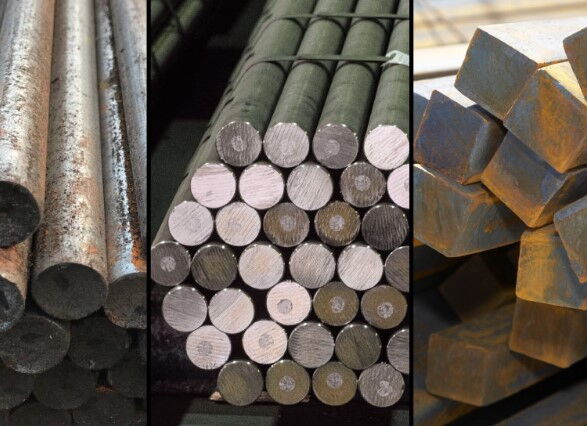
On the stage of industrial manufacturing, forged components are like solid cornerstones, supporting the operation of a wide range of machinery and equipment. With their outstanding strength, toughness, and impact resistance, they have become the preferred choice across many industries. However, the superior performance of forged parts does not rely solely on advanced forging techniques, high-quality raw materials are equally indispensable. Today, let us delve into the science of forging materials and explore the characteristics and application logic of four commonly used materials, carbon steel, alloy steel, stainless steel, and aluminum alloys, so as to master the right approach to material selection.
Steel, an alloy of iron and carbon, is a fundamental material in industrial forging. Its performance largely depends on its chemical composition and microstructure, while impurity elements exert a profound influence on its properties.
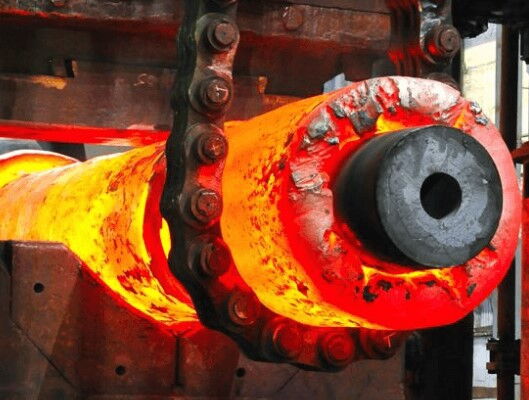
Steel typically contains impurity elements such as phosphorus, sulfur, nitrogen, hydrogen, and oxygen. These impurities act like hidden enemies, often exerting adverse effects on steel performance. Sulfur and phosphorus are the primary harmful impurities, and their content is a key indicator of steel quality.
Sulfur is mainly introduced from pig iron and fuel and exists in the form of FeS. It forms a low-melting-point eutectic with iron (melting point around 980 °C). During hot working at approximately 1200 °C, this low-melting eutectic can melt and cause cracking, leading to hot brittleness. In addition, sulfide inclusions may cause lamination in steel plates, impair weldability, promote hot cracking during welding, and result in porosity and looseness in weld metal.
Phosphorus is more difficult to remove and dissolves completely in ferrite. While it increases steel strength and hardness, it sharply reduces plasticity and toughness at room temperature, raises the ductile-to-brittle transition temperature, and causes cold brittleness. Phosphorus also deteriorates weldability and can lead to welding hot cracks.
Oxygen exists in steel in the form of various inclusions, often acting as stress concentrators that severely reduce plasticity and toughness. It readily causes aging phenomena and has an extremely unfavorable effect on the ductile-to-brittle transition temperature. Therefore, the quantity, shape, size, and distribution of such inclusions must be strictly controlled.
Nitrogen plays a more complex role. When intentionally added as an alloying element, it can improve strength and be beneficial. However, when present unintentionally in small amounts, it can be detrimental. In low-carbon steels, the precipitation of Fe₄N can cause aging and blue brittleness. Low-carbon steels containing trace nitrogen exhibit pronounced aging and notch sensitivity after cold working, especially when phosphorus is also present. Excessive nitrogen may also form bubbles and porosity, making both hot and cold working difficult.
Hydrogen enters steel during smelting from rusted or moist charge materials. It can cause severe defects such as white spots, spot segregation, hydrogen embrittlement, and cold cracking in the heat-affected zone of welds, seriously compromising steel integrity and reliability.
Carbon is the primary alloying element in steel. Carbon steels for pressure vessels generally contain less than 0.25% carbon. As carbon content increases, strength and hardness rise, while plasticity and toughness decrease—especially low-temperature toughness, which drops sharply. At the same time, the ductile-to-brittle transition temperature increases.
Carbon is also a major factor affecting weldability. Higher carbon content increases hardenability and the tendency for welding cold cracks. Moreover, carbon promotes sulfide segregation and thus contributes to hot cracking in weld metal. Therefore, low-carbon steels are usually specified for pressure vessel fabrication to ensure safety and reliability.
Carbon steel, also known as plain carbon steel, is an iron–carbon alloy with a carbon content (ωc) of less than 2%. In addition to carbon, it contains small amounts of silicon, manganese, sulfur, and phosphorus. Its properties are directly related to carbon content and can be classified as low-carbon steel (ωc ≤ 0.25%), medium-carbon steel (ωc = 0.25%–0.6%), and high-carbon steel (ωc > 0.6%).
Low-carbon steel offers excellent plasticity and toughness, along with good machinability and weldability, making it widely used in forging for construction and machinery manufacturing. Grades such as Q235B and Q345R are commonly used for general structural components and pipelines. Medium-carbon steel provides a good balance between strength and toughness and is suitable for parts requiring moderate mechanical performance, such as gears and shafts made from 20# steel. High-carbon steel, with its high strength and hardness but lower plasticity and toughness, is mainly used for tools and springs where hardness is critical.
Thanks to its high strength, good ductility, and ease of processing, carbon steel plays an indispensable role in many industries. It is economical, reliable, and capable of meeting most conventional industrial requirements. In forging, proper process control can further optimize its properties. For example, when forging large mechanical components, low-carbon steel can achieve a denser and more uniform microstructure through controlled heating and forging parameters, thereby enhancing overall strength and reliability.
Alloy Steel: Tailored Performance Enhancement
Alloy steel is produced by deliberately adding specific alloying elements, such as chromium (Cr), nickel (Ni), molybdenum (Mo), and vanadium (V), to carbon steel in order to improve strength, hardness, corrosion resistance, or high-temperature performance. According to alloy content and application, alloy steels are classified as low-alloy, medium-alloy, and high-alloy steels.
Different alloying elements impart distinct properties. For instance, aluminum refines grain size and fixes nitrogen in steel, significantly improving impact toughness and corrosion resistance, especially when used in combination with molybdenum, copper, silicon, or chromium. Nickel strongly increases strength while maintaining high toughness. Copper improves atmospheric corrosion resistance in low-alloy steels and, when combined with phosphorus, enhances strength and yield ratio without adversely affecting weldability.
Through rational selection and combination of alloying elements, alloy steels can achieve precise performance matching to meet complex service conditions. Whether for high-temperature, high-pressure energy equipment or high-strength mechanical components, alloy steels provide reliable material support for industrial forging. For example, in forging large pressure vessels, low-alloy steels with appropriate additions of molybdenum and vanadium can achieve improved high-temperature strength and creep resistance, ensuring long-term stability under severe operating conditions.
Stainless steel belongs to the category of high-alloy steel, but due to its exceptional corrosion resistance, it is often treated as a separate material class. Its defining characteristic is resistance to rust and corrosion, allowing long-term exposure to air, moisture, and mildly corrosive media. This property primarily stems from chromium. When chromium content reaches 10.5% or more, a thin, dense chromium oxide passive film forms on the surface, isolating the metal from the environment and providing self-protection.
Based on metallographic structure, stainless steels can be classified as follows:
Ferritic stainless steels contain 10.5%–18% chromium and low nickel content, making them the most cost-effective stainless steels. Typical AISI grades include 430 and 446. They offer good corrosion and oxidation resistance and are widely used in cutlery and appliance housings. In forging, optimized heating temperatures and forging speeds can improve microstructure, toughness, and corrosion resistance.
Martensitic stainless steels, such as AISI 410, 420, and 440, are used where precise edge hardening is required. They feature high strength and excellent wear resistance, making them suitable for knives and bearings. Careful control of heating and cooling rates during forging is essential to achieve the optimal balance between hardness and toughness.
Austenitic stainless steel is the most widely used stainless steel worldwide, typically containing at least 16% chromium and 6% nickel. AISI 200 and 300 series grades fall into this category. They offer excellent corrosion resistance, plasticity, toughness, and weldability. Applications include chemical equipment, food processing machinery, and medical devices. For example, 304 stainless steel is widely used for tanks and pipelines, while 316 stainless steel, with superior corrosion resistance, is suitable for marine environments. During forging, careful temperature control is required to prevent grain growth and maintain mechanical properties.
Duplex stainless steel combines austenitic and ferritic structures to address specific industrial challenges related to weight, toughness, and tensile strength. It offers the toughness and weldability of austenitic steel along with the high strength and chloride stress corrosion resistance of ferritic steel. It is widely used in chemical vessels and offshore structures. Precise control of heating and cooling is required during forging to maintain an optimal phase balance.
Precipitation-hardening stainless steels have an austenitic or martensitic matrix and are strengthened through precipitation (age) hardening. They combine high strength with good corrosion resistance and are used in aerospace and nuclear applications. Forging must be followed by carefully controlled heat treatment to achieve optimal performance.
Stainless steel performs exceptionally well in forging, where the process can further enhance its properties. Stainless steel forgings are commonly used in high-temperature, high-stress, and corrosive environments, such as chemical reactors and offshore components. Thanks to their outstanding corrosion resistance and strength, stainless steels are ideal materials for demanding industrial applications.
Aluminum alloys are among the most widely used structural materials in modern industry, with extensive applications in aerospace, shipbuilding, and machinery manufacturing. Their core advantage lies in the perfect balance between light weight and high strength. By alloying aluminum with elements such as magnesium, silicon, copper, and zinc, aluminum alloys achieve significantly enhanced strength, hardness, and corrosion resistance while maintaining low density.
In aerospace, aluminum alloys are used for aircraft structures and engine components to reduce weight, improve fuel efficiency, and extend range. For example, 7075 aluminum alloy, known for its high strength and corrosion resistance, is commonly used in aircraft wings and fuselage frames. In automotive and rail transportation, aluminum alloys are used for lightweight wheels and chassis components, reducing vehicle weight and energy consumption. In machinery manufacturing, aluminum alloys can replace certain steel components to reduce overall equipment weight and improve mobility.
Aluminum alloys also exhibit excellent forgeability. Forging refines their internal microstructure and further enhances strength and toughness. Forged aluminum alloys are widely used in weight-sensitive, high-strength applications such as aerospace engine blades and high-performance automotive pistons. With their unique combination of lightness and strength, aluminum alloys play an increasingly important role in modern industrial forging.
In practical industrial forging, selecting the right material is a complex task. In addition to material properties, manufacturing process performance, especially weldability and formability, must be considered. Material properties determine suitability under service conditions, while process performance directly affects production efficiency and product quality.
For example, pressure vessels often operate under complex conditions involving pressure, high or low temperatures, and corrosion. Material selection must therefore consider strength, toughness, corrosion resistance, and weldability. High-temperature, high-pressure vessels may require alloy steels with excellent high-temperature strength and oxidation resistance, while vessels in corrosive environments may call for stainless steel or aluminum alloys.
Understanding cold and hot workability is also essential. Some materials exhibit work hardening during cold processing, requiring proper process control, while others may suffer grain growth during hot working. Therefore, selecting materials compatible with the intended processing methods is critical to ensuring product quality and performance.
The selection of forging materials is both a science and an art. Only by thoroughly understanding material properties, processing characteristics, and service requirements can informed decisions be made. Carbon steel, alloy steel, stainless steel, and aluminum alloys each offer unique advantages and application potential. In practice, the optimal choice depends on a comprehensive evaluation of performance requirements and manufacturing considerations. Ultimately, correct material selection is the cornerstone of product quality and performance. By mastering the relationship between material properties and processing techniques, we can identify the most suitable material and build a solid, reliable foundation for industrial forging.