Precision Metal Stamping vs. Metal Forging: How to Choose
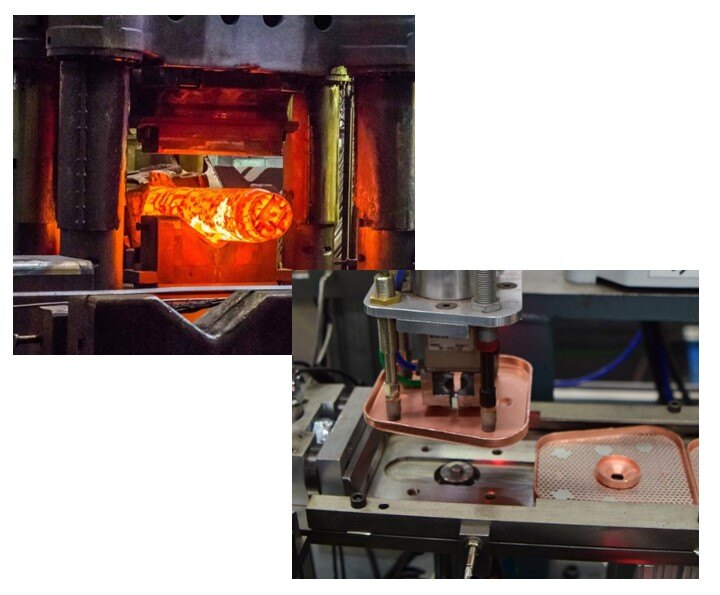
In the manufacturing industry, there are numerous methods for processing metal materials into the desired components. Among them, precision stamping and forging are two of the most commonly used processes and are often confused with each other. Many people are unclear about the differences between these two processes or unsure which method is appropriate for their products. Simply put, precision stamping uses a press to cut or bend metal sheets into the desired shape, making it suitable for high-volume production of thin-walled parts. It offers high precision at relatively low cost when the cost is distributed across large quantities. Forging, on the other hand, involves heating metal to a malleable state and shaping it with massive hammers or presses. It is ideal for producing robust components that must withstand heavy loads and impacts. Forged parts have superior strength but require higher energy consumption.
This article provides a detailed comparison of these two processes from multiple dimensions, including process principles, material selection, mechanical properties, surface quality, cost structure, and practical applications. Using the stamped steel control arm in automotive suspension systems as an example, we also explain how to quickly identify different types of components based on appearance, sound, and magnetic testing. Whether you are a professional in manufacturing or engineering, or simply a reader interested in metalworking, this guide will help you understand the differences between precision stamping and forging and make the right choice in practical applications.
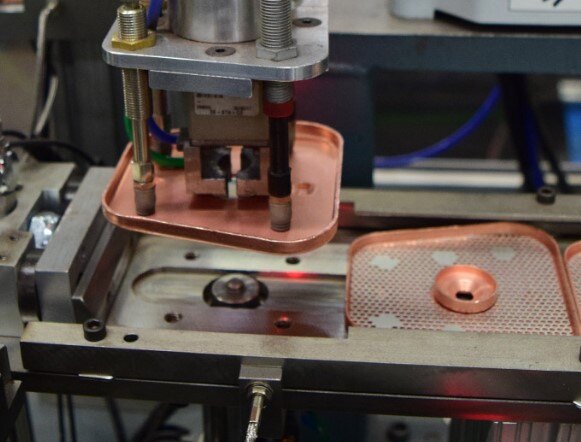
Precision stamping is a cold-working process. This technique involves processing metal sheets or strips into the required shapes using a stamping press. During the process, the operator places flat metal blanks into a die. The die consists of two main parts: the punch and the cavity. When the press applies force, the punch moves downward into the cavity, cutting, bending, or shaping the metal to produce the desired component.
The most notable feature of precision stamping is its high efficiency. This process can produce large quantities of parts in a short period. The precision of stamped parts can reach ±0.01 millimeters, making it ideal for applications with strict dimensional requirements.
Precision stamping can work with a variety of materials, including steel, aluminum, copper, brass, and stainless steel. Material selection depends on specific application requirements, such as strength, corrosion resistance, conductivity, and cost. For instance, steel is widely used due to its high strength and durability, whereas aluminum is favored in many industries for its lightweight and corrosion resistance.
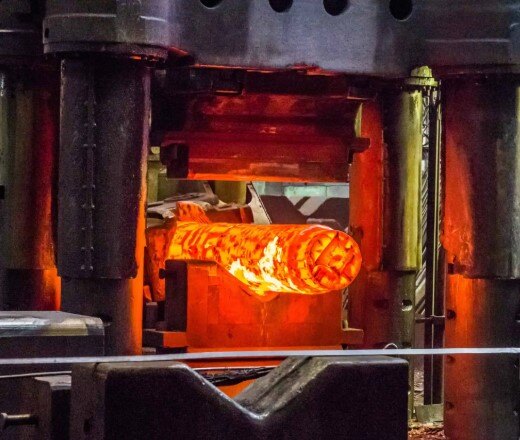
Forging is a hot-working process. This technique shapes metal by applying compressive force to heated billets or ingots. The operator first heats the metal to a plastic range and then forms it using hammers, presses, or other forging equipment.
Forging can be divided into several types, including open-die forging, closed-die forging, and upset forging. The choice of technique depends on the complexity of the part and process requirements. Compared with stamping, forging allows the production of parts with complex geometries and superior mechanical properties, although it generally requires more time and energy.
Forged components usually use high-strength alloys such as carbon steel, alloy steel, and stainless steel. These materials can withstand high stress, making them suitable for automotive, aerospace, and heavy machinery applications. Another significant advantage of forging is its ability to refine the metal’s grain structure, enhancing mechanical performance such as strength, toughness, and fatigue resistance.
After understanding the basic principles, materials, and types of each process, it is important to clarify the specific differences between stamping and forging. Many people are confused when choosing a manufacturing method because they do not fully understand the differences in mechanical properties, surface quality, and cost—three key indicators. The following is a detailed comparison to help you make decisions based on practical requirements.
Stamped parts have distinct mechanical characteristics. They generally exhibit uniform grain structures and consistent mechanical properties. However, because stamping is a cold-working process, residual stresses may exist inside the part, which can affect performance in certain applications.
Forged parts, in contrast, offer superior mechanical performance. The hot-working process optimizes the grain structure. Compression during forging aligns the grains more densely, improving strength, ductility, and fatigue resistance. These characteristics make forged components suitable for critical applications demanding high reliability and performance, such as engine parts, gears, and shafts.
Precision-stamped parts can achieve smooth surface finishes, especially when advanced stamping technologies and high-quality dies are used. Secondary processes such as polishing, electroplating, or coating can further enhance surface quality. Good surface quality improves both appearance and corrosion resistance while reducing friction.
Forged parts typically have rougher surfaces immediately after forging. However, mechanical processing and surface treatments can achieve the desired finish. Generally, surface finish is less critical for forged components, as strength and durability are prioritized.
The cost of stamped and forged parts is influenced by multiple factors, including material costs, part complexity, production volume, and manufacturing process. Precision stamping is cost-effective for high-volume production because initial die costs can be spread across many parts. Stamping is also fast and efficient, reducing labor and production costs.
Forging is relatively more expensive due to higher energy consumption, longer production cycles, and more complex dies. However, for small batches or parts with complex geometries, forging may offer better overall value because it can reduce subsequent machining steps.
Beyond differences in mechanical performance, surface quality, and cost, material selection is another critical factor. Materials determine a component’s performance limits and directly affect process feasibility and cost. The following sections outline commonly used materials for stamping and forging and the rationale for their selection.
Stamping works best with ductile metals that can withstand deformation without cracking. Common materials include low-carbon steel and stainless steel, both of which offer high strength and versatility. Aluminum is widely used in automotive and aerospace industries for lightweight parts, helping reduce overall product weight. Copper and its alloys, known for excellent conductivity, are often used in electronic components such as connectors.
The typical thickness of sheet metal for stamping ranges from 0.5 mm to 6 mm. Thickness influences both the stamping process and the required stamping force. This material suitability is a key distinction from forging, which typically uses thicker alloy billets.
Forging is suitable for high-strength metals, where grain refinement enhances material performance. Stainless steel and titanium alloys are ideal for aerospace components due to their excellent durability and corrosion resistance, especially in harsh environments. Carbon steel and alloy steel are commonly forged into mechanical parts and tools.
These materials contrast sharply with those used in stamping. Stamping favors thinner, highly ductile sheets, whereas forging uses thicker, stronger materials, affecting both applicability and end-use performance.
After understanding material selection, it is important to recognize the different process types within each technique. Various methods are suited to different part geometries and production requirements.
Stamping encompasses several techniques, each suitable for specific applications:
- Blanking: Cutting flat shapes from metal sheets, used for making gaskets or coin blanks.
- Punching: Creating holes in sheets, such as mounting holes in automotive brackets.
- Bending: Shaping metal into specific angles or curves, used for structural supports.
- Fine Stamping: Applying high pressure for precise surface details, often used for decorative parts.
- Deep Drawing: Pulling metal sheets into dies to form hollow shapes, such as sinks or fuel tanks.
These processes highlight stamping’s focus on high-volume production.
Forging techniques vary depending on die design and purpose:
- Open-Die Forging: Uses flat or simple dies for freeform shaping, suitable for large custom parts such as ship shafts.
- Closed-Die Forging: Metal is constrained within dies to form near-final shapes, such as automotive connecting rods, reducing subsequent machining.
- Roll Forging: Heated metal passes through rollers to elongate or taper it, suitable for axles or tapered tubes.
Each forging technique emphasizes producing high-strength components, contrasting with stamping’s focus on quantity.
Understanding the specific process types naturally leads to the question: in which products and industries are these processes applied? Knowing the application fields helps choose the appropriate method.
Precision-stamped components are widely used across industries. In electronics, stamping produces connectors, terminals, electromagnetic shields, and heat sinks. In automotive manufacturing, stamping produces body panels, chassis parts, transmission housings, and engine covers. In consumer goods, stamping is used for doors, hinges, handles, TV frames, and appliance housings.
These applications require high precision and consistency, which are the core advantages of stamping.
Forged parts are commonly used where high strength, toughness, and reliability are critical. In aerospace, forging is used for turbine blades, engine shafts, and landing gear components. In construction, forging produces couplings, tie rods, anchors, and booms. In the oil and gas industry, forged valves and pipe fittings withstand high pressure.
These applications demand extremely reliable components, and forged parts’ superior mechanical properties meet these requirements.
When selecting a process, consider the following factors:
- Production Volume: Stamping is ideal for high-volume, fast-turnaround production. Forging is preferred for small batches with high strength requirements.
- Budget: Stamping has high initial die costs but low per-unit cost, suitable for mass production. Forging consumes more energy and die cost but may reduce subsequent machining.
- Material Type: Stamping favors thin, ductile sheet metals. Forging suits thicker, high-strength alloys.
- Working Environment: Forged parts excel in high-stress, high-wear environments. Stamped parts are better when precision and surface quality are priorities.
- Part Complexity: Stamping works for relatively simple, thin-walled components. Forging allows complex, solid shapes.
- Practical Example: Identifying a Stamped Steel Control Arm
Stamped steel control arms are key components in automotive suspension systems. They connect the chassis to the wheel assembly, allowing wheels to move smoothly over bumps while keeping tires firmly planted for vehicle stability.
The manufacturing process starts with large steel sheets, precision-cut and stamped into specific shapes using high-pressure dies. Two stamped halves are welded to form a hollow assembly. This method is highly efficient for mass production, making stamped steel control arms common in modern passenger cars and light trucks.
To identify a stamped steel control arm, follow three steps:
- Visual Inspection: Examine the weld seams. Stamped steel arms have visible seams forming hollow box or shell structures. Cast or forged arms are solid with no welds.
- Tap Test: Lightly tap the arm with a wrench. Stamped steel produces a hollow, high-pitched sound, while cast or forged arms produce a dull, solid tone.
- Magnet Test: Magnets will stick to steel or cast iron arms but not to aluminum arms.
These steps allow accurate identification, supporting proper maintenance or replacement decisions.
Precision stamping and forging are two distinct metal forming processes. Precision stamping is a cold-working process with high efficiency and precision up to ±0.01 mm, suitable for high-volume production of thin-walled parts. Forging is a hot-working process that produces components with superior mechanical properties, ideal for small-batch, high-strength parts.
The choice depends on specific requirements. If high volume, fast delivery, and precision are needed, stamping is the better choice. If parts must withstand harsh environments with high strength and durability, forging is more suitable. Understanding the characteristics and differences of these processes aids in making informed decisions in manufacturing and engineering.