Guide to Hot Forging Press Selection and Application
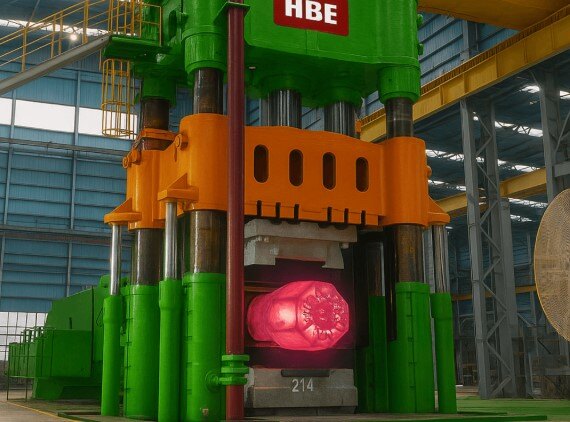
Hot forging presses are critical equipment in metal forming and processing, directly influencing product quality, production efficiency, and long-term operating costs. With a wide variety of models available in the market, companies often face multiple considerations during equipment selection: whether the press tonnage matches production requirements, whether the control system can ensure machining precision, and how to balance initial investment with long-term maintenance costs. If these issues are not properly addressed, they may lead to low production efficiency, increased material waste, and even a decline in overall competitiveness.
This article focuses on the basic working principles of hot forging presses, main types and characteristics, key selection factors, economic analysis, and industrial application fields. It aims to help readers systematically understand how to choose suitable equipment based on actual needs, while also grasping the core points of daily operation and maintenance. Whether you are planning to purchase new equipment or optimize existing production processes, the following content provides practical reference value.
A hot forging press is an industrial machine used for metal forming. Its main function is to heat metal to a certain temperature and then apply high pressure to cause plastic deformation, thereby shaping it into the required form and size. This type of equipment is widely used in automotive manufacturing, aerospace, and heavy machinery industries, and it is an essential tool for producing high-strength components.
A hot forging press typically consists of four main parts: the slide, die system, hydraulic system, and control system. The slide is responsible for directly applying pressure, the die system determines the final product’s forming structure, the hydraulic system provides the power source, and the control system monitors and regulates pressure and temperature during processing. These components must operate in coordination; any misalignment or malfunction may lead to reduced product quality.
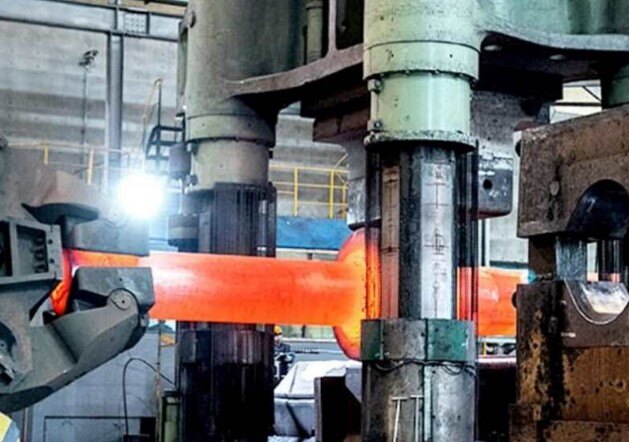
The core of the hot forging process lies in temperature control. When metal is heated above its recrystallization temperature, its internal grain structure changes, significantly improving its ductility and making it easier to shape. In this state, complex forming can be achieved without cracking, and energy consumption required for deformation is also reduced.
During hot forging, the metal is heated to a temperature range below its melting point. High temperature not only facilitates deformation but also promotes grain refinement, thereby improving mechanical properties. Forged parts typically exhibit higher strength and better durability, making them suitable for high-load operating conditions.
Hot forging and cold forging are two common metal forming methods, with significant differences in processing conditions and results. Cold forging is performed at room temperature. Although it can achieve good surface quality, it involves higher deformation resistance, greater forming difficulty, and a higher risk of internal defects.
Hot forging, on the other hand, reduces material resistance by heating the metal, making the forming process easier while also reducing internal defects such as porosity and micro-cracks.
However, hot forging also presents certain challenges. Improper temperature control may cause surface oxidation or degradation of material properties, while uneven heating can affect product consistency. Therefore, hot forging requires stricter temperature monitoring and pressure regulation, and precise control systems are essential to ensure stable processing.
Hot forging presses are mainly divided into three types based on driving mechanisms and structural principles: hydraulic, mechanical, and screw presses. Each type differs in forming capability, operating speed, precision, and application scenarios.
A hydraulic hot forging press uses fluid pressure to generate output force, enabling high forming pressure. It is suitable for processing complex shapes and high-strength materials and performs reliably in heavy-duty forging applications.
The hydraulic system provides smooth pressure output, making it easier to control pressure changes during forming. This makes it suitable for production environments requiring high forming quality and precision.
A mechanical hot forging press uses a crank mechanism to drive the slide motion, providing stable stamping force. It operates at high speed with a clear production rhythm, making it suitable for large-scale standardized production.
For manufacturers with uniform product specifications and high output requirements, mechanical presses generally offer higher production efficiency.
A screw hot forging press stores energy through continuous flywheel rotation and releases it instantly for forming. This type is characterized by high energy transmission efficiency and good forming precision.
It is suitable for processes requiring high dimensional accuracy and surface quality. When selecting equipment type, enterprises should consider production requirements, product characteristics, and batch size comprehensively.
After understanding different types of hot forging presses, several key factors must be considered in actual selection, including production capacity, material type, equipment specifications, control systems, energy efficiency, and after-sales support.
When selecting a hot forging press, it is first necessary to evaluate whether production capacity matches actual requirements. If the machine capacity is lower than demand, production efficiency will be insufficient. If it is too high, it leads to energy waste and increased operating costs.
Therefore, companies must clearly define production scale, expected output, and future expansion plans before selecting a suitable model.
Different metal materials behave differently during hot forging. Steel and aluminum differ significantly in heating methods, temperature ranges, and process parameters. For example, steel typically requires higher temperatures and greater forming force, while aluminum requires lower temperatures but stricter temperature uniformity.
If equipment does not match the material, product quality may decline and scrap rates may increase. Understanding material properties is therefore essential for selecting appropriate forging processes and equipment.
When evaluating specifications, key parameters such as press tonnage, stroke length, and forming force must be considered. Based on industrial experience, forming forces of approximately 1200 tons or more are generally suitable for most heavy forging applications, improving stability and efficiency.
Stroke length affects die installation space and forming depth, and should be selected based on product dimensions.
Advanced control systems are an important part of modern hot forging presses. Programmable systems improve accuracy and repeatability while reducing material waste and downtime through real-time parameter adjustments.
Some studies indicate that intelligent control systems can improve production efficiency by about 30%.
Energy efficiency is also a critical consideration. Equipment equipped with energy recovery hydraulic systems can recycle part of the energy, significantly reducing operating costs and improving long-term economic performance.
As a long-term investment, hot forging presses require reliable after-sales support for stable operation. Manufacturers that provide training, regular maintenance, and rapid fault response help reduce maintenance costs and downtime.
User-friendly operation interfaces, ergonomic design, and intuitive controls also improve safety and operator comfort.
After meeting technical requirements, economic evaluation becomes an essential part of decision-making. Initial purchase cost, long-term operating cost, reliability, and downtime risk form the three core dimensions of lifecycle cost analysis.
The market price of hot forging presses typically ranges from $100,000 to $500,000, depending on type, specifications, features, and brand.
For high-output and high-quality production scenarios, investing in higher-end equipment is reasonable. For low-output or simple applications, basic and more affordable models may be sufficient.
Purchase decisions should not focus solely on initial cost but also consider lifecycle economics. High-efficiency and low-maintenance equipment may require higher upfront investment but often provides better cost advantages over time.
Energy consumption, maintenance expenses, and potential production losses should all be included in overall evaluation.
Low-cost equipment may have higher failure rates, leading to frequent repairs and production interruptions, which ultimately increase total cost.
Therefore, companies should evaluate failure history, spare parts availability, and service networks. From a lifecycle perspective, high-reliability equipment with strong support services is often more economical than low-cost alternatives.
Hot forging presses play a key role in multiple industrial sectors, including automotive manufacturing, aerospace, and heavy machinery, each with different requirements and priorities.
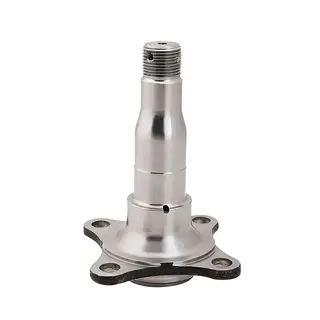
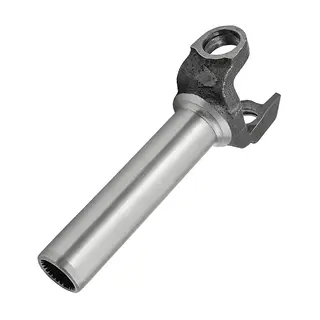
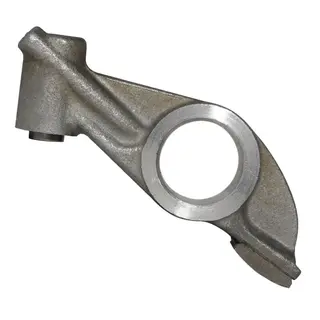
In automotive production, hot forging is widely used for components such as connecting rods and crankshafts. These parts must withstand high loads and complex operating conditions, requiring excellent strength and durability.
Hot forging improves grain structure and mechanical properties, meeting both lightweight and safety requirements. With increasing demand for high-strength automotive components, the application of hot forging presses continues to expand.
The aerospace industry has extremely strict requirements for reliability and safety. Hot forged parts are used in aircraft and spacecraft structural components, which must maintain stable performance under extreme temperature, pressure, and vibration conditions.
Hot forging improves internal structure, reduces defects, and enhances fatigue life, making it a key manufacturing process in aerospace applications.
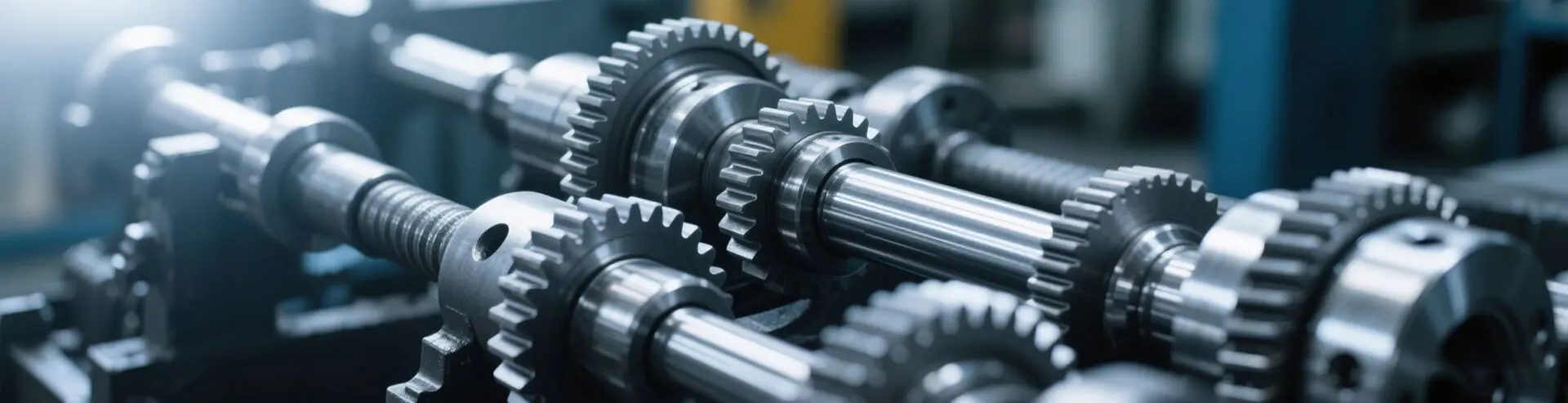
In heavy machinery, large bearings, gears, and connectors are typically produced using hot forging. These parts are large, complex, and require high strength and toughness.
Hot forging presses provide sufficient forming force, ensuring complete material filling of the die and achieving complex geometries that meet design requirements.
Selecting an appropriate hot forging press is a critical decision for manufacturing enterprises aiming to improve productivity and product quality. The process requires comprehensive consideration of production needs, material characteristics, equipment performance, budget, and after-sales service.
Through scientific selection and standardized operation, companies can fully leverage the advantages of hot forging technology, reduce production costs, and enhance market competitiveness. With continuous technological advancement and evolving market demands, hot forging presses will continue to play an important role in metal forming and provide high-quality fundamental components for various industries.