An Introduction to Surface Treatment of Steel Forgings
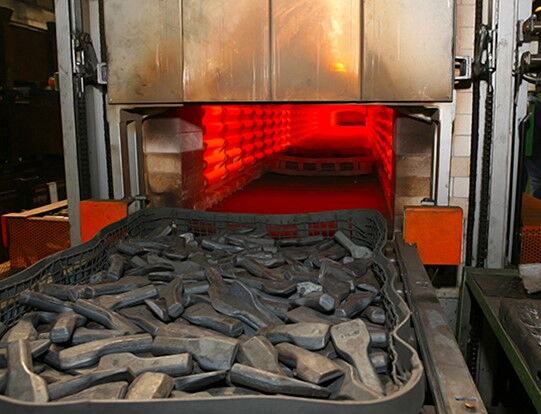
In modern manufacturing, surface treatment of forgings is a critical step in ensuring both product quality and visual appeal. Surface treatment not only improves the appearance of forged products, but also enhances their corrosion resistance, wear resistance, and service life. This article provides a detailed introduction to several common surface treatment methods for steel forgings, including baking paint, electroplating, sandblasting, shot blasting, mechanical finishing, and chemical surface treatment, helping you gain a comprehensive understanding of this essential process.
Surface treatment refers to processing methods that modify the surface of a material to transform it into a surface with specific characteristics. It not only enhances the aesthetic appeal of forgings, but also improves their performance. For large forgings in particular, surface treatment is especially important, as it directly affects product quality and service life. Common surface treatment methods include baking paint and electroplating, both of which play a vital role in improving the surface quality of forgings.
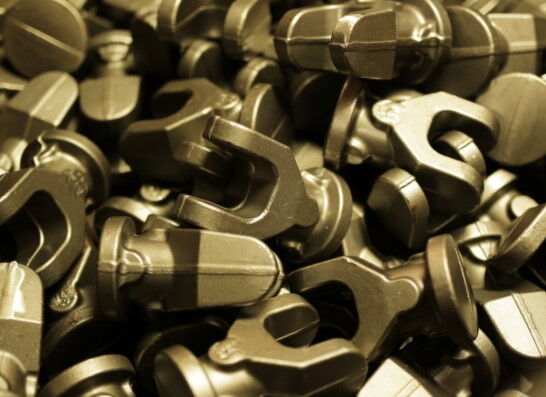
Electroplating is a chemical process in which oxidation–reduction reactions occur at the anode and cathode under the action of a direct current power supply. During electroplating, a salt solution containing the metal to be deposited is used as the electrolyte, while the substrate metal to be plated serves as the cathode. Through electrolysis, metal cations in the plating solution are deposited onto the surface of the substrate metal, forming a coating. The properties of this coating differ from those of the substrate, providing new characteristics such as protection, decoration, and other functional attributes.
According to the function of the coating, electroplating can be classified into protective coatings, decorative coatings, and other functional coatings. Protective coatings are mainly used to prevent corrosion of forged metals, such as zinc plating and nickel plating. Decorative coatings are used to enhance the appearance of forgings, such as chrome plating and gold plating. Functional coatings are designed to meet specific performance requirements, such as electrical conductivity and wear resistance.
Before electroplating, forgings are usually polished to reduce surface roughness and obtain a bright appearance. Polishing not only removes minor surface defects, but also provides a good foundation for electroplating. In addition, a series of pretreatment processes are required prior to electroplating, such as degreasing, rust removal, rinsing, neutralization, surface conditioning, and phosphating. These steps ensure a clean surface and improve the adhesion of the coating.
Baking paint is a common surface treatment method for forgings and can be divided into powder coating and liquid coating. It is widely used and relatively inexpensive, making it suitable for various substrates such as copper, iron, and aluminum. The baking paint process typically includes degreasing, rust removal, rinsing, neutralization, surface conditioning, phosphating, rinsing, baking, and color finishing.
The main advantages of baking paint are its cost-effectiveness and wide applicability. It provides forgings with good protection and an attractive appearance at a relatively low cost. The flexibility of the baking paint process also allows it to meet the diverse requirements of different customers.
Pretreatment before baking paint is crucial, as it directly affects the quality and appearance of the coating. The purpose of pretreatment is to remove grease, oxides, scale, dust, rust, and corrosion products from the forging surface, ensuring strong coating adhesion. Removing metal oxides through chemical reactions is an essential part of pretreatment and effectively enhances coating performance.
Sandblasting and shot blasting are two commonly used surface cleaning technologies for forgings, mainly applied to remove oxide scale and other impurities from the surface.
- Sandblasting: Sandblasting uses compressed air as the driving force to propel abrasive particles at high speed onto the forging surface to remove oxide scale. The typical working pressure ranges from 0.2 to 0.3 MPa. Sandblasting is suitable for forgings with special technical requirements or special materials, such as stainless steel and titanium alloys. However, it has low dust collection efficiency and high costs, requiring effective dust control measures.
- Shot Blasting: Shot blasting uses centrifugal force generated by a high-speed rotating impeller to project steel shots onto the forging surface to remove oxide scale. The working pressure is generally 0.5 to 0.6 MPa. Shot blasting provides cleaner surfaces and better cleaning results, but it also has disadvantages such as lower production efficiency and higher costs. Despite this, shot blasting is widely used in forging processing due to its high productivity and low consumable usage.
Mechanical finishing removes small amounts of material or surface defects by applying abrasive media to the metal surface, resulting in a uniform finish. Common mechanical finishing techniques include deburring, grinding, sandblasting, and polishing, all of which are widely used in forging surface treatment.
- Deburring: Deburring involves cutting sharp edges and burrs using tools to achieve a smooth transition and uniform appearance on the forging surface. Deburring machines, brushes, and files can achieve surface finishes ranging from 10 to 25 microns.
- Grinding: Grinding smooths forging surfaces by rotating grinding wheels that remove excess material and defects. Grinding machines and wheels reduce surface roughness and eliminate imperfections, achieving surface finishes between 0.8 and 6 microns.
- Sandblasting: In mechanical finishing, sandblasting propels abrasive media at high speed onto the forging surface for cleaning and texturing. Sandblasting machines and abrasives such as sand or glass beads are used to texture surfaces, remove rust and contaminants, and improve surface uniformity, achieving finishes of 1.6 to 12.5 microns.
- Polishing: Polishing involves repeated grinding with increasingly fine abrasives, followed by polishing with soft, ultra-fine particles. Grinding wheels, polishing wheels, and polishing compounds are used to achieve smooth, mirror-like forging surfaces, with finishes as low as 0.1 micron.
Chemical surface treatment alters surface properties through reactions between chemical solutions and the metal surface. Depending on the base metal and desired outcome, different chemical solutions are used, making this method widely applicable in forging surface treatment.
- Chemical Conversion Coatings: Chemical conversion coatings involve chemical solutions that react with the metal surface to form a protective layer. For example, chromate conversion of aluminum improves corrosion resistance and paint adhesion, and is widely used for forgings in aerospace, automotive components, electronic housings, and outdoor products.
- Pickling: Pickling uses strong acids such as sulfuric acid or hydrochloric acid to remove surface impurities, rust, oxide scale, weld burns, and other defects. It is suitable for all metals, especially steel, and is used to clean forging surfaces in preparation for further processing, such as surface cleaning of welded steel structures and final processing of forged metal parts.
- Passivation: Passivation involves treating stainless steel with citric acid or nitric acid solutions to form a chromium-rich layer. This process enhances wear resistance and corrosion resistance of stainless steel forgings and is widely used in food processing equipment, pharmaceutical containers, and marine hardware.
- Electroplating Finishing: Electroplating finishing deposits a required metal layer onto the substrate surface using an electrolytic process. For example, zinc plating on steel uses zinc sulfate or similar solutions as electrolytes. Zinc is connected to the negative electrode, while the iron workpiece is connected to the positive electrode. When current is applied, zinc deposits onto the iron surface, forming a firmly bonded zinc layer. Electroplating not only reduces surface roughness but also adds robust performance characteristics to the substrate. Coating thickness and uniformity depend on electrolytic current, time, ion concentration in the electrolyte, and other process parameters.
- Anodizing: Anodizing converts the surface of metals, primarily aluminum, into a decorative, durable, and corrosion-resistant finish. The anodizing process forms a complete oxide layer on the metal surface and is widely used for forgings in automotive, electronics, and cookware applications.
- Zinc Plating: Zinc plating coats iron, steel, or other metals to protect them from corrosion. The thin zinc layer produced by electroplating acts as a sacrificial coating, corroding before the underlying metal. Zinc plating is widely used for forgings in high-humidity environments.
- Chrome Plating: Chrome plating involves depositing a thin layer of chromium onto a metal object. This coating is highly valued for its aesthetic qualities, as it provides a bright and shiny surface, making it particularly suitable for forgings with high decorative requirements.
Surface roughness Ra is an important indicator of the finish quality of forged metal surfaces. Measured in microns, the Ra value directly reflects surface smoothness, the lower the value, the smoother the surface. Surface roughness measurement involves various tools and equipment, such as coordinate measuring machines, micrometers, and gauges. Surface roughness values quantify surface irregularities and defects. For example, Ra 6.3 μm indicates a rough, as-cast surface, while Ra 0.2–0.5 μm represents a mirror-like finish. Comparison finish plates are also used to evaluate forging surface finishes by comparing standard plates with the workpiece. Manufacturers additionally use standard samples for milling, turning, and other machining processes to ensure consistent forging quality.
Surface treatment of forgings is a key process for enhancing both product quality and appearance. By adopting appropriate surface treatment methods, such as electroplating, baking paint, sandblasting, shot blasting, mechanical finishing, and chemical surface treatment, the performance and service life of forgings can be significantly improved. Understanding the characteristics and applications of these processes helps in selecting the most suitable surface treatment method to meet diverse customer requirements. Whether for protective, decorative, or functional purposes, surface treatment provides substantial enhancements that allow forgings to stand out in a highly competitive market.