Temperature Monitoring in Metal Forging
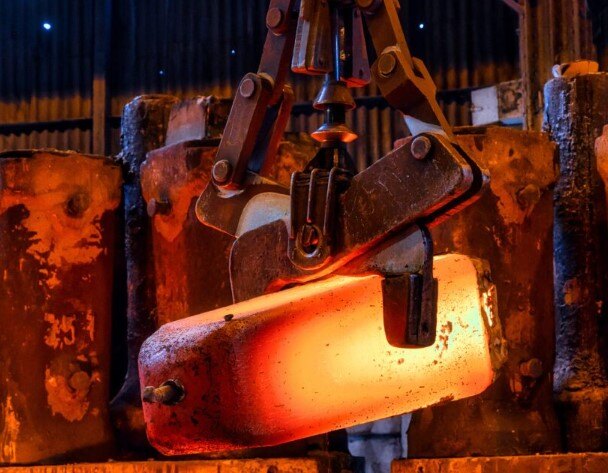
In daily life, many people may never pay attention to the technology of metal forging. In reality, however, the cars we drive, the high-speed trains we ride, the aircraft we travel in, and even the steel structures used in modern skyscrapers all rely on critical forged components. Simply put, forging is a manufacturing process in which metal is heated to an extremely high temperature and then shaped into the desired form under enormous pressure. Although the process may sound straightforward, one factor ultimately determines the quality of the forged product: temperature.
Metal forging requires extremely strict temperature control. Different metal materials must be processed within specific temperature ranges in order to be formed correctly. If the temperature is too low, the metal becomes excessively hard and may crack during deformation. If the temperature is too high, the internal structure of the metal can deteriorate, reducing its strength and durability. As a result, every stage of the forging process, from furnace preheating and billet heating to actual forging and subsequent heat treatment, requires accurate temperature monitoring and control.
In the past, many factories relied heavily on workers' experience to judge temperature conditions. However, this method lacked consistency and was prone to error. Today, non-contact infrared temperature measurement technology has become the mainstream solution in the forging industry. It allows manufacturers to measure temperature quickly and accurately without touching the hot metal surface, helping companies improve product quality, reduce energy consumption, and minimize equipment failures. This article explains in simple language why temperature is so important in metal forging and how effective temperature monitoring is carried out throughout different forging stages.
Metal forging is a manufacturing process that changes the shape of metal through the application of pressure. During the process, workers heat the metal to a high temperature and then apply massive force to form it into the required shape. Forging can produce components with high strength, excellent durability, and superior mechanical properties.
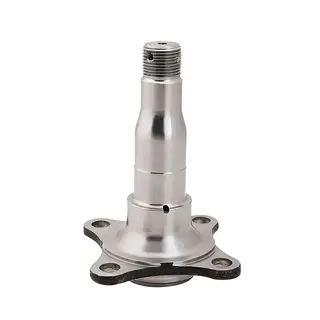
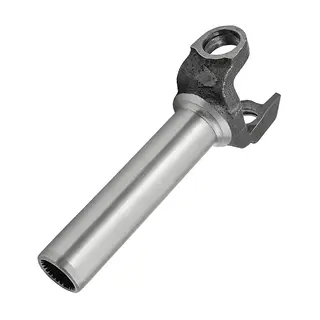
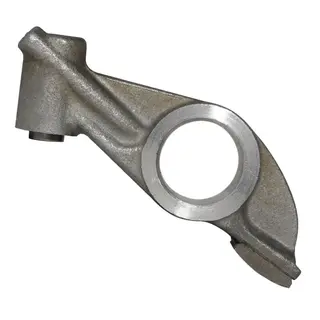
Metal forging is widely used across many industries. In the automotive industry, forged components are commonly used for engine parts, axles, and gears. The railway and transportation sectors use forging to manufacture critical components such as railway wheels. The aerospace industry depends heavily on forged parts because they must meet extremely high standards of safety and reliability. The construction industry also uses forged products in various structural applications.
Forging processes are highly dependent on temperature. Metals must reach specific temperature ranges before they can be plastically deformed effectively. Different metal materials require different forging temperatures. Steel, iron, aluminum, and various alloys typically need to be maintained between 900°C and 1250°C during hot forging operations.
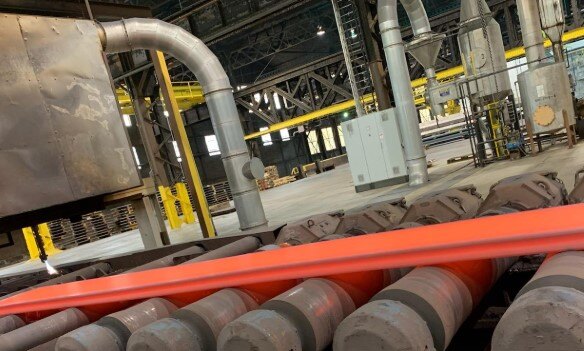
Temperature control is one of the most important factors affecting forging quality. Improper temperature management can directly result in various defects and performance problems.
When the metal temperature is too low, the material becomes extremely hard. Under forging pressure, hardened material is more likely to crack. These cracks may appear on the surface or remain hidden inside the material. Internal defects are particularly dangerous because they are difficult to detect during later inspections but can severely affect service life and operational safety.
When the metal temperature becomes too high, the internal structure of the material changes. The grain size of the metal may become excessively coarse, causing the material to lose its original strength. Overheating can also reduce wear resistance and other important mechanical properties. This type of structural degradation is irreversible. Once it occurs, the forged component may no longer meet operational requirements.
In addition to temperature extremes, uneven temperature distribution can also create serious quality defects. If different areas of a metal billet have different temperatures, uneven deformation will occur during forging. This may lead to warping, surface irregularities, or inconsistent internal structures within the forged part.
Throughout the entire forging process, temperature monitoring must be carried out at several critical stages. Temperature control at each stage has a major influence on final forging quality.
Before metal billets enter the heating furnace, the furnace itself must first be preheated. The purpose of this step is to ensure uniform temperature distribution inside the furnace chamber. If the furnace temperature is uneven, localized overheating or insufficient heating may occur during billet heating. At this stage, operators commonly use non-contact temperature measurement devices such as infrared pyrometers to monitor furnace temperature in real time and maintain a stable heating environment.
During billet heating, the surface temperature of the metal must be monitored precisely. The objective is to ensure that the metal reaches the proper forging temperature while avoiding overheating. Because furnace environments are extremely hot, traditional contact-type temperature sensors often cannot operate reliably for long periods. As a result, infrared thermometers have become the most commonly used solution during this stage. Infrared pyrometers can continuously measure temperature without contacting the metal surface, making them ideal for high-temperature industrial applications.
When the metal undergoes plastic deformation under a forging press or hammer, its surface temperature drops rapidly. If the temperature falls too quickly, the material may harden prematurely. Hardened material is more likely to develop cracks, uneven deformation, or internal structural defects during continued forging. Continuous temperature monitoring during forging helps operators ensure that the workpiece remains within the optimal plastic deformation temperature range.
After forging is completed, many metal components require additional heat treatment. The purpose of heat treatment is to further improve hardness, tensile strength, and wear resistance. This stage also requires highly accurate temperature control because heat treatment temperature directly determines the final microstructure and mechanical properties of the material. Excessive temperature deviation can lead to heat treatment failure and prevent the forging from meeting design specifications.
Implementing effective temperature monitoring systems provides forging manufacturers with multiple practical benefits.
Precise forging temperature control significantly reduces the occurrence of quality defects. Cracks, warping, surface irregularities, and internal structural inconsistencies can all be minimized. This enables manufacturers to produce forged parts with higher strength, greater durability, and better compliance with industry standards. High-quality products also help companies gain customer trust and secure more business opportunities.
Continuous monitoring of furnace and workpiece temperatures helps manufacturers optimize furnace operation. Operators can adjust heating parameters based on real-time temperature data, reducing energy waste caused by overheating or excessive heating time. Infrared temperature monitoring systems can also identify abnormal temperature changes early, preventing unnecessary energy consumption. Over time, this can significantly reduce production costs.
Real-time temperature monitoring systems can detect abnormal furnace conditions or temperature control failures before they become serious problems. Operators can address issues early, preventing costly production interruptions. Compared with repairing equipment after major failures occur, preventive monitoring saves considerable time and maintenance costs. Reduced downtime directly improves production efficiency.
With the development of industrial automation, modern temperature monitoring systems can now be integrated with automatic control systems. These systems can automatically adjust furnace and forging equipment parameters to maintain stable temperature conditions without constant human intervention. This not only improves production efficiency but also enhances process consistency and repeatability.
In the forging industry, non-contact infrared temperature measurement technology has become the mainstream solution for temperature monitoring. This technology can measure the surface temperature of extremely hot metals from a safe distance while continuously providing real-time temperature data.
Infrared pyrometers measure temperature by detecting infrared radiation emitted by hot objects. The device calculates the target temperature based on the intensity of the received infrared energy. Since the measurement process does not require physical contact with the object, the equipment is not directly affected by extreme heat.
Advanced dual-wavelength pyrometers can compensate for changes in emissivity on different metal surfaces. Metal surfaces with varying conditions emit infrared radiation differently, which may affect measurement accuracy. Dual-wavelength technology minimizes these errors and maintains reliable measurement accuracy even on reflective metal surfaces.
Compared with conventional contact-type thermometers, infrared temperature measurement devices offer several major advantages. First, they provide extremely fast response times and can complete measurements within milliseconds. Second, they can operate reliably for long periods in harsh industrial environments involving high temperatures, dust, and contamination. Contact-type devices are more likely to fail in such conditions and require frequent replacement, while infrared devices avoid these issues.
In addition to single-point infrared pyrometers, some manufacturers also use thermal imaging systems. Thermal imaging equipment can generate complete temperature distribution maps, allowing operators to quickly identify hot spots and cold spots on workpiece surfaces. This visual temperature information is highly valuable for optimizing forging processes. Operators can adjust heating parameters according to thermal images to achieve more uniform temperature distribution.
Different forging applications require different temperature measurement methods. Selecting the appropriate temperature monitoring solution for each scenario is essential.
Billet temperature is one of the most critical process control parameters. Billet temperature measurement generally involves two situations. One is measurement inside the heating furnace for batch heating control. The other is measurement before the billet enters the forging die to confirm that the material has reached the appropriate forging temperature.
When measuring temperature inside gas-fired furnaces, wavelength selection for infrared sensors is extremely important. Flames and combustion gases can interfere with infrared signals. Therefore, temperature sensors must use specific wavelength filtering technology capable of penetrating flame interference. Ratio pyrometers are often considered ideal because they automatically compensate for emissivity variations and maintain stable measurements even when oxide scale is present on the metal surface.
In induction heating systems, temperature feedback is critical for maintaining billet temperature consistency. Some measurement systems are installed between induction coils to directly observe billets inside the furnace. Other systems use fiber-optic probes with non-conductive optical fibers extending deep into induction coils for temperature measurement. This design allows accurate temperature monitoring without interfering with the heating process.
Forging die temperature has a major impact on forging quality. Excessively high or low die temperatures can cause premature die wear, increase lubricant consumption, and affect surface quality. Excessive die temperature may result in surface burning or localized melting, while low die temperature can contribute to surface cracking.
One challenge in die temperature measurement is that the target is not stationary. The die is affected by flames, lubricant spray, billet movement, and forged part removal. To solve this problem, some advanced infrared pyrometers use specialized signal processing technology. These devices can automatically identify valid measurement conditions and focus only on die temperature, effectively eliminating interference from surrounding factors.
During actual forging operations, workpiece temperature must be continuously monitored. In closed-die forging, the workpiece is enclosed inside the die and difficult to observe directly. However, in open-die forging, hammer forging, and ring rolling processes, the workpiece surface remains visible, making real-time infrared temperature monitoring possible.
After leaving the preheating furnace, forged workpieces gradually lose heat. If the temperature decreases too rapidly, cracks may develop during deformation, and tool wear may increase significantly. Workpiece temperature can also serve as an important process feedback parameter. Hotter workpieces can achieve greater plastic deformation during each forging stroke, while workpieces approaching the minimum deformation temperature require more careful impact control. By continuously monitoring workpiece temperature, operators can dynamically adjust forging force and optimize the entire forming process.
Metal forging is a manufacturing process that is extremely sensitive to temperature. From furnace preheating and billet heating to forging deformation and heat treatment, every stage requires accurate temperature control. Low temperatures can lead to cracks and internal defects, while excessive temperatures may cause microstructural degradation and performance loss.
Non-contact infrared temperature measurement technology provides an effective solution for temperature monitoring in forging operations. Infrared pyrometers and thermal imaging systems can operate reliably in harsh environments involving high temperatures and dust while delivering accurate real-time temperature data. By integrating temperature monitoring systems with automatic control technology, forging manufacturers can significantly improve product quality, increase energy efficiency, reduce equipment downtime, and ultimately achieve higher production efficiency.
Whether manufacturing railway wheels, automotive components, or aerospace parts, precise temperature control remains the foundation of forging quality. As temperature measurement technology continues to advance, the forging industry will achieve even more accurate and efficient temperature management, providing higher-quality metal components for a wide range of industries.