Complete Guide to Copper Alloy Hot Forging
In modern industrial manufacturing, copper alloys and hot forging technology are two closely connected and indispensable elements. Copper alloys are widely used in industries such as electrical power, construction, transportation, marine engineering, and machinery manufacturing because of their excellent electrical conductivity, thermal conductivity, and corrosion resistance. However, pure copper itself has relatively low strength and cannot satisfy the performance requirements of many high-strength components. To improve the mechanical properties of copper, alloying elements are commonly added during industrial production to create various copper alloys such as brass, bronze, and cupronickel.
At the same time, in order to manufacture these copper alloys into components with complex shapes and reliable performance, hot forging has become one of the preferred forming methods. Hot forging takes advantage of the increased plasticity of metals at elevated temperatures. By applying pressure to heated copper alloy billets, the material undergoes permanent deformation and gradually forms into the required shape and dimensions.
Compared with cold working processes, hot forging can significantly reduce the risk of cracking, refine the internal grain structure, and improve production efficiency. Therefore, understanding the classifications and characteristics of copper alloys, the critical parameters of hot forging, and the complete manufacturing process is highly important for professionals involved in metal processing, mechanical engineering, and materials engineering.
The following sections provide a systematic overview of copper alloy hot forging, including material classifications, process characteristics, advantages, limitations, and manufacturing procedures.
Copper alloys are widely used metallic materials known for their excellent conductivity, corrosion resistance, and good formability. In the metal processing industry, copper alloys are frequently used to manufacture electrical components, piping fittings, automotive parts, heat exchangers, and marine equipment.
Copper alloys are typically composed of copper combined with alloying elements such as zinc, tin, aluminum, nickel, or silicon. By adding different alloying elements, the strength, hardness, wear resistance, and heat resistance of copper can be significantly improved.
Common copper alloy categories include the following:
- Brass: Brass is an alloy composed primarily of copper and zinc. It offers good mechanical properties, excellent machinability, and relatively low manufacturing cost. Brass is widely used in valves, plumbing fittings, fasteners, and electrical hardware.
- Bronze: Bronze is mainly composed of copper and tin. Compared with brass, bronze generally provides higher strength and better wear resistance. Bronze alloys are commonly used for bearings, gears, bushings, marine components, and heavy-duty industrial applications.
- Cupronickel: Cupronickel is a copper-nickel alloy known for its excellent corrosion resistance, especially in seawater environments. It is widely applied in marine engineering, shipbuilding, desalination equipment, and chemical processing industries.
Each type of copper alloy has different performance characteristics and application areas. Selecting the proper copper alloy is essential for ensuring the final product’s quality, reliability, and service life.
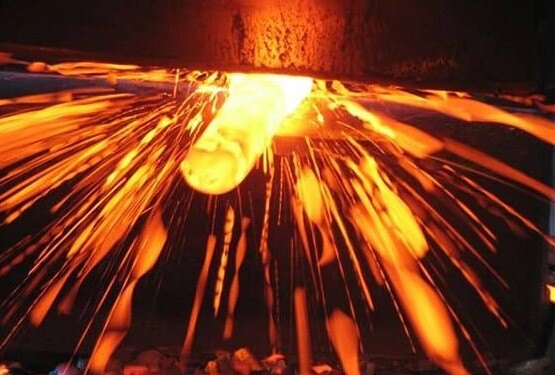
Hot forging is an important metal forming process in which pressure is applied to a metal at elevated temperature to produce plastic deformation and create the desired shape.
The process usually begins with heating the metal billet to a specific temperature. The heated billet is then placed between forging dies and shaped by hammers or forging presses. Because high temperatures significantly improve the plasticity of metals, hot forging can reduce the risk of cracking and increase formability.
Hot forging mainly includes two methods:
- Open-Die Forging: Open-die forging is suitable for large parts with relatively simple shapes. This method does not require fully enclosed dies, providing greater flexibility during operation.
- Closed-Die Forging: Closed-die forging uses specially designed dies to manufacture parts with complex geometries and high dimensional accuracy. It is widely used for high-volume production of precision components.
From a technical perspective, hot forging refers to the plastic deformation of metal above its recrystallization temperature. During this process, the material continuously recrystallizes while deforming, which prevents work hardening. As a result, the material maintains relatively low yield strength and high ductility, allowing large deformation without brittle fracture or cracking.
Copper alloys can be successfully processed through hot forging, and hot forging is one of the most common manufacturing methods for copper alloy components. Because copper alloys exhibit good ductility and plasticity at elevated temperatures, they can be forged into complex shapes while maintaining strict dimensional tolerances.
However, several critical factors must be considered during copper alloy hot forging. These factors include alloy type, forging temperature, forging speed, and lubrication conditions. Different copper alloys require different forging parameters to achieve optimal results.
The type of copper alloy directly affects its hot forging performance. For example, high-zinc brass generally has better hot workability than low-zinc brass because it exhibits improved plastic flow behavior at elevated temperatures.
Bronze alloys, on the other hand, usually have higher strength and hardness, making them more difficult to forge. Bronze forging often requires higher forging pressure and more precise temperature control.
Forging temperature is one of the most important factors affecting hot forging quality. The optimal forging temperature range for copper alloys is generally between 700°C and 950°C, depending on the specific alloy composition.
If the temperature is too low, the material may experience work hardening and cracking. At lower temperatures, the metal loses plasticity, and deformation resistance increases significantly.
If the temperature is too high, excessive grain growth may occur, reducing the mechanical properties of the material. Coarse grain structures can decrease strength, toughness, and fatigue resistance.
Forging speed is another critical parameter. Excessively high forging speed may cause material cracking because internal stresses cannot be released quickly enough during rapid deformation.
Conversely, overly slow forging speed may negatively affect surface quality and dimensional accuracy. Slow forging may also allow the metal to cool too quickly inside the die cavity, increasing deformation resistance.
Therefore, forging speed should be adjusted according to the alloy type and workpiece dimensions. Large components generally require slower forging speeds, while smaller parts can often be forged at higher speeds.
Lubrication is also an essential part of the hot forging process. Proper lubrication reduces friction between the metal and the die, prevents sticking, and improves the surface quality of forged parts.
Common lubricants include:
- Graphite-based lubricants for high-temperature forging applications
- Water-based lubricants for environmentally friendly medium- and low-temperature forging
- Synthetic lubricants specially developed for certain copper alloy materials
The selection of lubricant depends on forging temperature, alloy type, and specific production requirements. Effective lubrication not only improves production efficiency but also reduces die wear and extends tool life.
Copper alloy hot forging provides several important advantages.
- Grain Refinement: Hot forging refines the internal grain structure of the material, improving strength, toughness, and fatigue resistance. Forged copper alloy components generally have more uniform and finer grains, leading to better mechanical performance.
- Ability to Produce Complex Shapes: Hot forging can manufacture components with complex geometries that are difficult to achieve using many other processing methods. With precision dies, complicated shapes can often be formed in a single operation, reducing secondary machining requirements.
- Improved Production Efficiency: Hot forging offers high production efficiency while reducing material waste and minimizing machining operations. Compared with machining from solid stock, hot forging provides much higher material utilization and lower scrap generation.
- Better Surface Quality: Forged parts usually exhibit relatively good surface quality, reducing the need for extensive grinding or polishing operations. This helps lower manufacturing costs and shorten production cycles.
Although hot forging has many advantages, several issues must still be carefully controlled during copper alloy processing.
- Oxidation: Copper alloys are prone to oxidation at high temperatures, forming oxide scale on the surface. Oxidation can affect surface finish and dimensional accuracy, often requiring additional cleaning or descaling operations.
- Grain Growth: Excessive heating temperature or prolonged holding time may lead to grain growth, which reduces mechanical properties. Strict control of heating temperature and soaking time is therefore essential.
- Die Wear: The high pressure and friction involved in hot forging can cause significant die wear. High-quality die materials and proper lubrication are necessary to reduce equipment wear and improve production stability.
The manufacturing of copper alloy forgings includes multiple stages, from raw material selection to final inspection.
The first step is selecting high-quality raw materials. Copper with purity levels of approximately 99.9% is commonly used to ensure excellent conductivity and thermal performance.
Raw copper materials are usually supplied in the form of bars or rods. These materials are cut into billets suitable for heating and forging operations.
The billets are heated in a furnace until they become soft enough for plastic deformation. Typical heating temperatures range from 800°C to 900°C, depending on the alloy type.
The heated billets are then placed into forging presses or hammers, where pressure is applied through dies to gradually form the desired shape. Multiple forging operations may be required before achieving the final dimensions.
After forging, the components are cooled through air cooling or water cooling to restore a stable solid-state structure.
Cooling rate significantly affects grain structure and final mechanical properties. Rapid cooling generally produces finer grains and higher strength, while slower cooling can reduce internal stress and improve toughness.
After cooling, finishing operations are performed to remove flash, burrs, and surface defects generated during forging.
Depending on product requirements, additional surface treatments such as polishing or electroplating may also be applied. Polishing improves appearance, while plating can enhance corrosion resistance and conductivity.
The final step involves testing and inspection to ensure the forgings meet required specifications and standards.
Non-Destructive Testing: Methods such as ultrasonic testing and X-ray inspection are used to detect internal cracks or defects without damaging the component.
Destructive Testing: Mechanical tests such as tensile testing and impact testing are performed to evaluate material properties and overall performance.
Visual inspection is also conducted to confirm that the surface is free from defects that could affect functionality or reliability.
Only forgings that satisfy all quality requirements are accepted, while defective products are rejected.
Temperature control is the most critical parameter in hot forging operations. The metal must be heated above its recrystallization temperature to ensure sufficient plasticity.
For pure metals, the forging temperature is generally around 0.3 to 0.4 times the melting temperature. For alloy materials, it is usually approximately 0.5 times the melting temperature.
In general, the minimum hot forging temperature is approximately 60% of the material’s absolute melting temperature.
Typical hot forging temperature ranges include:
- Steel: approximately 700°C to 1250°C
- Aluminum alloys: approximately 300°C to 550°C
- Titanium alloys: approximately 750°C to 1040°C
- Copper alloys: approximately 700°C to 800°C
These temperature ranges represent the optimal processing windows for maintaining good workability while preventing excessive grain growth.
The hot forging process begins with heating the material in specialized furnaces. Accurate temperature control during this stage is essential because it directly affects forming performance and final mechanical properties.
At the same time, forging dies must also be preheated and prepared. Since hot forging dies are exposed to repeated thermal cycling and heavy mechanical loads, they are usually manufactured from heat-resistant tool steels designed for high-temperature applications.
The dies are specially designed according to the geometry of the component to ensure that the forged part achieves the required dimensions and structural integrity.
Copper alloy hot forging is a mature and widely used metal forming technology. By properly controlling alloy selection, forging temperature, forging speed, and lubrication conditions, manufacturers can produce high-quality copper alloy components with excellent mechanical and physical properties.
Although challenges such as oxidation, grain growth, and die wear exist during the forging process, these issues can be effectively controlled through scientific process design and strict quality management.
The manufacturing process of copper alloy forgings involves multiple critical stages, including raw material selection, heating, forging, cooling, finishing, inspection, and testing. Every stage plays an important role in ensuring the final product’s quality, reliability, and service performance.
As industrial manufacturing continues to demand higher performance materials and more complex component designs, copper alloy hot forging will remain an essential processing technology across a wide range of industries.