Forging vs. Fabrication: Two Core Metal Processing Methods
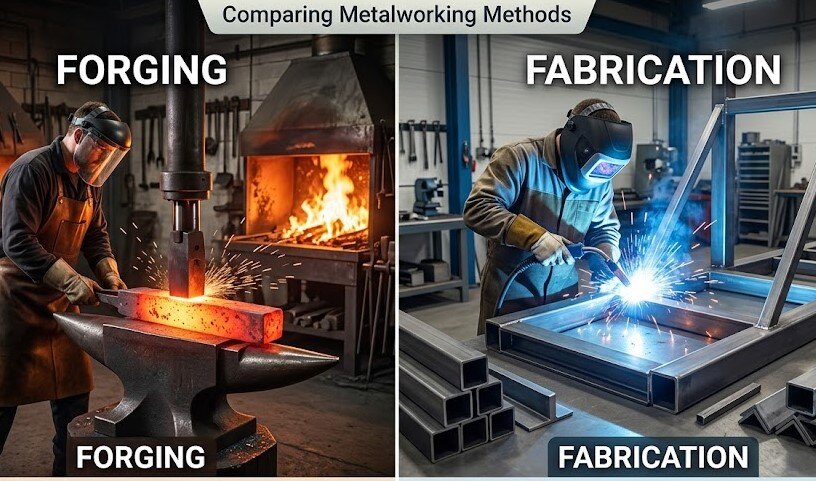
Metal processing is the industrial process of transforming raw metal materials into components or finished products. With the advancement of steel forming technologies, metal processing methods have evolved significantly. Although it is now rare to see traditional hand-forged hot steel being hammered in workshops, the fundamental principles of metal forming remain unchanged. In modern industry, the two most common metal processing methods are fabrication and forging. Understanding the differences between metal forging and metal fabrication is highly important for product design, material procurement, and production decision-making.
Among the two core metal processing methods, fabrication represents a technological approach based on cutting, joining, and assembly. To understand why this process plays a dominant role in modern industry, it is necessary to clearly define its concept, workflow, core equipment, and typical applications.
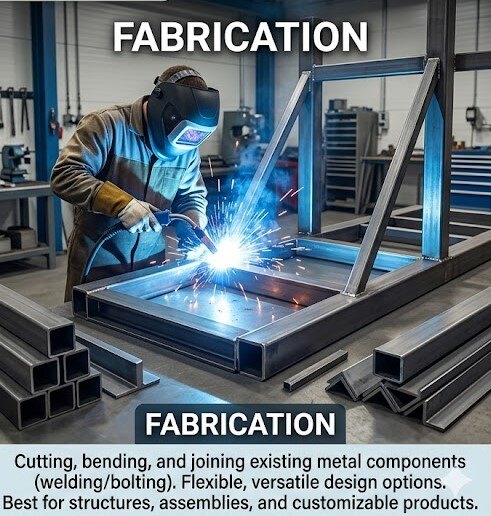
Fabrication is a broad industrial concept that generally refers to the entire process of cutting, shaping, and assembling processed metal materials. The core idea is to perform value-added processing on materials using different techniques to ultimately form components or finished structures. Fabrication does not aim to change the internal crystal structure of the metal; instead, it reshapes materials externally into required geometries and assembles multiple parts into a complete structure.
In modern fabrication workshops, commonly used equipment includes laser cutting machines, press brakes, and automated welding systems. These systems work together to complete the entire process from part manufacturing to final assembly. Fabrication emphasizes efficiency and mass production and is widely used in industrial and construction fields, focusing on speed, standardization, and repeatability.
The fabrication process typically consists of three main stages: cutting, welding or joining, and assembly. First, according to engineering drawings, raw metal materials such as plates, bars, or pipes are cut into required dimensions. Second, components are joined using welding, riveting, or other connection methods. Finally, overall assembly and testing are performed to complete the finished structure.
Welding plays a critical role in this process. In many cases, weld strength can even exceed that of the base material itself, making it widely used in large structural components and complex assemblies. Even though robotic welding has greatly improved efficiency and consistency, manual welding is still irreplaceable in certain specialized applications.
Fabrication widely uses plate rolling, press bending, and CNC cutting systems. Although these machines require relatively high initial investment, they enable high precision, multi-material adaptability, and flexible processing of complex structures, making them suitable for a wide range of industrial manufacturing needs.
Common techniques include waterjet cutting for heat-sensitive materials, laser cutting for high-precision thin sheets, plasma cutting for fast thick-plate processing, and flame cutting for low-cost rough processing. Additional processes such as drilling, punching, bending, stamping, and stretching are also widely used. Bending forms angular structures, stamping is suitable for mass production of standard parts, and deep drawing is used for cup-shaped or cavity structures.
Fabricated products are typically composed of multiple assembled components, emphasizing structural accuracy and consistency. Common examples include metal gates, railings, mechanical frames, industrial brackets, and various sheet metal products. In large engineering projects, fabrication is often preferred due to its controllable cost and high design flexibility.
Unlike the “assembly-based” concept of fabrication, forging represents a traditional process that reshapes metal through strong compressive force. This process not only changes the external shape of the metal but also significantly improves its internal grain structure, enhancing mechanical performance. Understanding its definition, process flow, differences between hot and cold forging, and main methods is essential to fully grasp forging technology.
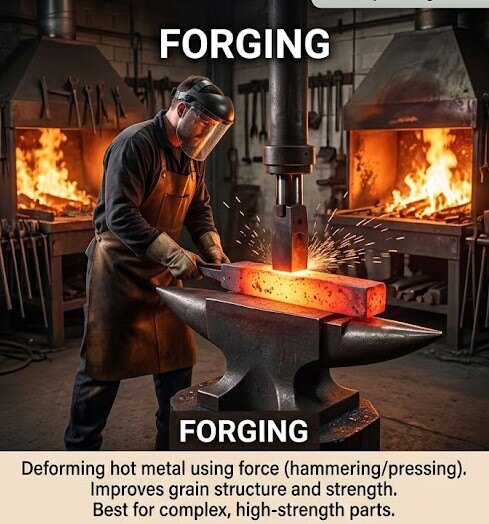
Forging is a metal forming process in which heated metal is subjected to repeated impact or high-pressure compression to change its shape. Although modern forging no longer relies on traditional blacksmith hammering, its essence remains the same: metal deformation under strong compressive force. During forging, the workpiece undergoes severe plastic deformation under high pressure, compressing internal pores and impurities, resulting in a denser and more refined crystalline structure.
Forging does not merely change the external shape of metal; more importantly, it improves the internal grain structure, aligning it along stress directions and significantly enhancing overall strength and durability.
The forging process typically includes heating, hammering or pressing, and forming. Traditionally, steel or iron is heated to a plastic state and shaped through hammering or pressing tools. In modern industry, forging is usually performed using dedicated molds known as die forging. Common equipment includes furnaces, hammers, anvils, and fixtures, while modern production relies more on presses and precision dies.
A typical industrial forging workflow includes die design, billet preparation, heating, forming, heat treatment, cooling, and surface finishing. Each stage directly affects the final performance, cost, and quality of the component.
Forging can be performed under different temperature conditions, mainly divided into hot forging and cold forging.
Hot forging is carried out at high temperatures, with metal heated up to approximately 2500°F. High temperature improves material plasticity, making it easier to form complex or large parts. It reduces deformation resistance and equipment load, but dimensional accuracy is relatively lower and requires post-processing.
Cold forging is performed near room temperature, typically not exceeding around 25°C. It provides higher dimensional accuracy and better surface finish due to the absence of oxidation. However, it requires significantly higher forming force and is suitable for simpler shapes and high-volume small parts.
Depending on production requirements, forging has developed multiple methods:
- Hammer forging for small batches and complex shapes
- Press forging for medium to large batches with higher precision
- Roll forging for long components such as shafts
- Upset forging for locally thickened parts like bolt heads
- Automatic hot forging for mass standardized production
- Ring rolling for high-strength ring components
- Cold precision forging for near-net-shape forming
Isothermal and induction forging for advanced materials and high-efficiency production
Rotary forging for thin-walled symmetrical parts
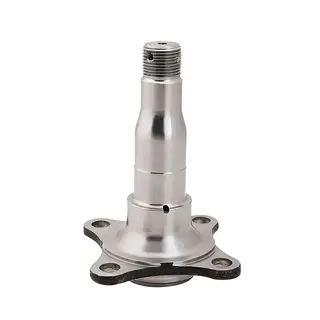
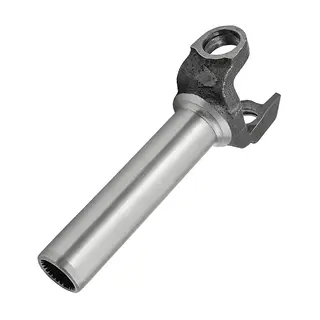
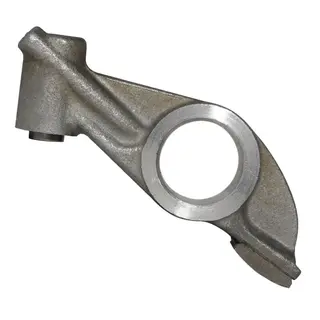
Forged components typically have high strength and reliability, making them suitable for high-stress parts. Common forged products include knives, axes, chisels, horseshoes, nails, and decorative ironwork. In modern industry, forging is widely used in automotive, aerospace, and heavy machinery industries where safety requirements are extremely high. Forged products often feature unique textures and are widely used in tools, cutting instruments, and artistic metal products.
After understanding both processes individually, they must be compared on the same analytical basis. Differences in principles, performance, cost, efficiency, appearance, and application directly influence engineering design and production decisions.
Forming Method Difference: Forging reshapes a single metal billet through heating and high-pressure deformation, fundamentally modifying the material. Fabrication assembles multiple pre-processed components through cutting and welding, forming a composite structure. Forging does not remove material but strengthens it through deformation. Fabrication removes excess material and connects parts into a final structure.
Changes in Material Structure: Forging realigns internal grain structure and compresses impurities, resulting in a denser material. Fabrication does not change internal crystal structure; final performance depends mainly on joint quality.
Overall Strength vs. Joint Strength: Forged parts typically have higher overall strength due to grain alignment along stress directions. Fabricated structures rely heavily on weld quality, and each joint may become a potential weak point requiring strict inspection.
Durability and Reliability: Forged products generally have longer service life due to dense internal structure and better fatigue resistance. Fabricated products depend on welding quality and structural design. For long-term high-load applications, forging is usually safer.
Production Cost Analysis: Forging typically has higher material and processing costs due to larger billets and multiple forming stages. Fabrication is more suitable for large-scale projects with lower cost due to efficient material utilization and automation.
Batch Size and Production Scale: Forging is suitable for small batches with high quality stability. Fabrication is more economical for large-scale standardized production using CNC and automated systems.
Product Appearance Characteristics: Forged products often have a handcrafted texture and unique surface marks. Fabricated products are more standardized, uniform, and industrial in appearance.
Industry Applications: Forging is suitable for tools, aerospace components, cutting tools, and artistic metalwork. Fabrication is widely used in structural frames, industrial supports, enclosures, and construction systems.
The final decision depends on real engineering requirements such as strength, complexity, budget, and production volume.
For high-load, high-stress, or fatigue-critical applications, forging is preferred due to its superior internal structure. For general load-bearing structures, fabrication is more cost-effective.
Fabrication offers greater design flexibility for complex structures. Forging is better suited for solid or relatively simple high-strength components.
Forging is more expensive but provides higher performance and uniqueness. Fabrication is better suited for large-scale production and cost control.
Forging and fabrication are not competing technologies but complementary metal processing methods. Forging focuses on improving internal material properties through deformation, delivering high strength and durability. Fabrication focuses on efficiency and scalability by assembling multiple components into complex structures.
In real-world applications, the key decision is whether the product requires a high-strength monolithic part or a multi-component structural assembly. Forging excels in extreme stress conditions, while fabrication offers flexibility and cost efficiency. Understanding their differences helps engineers and procurement teams make better decisions and avoid issues such as cost overruns, insufficient strength, or delivery delays.
With continuous advancement in metal processing technologies, both forging and fabrication continue to evolve. Modern forging integrates precision dies and temperature control systems, while fabrication benefits from CNC automation and robotic welding. Regardless of the method chosen, the ultimate goal remains the same: transforming metal materials into high-quality products that meet design and operational requirements.