Carbon Steel and Alloy Steel Forging Technology
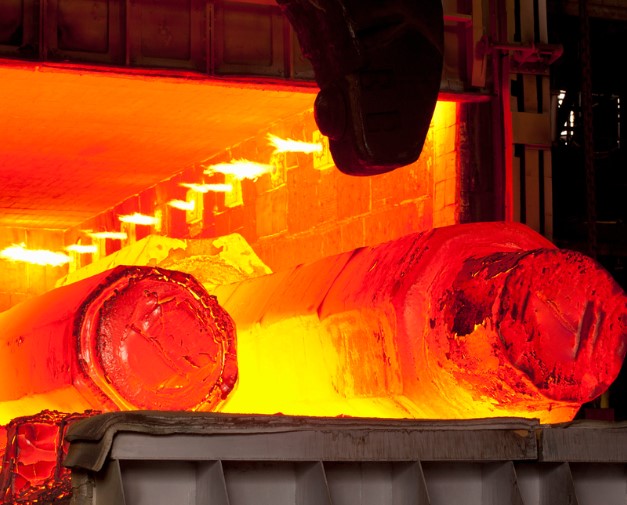
The forging of carbon steel and alloy steel is an important metalworking process that shapes metal materials into the desired form through the application of pressure while improving the internal structure of the material. This process not only refines the casting structure and repairs internal shrinkage defects but also significantly enhances the mechanical properties of the forgings. Compared with casting or machining, forged parts require considerably less subsequent machining, although the specific extent depends on the geometric complexity of the finished part and the type of forging process used.
Traditionally, forging production starts with ingots, which can either be used directly for forging or be processed into hot-worked billets or steel billets. With the popularization of continuous casting technology, continuous cast products are now more commonly used as the initial billet in industrial production. In addition to ingots and rolled billets, sheets, bars, and cast steel components are also common raw materials for forging.
The history of steel forging can be traced back to the early Iron Age. At that time, hot hammering was the core process for producing wrought iron and manufacturing wrought iron products. Early production involved smelting small amounts of iron from high-grade iron ore, charcoal, and flux in simple furnaces. These iron pieces had to be manually forged and welded to form usable material. The primary purpose of forging at the time was to connect dispersed iron pieces into a whole. It is widely believed that the Industrial Revolution marked the beginning of systematic development in steel forging. Despite such a long history, steel forging still largely relies on accumulated experience, with many process parameters determined through practical trials.
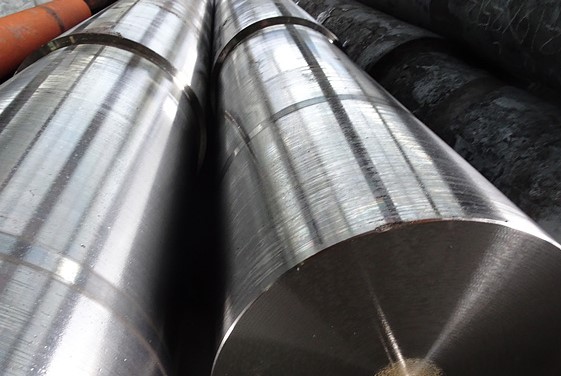
- By Die Type: Forgings are generally classified in several ways. Firstly, based on die form, they are divided into open-die forging and closed-die forging. Open-die forging does not use enclosed dies and is suitable for producing large, simple-shaped parts, while closed-die forging uses dies with cavities to form complex shapes with higher dimensional accuracy.
- By Machining Allowance: Forgings can also be classified according to how close they are to the finished product, i.e., based on the amount of material that needs to be removed through machining (machining allowance). This classification is closely related to the inherent properties of the forging, including key indicators such as strength and stress corrosion resistance. Generally, forgings that require minimal machining to meet the finished part requirements have the best overall performance.
- By Equipment Type: Finally, forgings can also be further subdivided according to the forging equipment required for production, such as hammer forging, ring rolling, and multi-directional forging. Among these classifications, the one based on proximity to finished product most accurately reflects the actual performance of the forging.
Determining the forging temperature is the first step in obtaining high-quality forgings. Temperature selection must comprehensively consider four major factors: carbon content, alloy composition, optimal plasticity temperature range, and required deformation. Among these, carbon content has the most significant effect on the maximum forging temperature—the higher the carbon content, the lower the allowable maximum forging temperature to prevent overheating or burning.
Carbon steel and alloy steel are currently the most widely used forging materials and can be forged using hot, warm, or cold forging processes with standard equipment to produce various shapes. The choice of forging temperature mainly depends on several key factors: carbon content, alloy composition, the temperature range of optimal plasticity, and the required deformation of the workpiece. Among these factors, carbon content has the most significant impact on the upper limit of forging temperature.
- Hot forging is usually carried out between 950°C and 1250°C, depending on the type of steel. This temperature range gives the material maximum ductility and plasticity, allowing complex shapes to be formed with relatively low force. Dynamic recrystallization during hot forging can eliminate work hardening, improving the material's toughness and impact resistance.
- Warm forging typically occurs between 200°C and 900°C, falling between cold and hot forging. Warm forging combines the advantages of both: compared with cold forging, forming loads are reduced by 15–30% and material flowability is better; compared with hot forging, oxidation is lower, dimensional control is more precise, and die life is longer.
- Cold forging is performed at room temperature (20–200°C), increasing material strength through work hardening. Cold-forged parts have excellent surface finish and dimensional accuracy, with tolerances up to ±0.05 mm, very high material utilization, and the lowest energy consumption. However, cold forging is mainly suitable for low-carbon steels and other materials with good ductility, and the part shapes are relatively simple.
According to the latest industry data, the recommended forging temperature ranges for different steels are as follows:
- Carbon steel: 1100–1250°C, one of the widest forging temperature ranges.
- Low-alloy steel: Similar to carbon steel, but requires stricter temperature control to prevent overheating.
- High-alloy steel (e.g., high-chrome steel, nickel-based alloys): Narrow forging temperature window, operating is like “walking a tightrope”—slightly higher temperatures cause burning, slightly lower cause cracking.
- Stainless steel: 1050–1150°C, avoiding prolonged dwelling around 800°C to prevent carbide precipitation that affects corrosion resistance.
Scientific selection of forging temperature directly determines whether the material can be successfully formed, but temperature is only one factor affecting final quality. The real source of excellent performance in forgings lies in the microstructural changes occurring during forging—from grain refinement to defect repair, from flow-line control to performance optimization, all these changes together constitute the irreplaceable technical value of forging processes.
During forging, under the action of pressure, the material undergoes plastic deformation, coarse grains in the original casting structure are broken and rearranged, forming finer and more uniform microstructures. Grain refinement is a function of temperature, deformation direction, and deformation amount. At the same time, forging can compact internal porosity and shrinkage, improving material density.
Studies show that the forging ratio (degree of deformation) significantly affects material performance. Taking high-strength 40CrNi2Si2MoV steel as an example, under high forging ratios, the austenite peak is significantly reduced, martensite becomes dominant, dislocation density increases, and strength and hardness are improved. Compared with low forging ratios, impact toughness increases by about 1.23 times, tensile strength by 1.02 times, and microhardness by 2.25%.
The most unique advantage of forging is the ability to control the metal flow direction. For complex-shaped parts, only forging can align metal flow lines with the primary load direction, maximizing load-bearing capacity. This directional fiber structure allows forgings to exhibit good mechanical properties along the longitudinal, transverse, and short-transverse axes.
For example, in upset disc forgings, a proper forging process can achieve uniform mechanical properties along the entire circumferential and radial directions, which cannot be achieved by discs cut from rolled plates.
Fully controlling metal flow to optimize performance in complex forging shapes often requires one or more upsetting operations before die forging, and sometimes hollow forging or backward extrusion to avoid flash along die parting lines. Such process planning maximizes material structural integrity, optimizes design configuration, and reduces part weight while ensuring performance.
Forging significantly enhances the overall performance of materials through grain refinement and flow-line control, but this improvement is predicated on the material being able to plastically deform under specific conditions without cracking. Different steels have significant differences in deformability under the same forging parameters, which brings in the key concept of forgeability—it directly determines whether the material is suitable for forging, and what specific forging temperature and deformation rate should be used.
Forgeability refers to the relative ability of steel to undergo plastic flow under compressive loads without fracturing. Except for sulfur-containing free-machining steels and rephosphorized steels, most carbon steels and low-alloy steels are considered to have good forgeability. Differences in forging behavior among different steel grades are small, and forging behavior rarely influences steel selection. However, selecting sulfur-added or rephosphorized steels is usually only reasonable when the forging will undergo extensive subsequent machining, because one main reason for choosing forging is to reduce subsequent machining operations.
- Hot Torsion Test: One of the most common methods. Heated rod samples are twisted at multiple temperatures across the possible hot-working temperature range until fracture. The temperature with the highest number of twists is considered the optimal hot-working temperature.
- Wedge Forging Test: Wedge-shaped samples are forged between flat dies to determine vertical deformation that causes cracking.
- Upsetting Test: Cylindrical rod samples are compressed between parallel flat dies, with the cylinder axis parallel to the dies and ends unconstrained, measuring deformation before cracking to evaluate forgeability.
- Notched Upsetting Test: Similar to the standard upsetting test, but with axial notches in the sample to introduce higher local stresses, simulating actual forging conditions.
Although there are many available compositions, all materials in this category show fundamentally similar forging characteristics, except steels with free-machining additives such as sulfides, which are more difficult to forge.
Typically, hot forgeability of carbon and alloy steels improves with increasing deformation rate. The improvement in machinability is mainly due to deformation-generated heat at high rates. Heat generated within the material at high deformation rates helps maintain forging temperature, reducing temperature drops caused by die contact.
Forging of carbon and alloy steels is a process that combines ancient techniques with modern technology. From hand hammering in the Iron Age to today’s precision CNC forging, this process has continuously evolved. Understanding the relationship between forging temperature, deformation, and microstructural evolution, and mastering the forging characteristics of different steels, is crucial for producing high-quality forgings.
With the popularization of continuous casting, intelligent forging equipment, and simulation technologies, modern forging processes are becoming more efficient, precise, and environmentally friendly. Whether for cost-sensitive carbon steel components or high-performance alloy steel parts, forging will continue to play a key role in manufacturing, providing reliable and high-performance components across industries.