Tempering of Metal Forgings: Principles, Objectives & Types
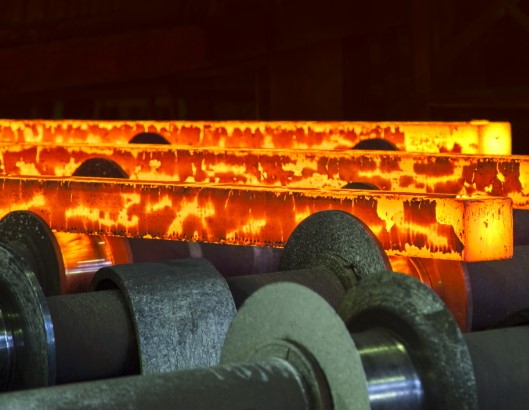
In the metal forging and heat treatment process, tempering, as a critical step following quenching, plays an important role in determining the performance and service life of forged components. Although quenching can significantly improve the hardness and strength of steel parts, it also introduces considerable internal stresses and brittleness, which can lead to deformation, cracking, or even failure of components. To eliminate these adverse factors and simultaneously improve the comprehensive mechanical properties, machinability, and fatigue resistance of metal forgings, tempering becomes an indispensable process. This article systematically elaborates on the core objectives of tempering, process principles, types, and performance changes and brittleness control in practical applications, providing reference and guidance for engineering practice.
Forgings after quenching often have large internal stresses, high brittleness, and dimensional instability. Tempering is designed to address these defects. The core objectives can be summarized as follows:
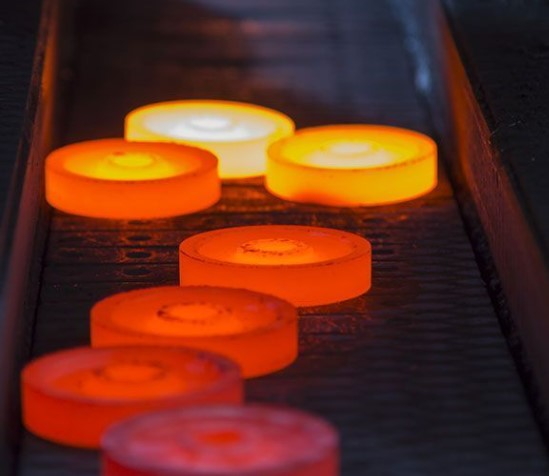
The primary goal of tempering forgings is to eliminate or reduce the internal stresses generated during quenching. Quenching, as a key method in metal heat treatment, significantly increases the hardness and strength of metals through rapid cooling. However, the side effect of rapid cooling is the generation of large internal stresses, which often lead to severe problems such as deformation and cracking of the forgings.
Tempering involves reheating the quenched forgings to a specific temperature, holding them for a certain period, and then cooling, which can effectively reduce or eliminate these internal stresses. This process significantly reduces the tendency of forgings to deform or crack, greatly enhancing dimensional stability and service life.
Quenched forgings usually contain martensite or other hard and brittle phases, which are prone to brittle fracture under stress. Tempering promotes the decomposition of martensite and forms more stable, ductile structures, including tempered martensite, tempered troostite, and tempered sorbite.
These optimized microstructures not only improve the plasticity and toughness of forgings but also allow better energy absorption under load, effectively preventing brittle fracture. By precisely controlling tempering temperature and time, grain refinement can be achieved, and carbide precipitation can be promoted and distributed reasonably, significantly improving toughness without significantly reducing strength.
For large mechanical components subjected to complex stress states, comprehensive mechanical properties are crucial. For example, heavy machinery spindles and key components of large gearboxes require sufficient hardness to resist wear and excellent toughness to absorb impact energy, ensuring long-term stable operation under extreme conditions. Tempering optimizes the material’s microstructure, achieving a favorable combination of hardness and toughness.
Tempering can also effectively remove hydrogen from the forging or achieve a more uniform distribution, which is beneficial for reducing the risk of hydrogen embrittlement. Hydrogen embrittlement is a common phenomenon in metals, leading to increased brittleness and shortened service life. The diffusion process during tempering can expel hydrogen or distribute it more evenly, reducing the harm caused by hydrogen embrittlement.
With the release of internal stress and optimization of microstructure, forgings exhibit better dimensional stability and lower deformation tendency during subsequent machining processes such as cutting and grinding, which is important for improving machining accuracy and efficiency. Meanwhile, tempering optimizes the microstructure, reduces internal defects and stress concentrations, and significantly enhances the fatigue resistance of forgings, enabling better resistance to fatigue failure during long-term use.
Tempering refers to heating quenched steel to a temperature below Ac1 (the temperature at which pearlite begins to transform into austenite), holding it for a certain period, and then cooling it to room temperature, so that unstable structures transform into more stable structures.
The microstructure of quenched steel is mainly martensite, which is characterized by high hardness, high brittleness, dimensional instability, and large internal stresses, making it prone to cracking and unsuitable for direct use. Therefore, tempering is necessary to achieve the required hardness, microstructure, and comprehensive performance.
The specific objectives of tempering include:
- Reducing or eliminating quenching-induced internal stress in parts
- Appropriately lowering hardness, improving steel plasticity and toughness, and achieving good comprehensive mechanical properties
- Stabilizing the microstructure to maintain dimensional accuracy over long-term use
- Improving machinability and preventing cracking during grinding
According to the heating temperature, tempering is generally divided into low-temperature, medium-temperature, and high-temperature tempering. The cooling method after tempering is usually air cooling.
- Low-Temperature Tempering (150–250°C): The main purpose of low-temperature tempering is to reduce quenching stress, decrease brittleness, and obtain a tempered martensite microstructure while maintaining the high hardness, strength, and wear resistance of quenched steel. The resulting microstructure is tempered martensite, which ensures high hardness while improving plasticity and toughness and reducing quenching stress. This tempering process is widely used for components requiring high hardness and wear resistance, including various cutting tools, measuring tools, cold working dies, rolling bearings, carburized parts, surface-hardened components, carbonitrided parts, and high-strength steels.
- Medium-Temperature Tempering (350–500°C): Medium-temperature tempering mainly produces tempered troostite with a hardness typically in the 35–45 HRC range. Its purpose is to achieve high elasticity and sufficient hardness while maintaining certain toughness. This tempering is mainly used for various springs, forging dies, die-casting molds, as well as various mechanical parts and standard components. For chromium steel, chromium-manganese steel, silicon-manganese steel, and chromium-nickel steel (e.g., 40Cr, 45Mn2), rapid cooling in oil or water after tempering is required to eliminate temper brittleness.
- High-Temperature Tempering (500–650°C): High-temperature tempering primarily produces tempered sorbite, commonly referred to as “quenching and tempering treatment.” The tempered microstructure is fine, uniform, with lower hardness and strength but higher plasticity and toughness, achieving a good balance of mechanical properties. This process is widely used for parts subjected to impact and cyclic loads in automobiles, tractors, machine tools, and other equipment, including axles, connecting rods, bolts, crankshafts, spindles, camshafts, and various gears. High-temperature tempering also serves as a preparatory microstructural step for subsequent heat treatments such as surface quenching, nitriding, and carbonitriding.
- Hardness Change Trends: During tempering, hardness generally decreases continuously as the tempering temperature rises. However, several special phenomena exist: Around 100°C, high-carbon steel with carbon content above 0.8% may exhibit slightly increased hardness due to dispersed hardening caused by carbon atom clustering and ε-carbide precipitation. During 200–300°C tempering, hardness decreases gradually because martensite decomposition lowers hardness, while retained austenite transforms into lower bainite or tempered martensite, slightly increasing hardness. When tempering exceeds 300°C, ε-carbides transform into cementite, the coherent relationship is destroyed, cementite aggregates grow, and steel hardness decreases linearly.
- Effect of Alloying Elements: Alloying elements in steel can reduce the rate of hardness decline during tempering and improve tempering stability. Strong carbide-forming elements can precipitate dispersed special carbides during high-temperature tempering, significantly increasing hardness, resulting in secondary hardening.
- Changes in Strength and Plasticity: As tempering temperature increases, steel’s strength indicators (yield strength, tensile strength) generally decrease, while plasticity indicators (elongation, reduction of area) increase. Around 350°C tempering, the elastic limit reaches its maximum. Above 400°C tempering, elongation and reduction of area increase most significantly.
The phenomenon of increased hardness after one or more tempering cycles in iron-carbon alloys is called secondary hardening. It results from the precipitation of special carbides and/or the transformation of retained austenite into martensite or bainite.
Secondary hardening is particularly prominent in certain high-alloy steels such as high-speed steels and high-chromium mold steels, where hardness after tempering can exceed that in the quenched state.
The causes of secondary hardening mainly include:
Strong carbide-forming elements such as Cr, Mo, W, V, Ti, Nb, which enrich in cementite. At higher tempering temperatures (above 400°C), these elements exceed saturation and transform cementite into special carbides. These carbides are harder than cementite and precipitate as highly dispersed particles in the matrix, increasing solid solution carbon in α phase and pinning dislocations, providing dispersion strengthening.
In some steels, retained austenite does not decompose during tempering heating and holding but transforms into martensite or lower bainite during subsequent cooling, called secondary quenching, which also contributes to secondary hardening but to a lesser extent.
Generally, as tempering temperature rises, steel strength and hardness decrease, while plasticity and toughness increase. However, in many steels (mainly structural steels), impact toughness does not increase continuously with tempering temperature. In certain temperature ranges, impact toughness decreases significantly, which is called temper brittleness.
- First-Type Temper Brittleness (Low-Temperature Temper Brittleness): This occurs when quenched steel is tempered between 250–400°C, resulting in significantly reduced impact toughness, also known as low-temperature temper brittleness. Nearly all industrial steels exhibit this to some extent, and it is unrelated to cooling speed during tempering. Causes include initial carbide nucleation during martensite decomposition and segregation of trace elements (S, P, Sb, As) at grain or subgrain boundaries. Once formed, this brittleness cannot be eliminated. Preventive measures include avoiding tempering in the critical brittle temperature range, using isothermal quenching, or adding Mo, W, and other alloying elements.
- Second-Type Temper Brittleness (High-Temperature Temper Brittleness): This occurs when quenched steel tempered at 450–650°C is slowly cooled, leading to significantly reduced impact toughness. This type is reversible: reheating above 650°C and rapid cooling eliminates brittleness, which can reappear if re-tempered and slowly cooled within the critical temperature range. Its occurrence is related to steel composition, tempering temperature and duration, and post-tempering cooling rate. It mainly appears in alloy structural steels and rarely in carbon steels. The mechanism is attributed to segregation or precipitation of trace impurities (Sb, Sn, As, P) at prior austenite grain boundaries, with alloying elements (Cr, Mn, Ni) also enriching at boundaries and further reducing boundary strength.
Tempering of forgings, as a key step in heat treatment, is of critical importance. By reasonably selecting tempering temperatures and process parameters, internal stresses can be effectively relieved, microstructures optimized, comprehensive mechanical properties improved, machinability enhanced, and service life significantly extended. At the same time, potential issues such as temper brittleness must be fully understood and corresponding preventive and countermeasures adopted to ensure stable and reliable product quality. In actual production, tempering processes should be scientifically designed according to material characteristics, component function, and performance requirements to fully utilize the technical advantages of tempering.