Forging Technology in Steel Pipes Manufacturing Process

In offshore oil drilling platforms located thousands of meters beneath the seabed, in the high-temperature and high-pressure environments of nuclear power plant reactors, and in pipeline systems transporting corrosive media in chemical plants, there exists a type of pipe that has become an indispensable key material under these extreme working conditions due to its seamless, dense structure and outstanding mechanical performance. This material is the forged steel pipe.
As a high-end product in industrial piping systems, forged steel pipes play an irreplaceable role in many critical industries thanks to their unique manufacturing process and excellent comprehensive properties. This article provides a complete explanation of forged steel pipes from multiple perspectives, including basic concepts, manufacturing processes, production workflows, core advantages, application fields, and process comparisons.
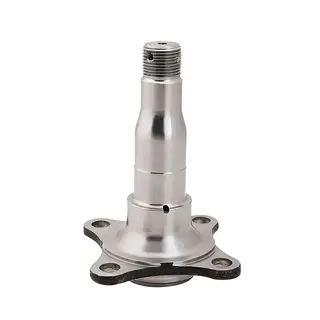
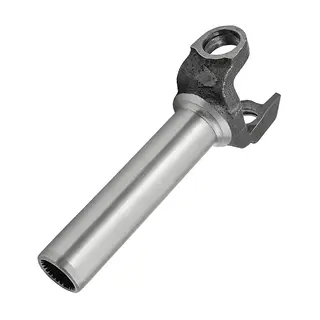
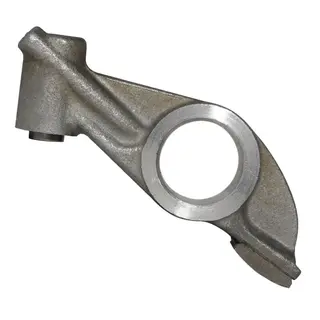
A forged steel pipe is a high-performance metal pipe manufactured through forging processes. Forging is a complex manufacturing method that deeply integrates engineering technology and mechanical processing. It applies enormous thermal energy and mechanical pressure to a steel billet, causing plastic deformation under high temperature and pressure conditions and changing its shape.
The resulting forged steel pipe has a continuous and dense metallic structure with no weld seams. It is widely used in seawater desalination, oil and gas, nuclear industry, and petrochemical sectors, among other high-end industrial fields.
When processing special materials such as duplex stainless steel and super duplex stainless steel, forging requires multi-stage, high-intensity compressive forces and forming under extreme pressure conditions. During production, key performance indicators must be comprehensively considered, including surface porosity, grain refinement level, tensile strength, fatigue life, and ductility, to ensure the final product meets stringent industrial requirements.

The manufacturing of forged steel pipes involves various processes, including hot forging, open-die forging, closed-die forging, extrusion forging, and cold forging. Each process has its own application range and technical characteristics. The selection depends on material properties, product specifications, and performance requirements.
Forged steel pipes are generally produced using either hot forging or cold forging, among which hot forging is mainly used for special steel materials.
Hot forging refers to applying significant pressure to steel billets at extremely high temperatures, causing plastic deformation and changes in internal structure. The billet is first heated to the forming temperature and then processed through different forging methods.
The advantage of hot forging lies in the excellent plasticity of metals at high temperatures, which reduces deformation resistance and allows large deformation processing. At the same time, high-temperature forging improves internal metal structure, refines grain size, and enhances overall mechanical properties.
Open-die forging, also known as free forging, is suitable for forming large and simple structural components. This method does not use closed molds. Instead, heated metal billets are directly processed through hammering or pressing.
Open-die forging offers high flexibility and can produce ultra-large-sized and thick-walled pipe blanks or fittings with a wide application range. Its main features include simple tooling and strong adaptability. However, it requires high labor intensity and depends heavily on operator experience.
In forged steel pipe production, open-die forging is mainly used for manufacturing pipe blanks for large equipment such as nuclear power and heavy chemical pressure vessels.
Closed-die forging uses enclosed molds to produce smaller components with high strength and toughness. Heated metal billets are placed inside a closed die cavity and pressed to fully fill the mold space, achieving precise shape and dimensions.
Products made by closed-die forging have high dimensional accuracy and excellent surface quality, making them suitable for mass production. In forged steel pipe and fitting manufacturing, closed-die forging is mainly used for producing tees, elbows, and similar fittings.
These products offer high strength and reliability and are widely used in high-pressure pipeline systems in the power and petrochemical industries.
Extrusion forging is a key process in forged steel pipe production. In this process, heated steel billets are placed in a die and pushed by a hydraulic punch so that the material flows along a mandrel.
This forms a tubular structure between the die and the core rod, ultimately producing a seamless pipe shape.
Extrusion forging is suitable for high-alloy and difficult-to-deform steels. It offers strong material adaptability, uniform structure, and high dimensional accuracy. However, it has relatively high cost and lower production efficiency, and is commonly used for stainless steel pipes, alloy steel pipes, and special metal tubing.
Cold forging is performed at room temperature and is generally not used for forged steel pipe production. It is mainly applied to small precision parts such as bolts, nuts, and gears.
Cold forging forms metal through plastic deformation below the recrystallization temperature. It is suitable for softer materials such as aluminum and offers low production cost.
Although cold-forged products usually require minimal post-processing, heat treatment is still commonly needed to improve strength and stability. Due to high deformation resistance at room temperature, cold forging is not suitable for large pipe manufacturing.

After understanding the various manufacturing methods, it is important to examine the complete production workflow from raw material to finished product. This includes three key stages: raw material selection, main production processes, and heat treatment with quality inspection. Each stage plays a decisive role in final product quality.
The first step in steel pipe forging is selecting high-quality raw materials, typically including high-grade carbon steel and low-alloy steel. These materials have good plasticity and weldability, meeting the requirements of subsequent processing and forming.
Common forging materials also include stainless steel, titanium alloys, and nickel-based high-temperature alloys such as Inconel, Haynes, and Hastelloy.
Raw material selection directly determines the final performance of forged steel pipes. High-quality materials should have uniform chemical composition, good purity, and appropriate grain size.
The hot rolling process typically includes: heating round billets, perforation, three-roll skew rolling or continuous rolling or extrusion, pipe removal, sizing or reducing, cooling, straightening, hydrostatic testing or non-destructive testing, marking, and storage.
This process is characterized by high efficiency and suitability for large-scale continuous production.
The cold drawing process includes: billet heating, perforation, heading, annealing, pickling, oil coating, multiple drawing passes, heat treatment, straightening, hydrostatic testing, marking, and storage.
This process provides high dimensional accuracy and excellent surface quality but has a more complex workflow and higher production cost.
Piercing and drawing forging processes offer high flexibility and short delivery cycles. They are especially suitable for single-piece or small-batch production of large-diameter thick-walled seamless steel pipes. However, efficiency is lower and material utilization is not optimal.
After rolling, steel pipes undergo heat treatment such as normalizing, quenching, or tempering to eliminate internal stress, improve microstructure, and enhance overall properties.
They then enter non-destructive testing and finishing stages, including ultrasonic testing and eddy current testing to detect internal defects, along with cutting and grinding operations.
Finished steel pipes must pass strict inspection procedures, including chemical composition analysis, mechanical property testing, and hydrostatic testing, ensuring that every thick-walled seamless pipe meets national standards and customer requirements.
Forged steel pipes hold an irreplaceable position in high-end industrial fields due to several unique advantages, including high strength, long service life, economic efficiency, and excellent surface quality.
The primary advantage of forged steel pipes is their high strength. The forging process refines and rearranges grain flow lines, significantly improving tensile strength and impact resistance.
Under high-pressure, fatigue, and complex stress conditions, forged steel pipes demonstrate superior stability. The grain structure flows along stress directions, enhancing both strength and toughness—something casting or welding processes cannot easily achieve.
Forging eliminates internal defects such as porosity, shrinkage cavities, inclusions, and cold shuts, greatly improving reliability and durability. Since there are no weld seams, forged steel pipes perform better under corrosive and high-pressure conditions.
Their continuous dense structure and thicker walls further enhance structural integrity compared with welded or conventionally formed pipes.
Forging offers high material utilization with minimal waste, providing cost advantages. It also allows flexible production of different specifications and complex geometries using dedicated molds.
When using stainless steel or titanium alloys, corrosion resistance and high-temperature performance are further enhanced, making them suitable for extreme environments.
Forging significantly reduces surface defects, porosity, and roughness, resulting in a dense and smooth surface. Multi-directional compression inside the die improves surface microstructure, benefiting subsequent machining and service performance.
Due to their excellent performance, forged steel pipes are widely used across multiple critical industries, including oil and gas, nuclear power, petrochemicals, aerospace, automotive, power generation, and seawater desalination.
- Oil and Gas Industry: In oil and gas applications, forged steel pipes are used in drilling equipment and corrosion-resistant critical components. Their seamless structure and high mechanical strength make them ideal for high-pressure and highly corrosive environments.
- Nuclear Power Industry: Nuclear power plants require extremely strict material standards. Forged steel pipes are used in heavy nuclear and chemical pressure equipment due to their strength, reliability, and radiation resistance, ensuring long-term safe operation.
- Chemical and Petrochemical Industry: In chemical and petrochemical sectors, forged steel pipes are widely used in high-pressure pipelines, reactors, and heat exchangers. Their strength and corrosion resistance make them suitable for harsh operating conditions.
- Aerospace and Automotive Industry: In aerospace, forged components are used in high-temperature structural parts and high-strength connectors. In automotive systems, they are used in steering, transmission, and suspension components. With lightweight trends, their application prospects continue to expand.
- Power Generation and Seawater Desalination: In power generation, forged steel pipes are used in turbines, generators, and heat exchange systems. In seawater desalination, duplex and super duplex stainless steel forged pipes are widely applied due to excellent seawater corrosion resistance.
To better understand their value, it is necessary to compare forged steel pipes with other pipe manufacturing processes in terms of cost, efficiency, and performance.
- Hot piercing is the most common and basic method for producing hot-rolled seamless pipes and capillary tubes. It is efficient and low-cost, making it suitable for mass production.
- Extrusion is suitable for high-alloy and difficult-to-deform materials, offering good uniformity and dimensional accuracy but higher cost and lower efficiency.
- Continuous rolling is mainly used for large-diameter thick-walled pipes, providing good strength but slower production and higher equipment investment.
Forged steel pipes offer the highest strength and reliability but also the highest cost, making them suitable for the most demanding conditions.
- Seamless steel pipes, produced by hot rolling or cold drawing, have no weld seams and offer good performance but are still inferior to forged pipes.
- Welded pipes are formed by rolling and welding steel plates. They are the most economical but have weld-related weaknesses and are suitable for general and low-pressure applications.
In engineering selection, performance requirements, operating conditions, and cost must all be considered.
In summary, forged steel pipes, with their seamless dense microstructure, excellent mechanical properties, and high reliability under extreme conditions, have become indispensable materials in modern high-end industrial piping systems.
From raw material selection to forging, heat treatment, and strict quality inspection, every manufacturing step directly determines final performance and application capability.
Compared with welded pipes and conventional seamless pipes, forged steel pipes offer significant advantages in strength, pressure resistance, corrosion resistance, and service life. Therefore, they are widely used in oil and gas, nuclear power, chemical engineering, aerospace, and marine industries.
With the continuous development of advanced manufacturing and energy industries, the technology and application scope of forged steel pipes will continue to improve and expand, playing an even more important role in increasingly complex and demanding industrial environments.