Forged Valve Components: Everything You Need to Know

In industrial sectors such as oil and gas transmission, petrochemical production, and power generation, the safe operation of pipeline systems is of critical importance. Valves, as essential devices for controlling the flow, pressure, and direction of media within pipelines, rely heavily on the quality of their components, which directly determines the reliability of the entire system. Among various valve manufacturing processes, forging technology has become the preferred solution for high-pressure, high-temperature, and highly corrosive working conditions due to its ability to produce components with dense structures and excellent performance. In this article, we systematically introduce forged valve components from multiple perspectives, including their basic concepts, main parts, manufacturing processes, material selection, and quality control, helping readers gain a comprehensive understanding of this industrial core component and its technical value.
Forged valve components are critical valve parts manufactured by plastically deforming metal under high temperature and high pressure conditions. Unlike cast valve components, forging does not involve pouring molten metal into a mold. Instead, solid metal is subjected to pressure, causing plastic deformation that eliminates internal defects such as porosity, shrinkage cavities, and looseness.
This processing method results in a more compact and uniform grain structure, giving forged valve components higher mechanical strength and superior overall performance.
Forged valve components are widely used in high-pressure, high-temperature, and highly corrosive environments in industries such as oil and gas, petrochemical, and power generation. In these critical applications, valve reliability directly affects the safe operation of pipeline systems, making forged components the preferred choice for high-pressure valve manufacturing.

Casting involves pouring molten metal into a mold and allowing it to solidify. Although this process is relatively simple and cost-effective, castings are prone to internal defects such as porosity and shrinkage cavities, which can reduce material density and mechanical performance.
Forging, on the other hand, uses pressure to plastically deform solid metal. Internal defects are compressed and eliminated, and the grain structure is refined and optimized. As a result, forged parts have higher structural integrity.
Because forging eliminates internal defects and improves grain structure, forged valve components outperform cast components in fatigue resistance, strength, and service life. In high-pressure, high-temperature, or corrosive media conditions, forged valve components provide more reliable sealing performance and longer service life.
The main advantages of forged valve components include:
First, high material density with minimal internal defects, enabling them to withstand higher working pressures.
Second, uniform grain structure with consistent mechanical properties.
Third, excellent fatigue resistance, suitable for long-term cyclic loading conditions.
Fourth, long service life with reduced maintenance costs.
Fifth, stable performance in high-temperature and corrosive environments.
These advantages make forged valve components standard configurations in Class 800 and above high-pressure applications, sulfur-containing environments, and critical safety systems.
The main forged valve components include the valve body, bonnet, stem, internal closure parts (gate, ball, or disc), and seats and sealing rings. The valve body serves as the primary pressure-bearing shell, while the bonnet seals the top of the valve and protects internal structures. The stem transmits torque, and the internal closure parts directly control media flow. Seats and sealing rings form the sealing interface, directly affecting sealing performance.
The valve body is the main pressure-bearing shell of the valve and must withstand internal pipeline pressure. Forged valve bodies effectively eliminate casting defects such as porosity and micro shrinkage cavities, resulting in higher material density and stronger pressure-bearing capacity.
In Class 800 and above high-pressure conditions or sulfur-containing environments, forged valve bodies are critical for ensuring system safety. The wall thickness design must remain uniform to ensure consistent mechanical properties and avoid stress concentration.

The bonnet seals the top of the valve body and protects internal components. In high-temperature cycling or steam service conditions, forged bonnets maintain stable sealing performance and prevent leakage caused by thermal stress changes.
The sealing connection between the bonnet and valve body is a key factor in overall valve sealing performance. Forging ensures material uniformity and dimensional accuracy, improving sealing reliability.
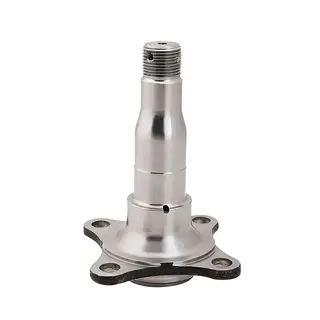
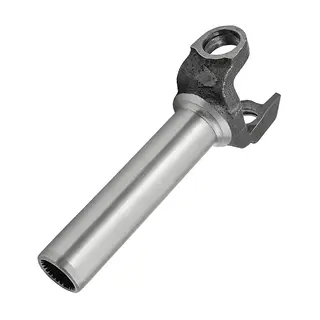
The valve stem transmits torque from the handwheel or actuator to the closure element and is the core transmission component of valve operation.
Forged stems feature continuous fiber flow lines, which significantly enhance bending resistance and fatigue resistance under cyclic stress. Compared with machined or cast stems, forged stems offer superior mechanical performance, making them suitable for high-frequency operation and high-pressure conditions.
Internal closure components include gates, balls, and discs. These parts directly contact the medium and are the core elements responsible for opening and closing functions.
Forged structures provide denser surfaces, improving resistance to erosion and wear. Additionally, forged components can achieve tighter sealing when matched with precision-ground valve seats, reducing leakage.
Seats and sealing rings form the sealing interface of the valve, and their quality directly determines sealing performance.
Forging ensures uniform hardness distribution, reducing uneven wear caused by hardness variation. Since leakage is one of the most common valve failure modes, forged seats and sealing rings significantly extend sealing life by optimizing material performance.
Common forging processes for valve components include closed-die forging, open-die forging, and ring rolling.

Closed-die forging is the most widely used method for forged valve components. Metal billets are heated to approximately 1050–1250°C and formed under high-pressure dies.
This process is suitable for complex components such as valve bodies and bonnets, offering excellent grain structure and dimensional consistency. Due to mold constraints, closed-die forging produces high-precision parts with minimal machining allowance, making it ideal for mass production.
Open-die forging is used for larger or simpler components such as stems or thick-walled blanks. The metal is gradually shaped through repeated pressing without complex die cavities.
Although equipment investment is lower, dimensional accuracy is relatively limited, and machining allowance is higher. This method is suitable for small batches or large forgings.
Ring rolling is mainly used for manufacturing seats and sealing rings. Radial expansion during rotation forms a continuous fiber flow structure.
This structure provides excellent circumferential strength, making ring components highly resistant to internal pressure. Ring rolling offers high material utilization and excellent dimensional accuracy, making it a key process for high-performance sealing components.
Material selection is a core aspect of forged valve component design. Common materials include ASTM A105 carbon steel, ASTM A350 LF2 low-temperature steel, ASTM A182 F316/F316L stainless steel, ASTM A182 F22/F91 high-temperature alloy steel, duplex stainless steels such as F51/F55, and NACE-compliant materials.
Material selection depends on operating conditions:
- ASTM A105 carbon steel is widely used for general high-pressure oil, gas, and water systems due to its strength and low cost.
- ASTM A350 LF2 low-temperature steel is designed for cryogenic environments such as LNG systems, maintaining toughness at extremely low temperatures.
- ASTM A182 F316 and F316L stainless steels offer excellent corrosion resistance for chloride-containing or chemical environments.
- ASTM A182 F22 and F91 are high-temperature alloy steels used in steam and power plant applications.
- Duplex stainless steels (F51, F55) combine corrosion resistance and high strength, suitable for offshore and seawater applications.
For sour service environments containing hydrogen sulfide, NACE-compliant materials are required to prevent sulfide stress cracking.
Stainless steel is widely used in forged valve bodies due to its excellent corrosion resistance, high strength, and durability. It is suitable for harsh environments such as chemical processing and offshore platforms. Stainless steel maintains structural stability under extreme conditions, making it a preferred material for high-reliability applications.
Carbon steel is known for its high strength and low cost. It is commonly used in general industrial pipelines where corrosion resistance requirements are not severe.
However, due to limited corrosion resistance, surface treatment or coatings are often required. Carbon steel forged valve bodies are widely used in general industrial systems where cost efficiency is a priority.
Aluminum alloys offer lightweight properties, good corrosion resistance, and excellent thermal conductivity. They are commonly used in aerospace and automotive applications where weight reduction is critical.
Although anodizing can improve corrosion resistance, aluminum alloys have relatively low pressure-bearing capacity and are not suitable for high-pressure conditions.
Key design factors include shape, size, and wall thickness. Forging process selection includes open-die forging, closed-die forging, and precision forging.
Valve body design plays a crucial role in forging. Structural design must balance shape, size, and wall thickness.
Flow paths should be optimized to reduce pressure loss. Complex geometries require more advanced dies and increase manufacturing difficulty.
Size significantly affects forging. Large valves require high-tonnage equipment, while small valves require higher dimensional precision.
Wall thickness should be uniform to avoid stress concentration, although local variations may be used for reinforcement or flow optimization.
Open-die forging is simple and suitable for large or low-volume production but requires more machining.
Closed-die forging is the most widely used method, offering high precision and efficiency for mass production.
Precision forging uses advanced equipment to achieve very high accuracy and surface quality, mainly for aerospace and high-end industrial applications, but at higher cost.
Heat treatment and surface treatment are essential for improving performance.
Heat treatment includes annealing, quenching, and tempering, which reduce stress, increase hardness, and improve toughness.
Surface treatment includes grinding, polishing, coating, and machining to improve surface quality, corrosion resistance, and structural features.
Annealing relieves internal stress and improves plasticity.
Quenching increases hardness and strength through rapid cooling.
Tempering reduces brittleness and improves toughness after quenching.
Strict control of temperature, time, and cooling rate is required to ensure stability and avoid defects.
Surface treatments improve corrosion resistance and service life.
Machining processes such as drilling, milling, and turning create threads, sealing surfaces, and key structural features. Precision directly affects sealing performance and reliability.
Forged valve components must comply with international standards such as API 602, ASME B16.34, BS 5352, and ASTM material specifications.
API 602 applies to forged steel gate, globe, and check valves. ASME B16.34 defines pressure-temperature ratings. BS 5352 is widely used for small bore valves.
Materials must comply with ASTM standards such as A105, A182, and A350, covering chemical composition, mechanical properties, and heat treatment requirements.
Inspection includes:
- Chemical composition analysis
- Tensile and impact testing
- Ultrasonic testing for internal defects
- Magnetic particle testing for surface defects
- Hydrostatic and pneumatic testing for sealing and pressure resistance
Complete traceability documentation ensures full material and processing history can be tracked.
Forged valve components, with their excellent mechanical properties, high density, and long service life, have become indispensable core elements in critical industries such as oil and gas, petrochemical, and power generation.
From valve bodies and bonnets to stems and internal closure parts, the forging quality of each component directly affects the safety and reliability of the entire valve system.
In terms of materials, from carbon steel and stainless steel to duplex steels and high-temperature alloys, different materials are suited to different operating conditions, and proper matching is essential for performance.
In terms of processes, closed-die forging, open-die forging, and ring rolling each have distinct advantages depending on component shape and production scale. Heat treatment and surface treatment further enhance performance, while strict quality control systems ensure compliance with international standards.