Multi-Directional Forging for Complex Components

In modern manufacturing, producing metal components with complex geometries has long faced challenges such as significant material waste, numerous processing steps, and high production costs. Multi-directional forging (MDF) technology, as an advanced forming process, applies pressure to a metal billet from multiple directions simultaneously, enabling the creation of complex, high-performance forgings without flash in a single forming operation. By combining extrusion and die forging, this technology significantly improves material utilization, enhances mechanical properties, and is especially suitable for difficult-to-form materials such as stainless steel and high-temperature alloys. This article systematically introduces the fundamental concepts of multi-directional forging, its forming principles, three types of die parting methods, technical features and advantages, mold design requirements, and typical application areas, providing readers with a comprehensive understanding of its operational principles and practical value.
Before exploring the forming principles and parting methods of multi-directional forging, it is necessary to clarify its basic concept and distinguish it from conventional forging. Multi-directional forging is a comprehensive forming process that integrates extrusion with die forging, allowing complex, flash-free forgings to be produced in a single stroke. The following section introduces its definition and key differences from traditional forging.
Also known as multi-punch forging, multi-directional forging utilizes sectional dies to produce complex forgings in one stroke of a multi-directional forging press. These forgings are characterized by the absence of flash or very minimal draft angles, and can include multiple branching structures or internal cavities.
In simple terms, multi-directional forging applies pressure to a metal billet from multiple directions simultaneously, causing the material to flow and fill a closed die cavity completely, ultimately forming the desired complex component shape. Unlike conventional forging, it eliminates the formation of flash and reduces the need for secondary machining.
Conventional forging typically applies pressure in one or two directions, with simpler die structures. Producing complex shapes often requires multiple operations, generating flash and causing material waste. Multi-directional forging, in contrast, applies simultaneous or sequential pressure in multiple directions, completing complex structures in a single operation without flash, improving material efficiency and enhancing forging performance.

Under multi-directional pressure, the metal undergoes complex flow, filling the die cavity completely. The principles can be described from two perspectives: closed-cavity forming and multi-punch coordination.
The MDF process occurs within a closed die cavity composed of four separable die segments. One or more punches in horizontal or vertical directions exert pressure on the billet, causing the metal to flow and fill the cavity.
Specifically, part of the metal flows along the punch motion direction, while another part flows vertically or at an angle. This multi-directional flow enables the forging to form complex parting structures, multiple branches, and precise cavity dimensions.
Implementing MDF requires specialized multi-directional forging presses. The press frame typically features a slight inclination in the lateral direction and uses wire-wrapped structures to provide preloading in vertical and horizontal directions. Through coordinated movement of punches in different directions and sequences, the billet is fully filled within the closed die cavity. After forming, the dies open, and the forging is removed.
Punch movement may occur simultaneously or sequentially. Two or more punches exert pressure on the billet from different directions, causing extrusion or upsetting deformation, thereby achieving the formation of complex-shaped components.
MDF dies can be classified into three types based on parting method: vertical parting, horizontal parting, and combined vertical-horizontal parting (composite parting). Each method has specific die structures and suitable application scenarios. Understanding the differences helps select the most appropriate die configuration in production.
In vertical parting, the parting surface is perpendicular to the press table. The lateral dies are fixed to horizontal cylinder pistons, while vertical punches are mounted on vertical through-cylinder pistons. During operation, vertical and horizontal motions work together to fill the die cavity. After forming, the dies open, and the forging is removed.
The lateral dies are connected to a linkage via hex bolts, and the linkage is connected to the horizontal cylinder piston. The vertical punch connects to the vertical cylinder piston. The lateral die movable table is fixed to the forging worktable with bolts. After the vertical punch retracts, the movable table drives the lateral dies, which are guided by dovetail slots. The horizontal cylinder provides closure force, and once closed, the billet is placed in the cavity and compressed by the vertical punch to fill the die.
Horizontal parting has a parting surface parallel to the press table. The upper and lower dies are fixed to the moving and lower beams, respectively. Vertical and horizontal punches deform the billet. Once the dies close, multi-directional extrusion is applied. After forming, punches retract, and the dies open for removal.
When installing the die, it is essential to align the horizontal punch centerline with the upper and lower die lateral holes, and the vertical punch centerline with the upper die holes. The billet is placed in the lower die cavity, the upper beam clamps the dies, and vertical and horizontal punches compress the billet to fill the cavity.
Composite parting features two parting surfaces: one parallel and one perpendicular to the worktable. Compared to horizontal parting, it can forge valve bodies with main flanges. Compared to vertical parting, the perpendicular parting surface is much smaller, reducing lateral clamping load. Vertical clamping load is provided by press cylinders.
The advantage of composite parting is its versatility, enabling a broader range of products to be forged on the same press.
MDF is widely used in aerospace, energy, and hydraulic systems due to several advantages over conventional forging. These include material utilization, mechanical performance, production efficiency and energy control, and adaptability to difficult-to-form materials.
MDF is a flash-free forming process. Unlike open-die forging, there is no flash waste. Forgings can be designed with hollow structures, and punch draft angles can be minimized or eliminated. These characteristics allow MDF to save 30–50% of metal material.
The final shape of the forging is close to the part’s design, reducing machining time and overall manufacturing costs.
Because most of the forging shape is formed directly in the die, metal fibers follow the component contour continuously. This optimized fiber flow improves mechanical properties, increasing strength by over 30%. Continuous fiber distribution also enhances stress corrosion resistance.
MDF controls deformation in multiple directions, reinforcing load paths, optimizing grain flow in complex transitions, and enhancing strength in high-stress areas while reducing incomplete filling or unfavorable grain orientation.
MDF usually requires only one heating cycle, completing forging in a single stroke. This increases production efficiency, reduces energy consumption, and minimizes oxidation and decarburization. Fewer process steps shorten production cycles and improve labor productivity.
MDF is particularly suitable for low-plasticity materials with narrow forging temperature ranges, such as stainless steel, high-temperature alloys, and titanium alloys. Under strong triaxial compressive stress, material ductility increases, and cracking risk decreases. This enables high-alloy and special alloy materials, challenging for conventional forging, to be formed successfully.
The advantages of MDF ultimately depend on high-quality dies. Die design involves selecting die structure, material choice, precision control, and wear mitigation measures. Only with well-designed, precisely manufactured dies can forging quality and die lifespan be ensured.
Depending on the parting method, MDF dies have three basic structures: horizontal, vertical, and composite. These dies are complex, multi-directional, and usually consist of multiple movable parts operated hydraulically or mechanically.
MDF dies require high strength and wear resistance, typically made from alloy steel or wear-resistant materials. Temperature control systems, such as cooling channels or heaters, maintain suitable working conditions, ensuring die life and product quality.
Complex geometry demands precision machining and surface treatment to reduce friction. High precision is essential, particularly in complex parts, where die accuracy and durability directly affect product quality.
MDF produces intense metal flow in a single stroke, causing significant die and punch wear. Common issues include cracks, cavity collapse, and punch breakage.
Cracks often result from friction loads during vertical punching combined with thermal cycling. Collapse occurs when billet metal flows into the upper die cavity, repeatedly compressed by vertical punches, damaging sharp edges. Punch breakage often results from uneven metal flow causing eccentric loads.
Mitigation requires designing dies for uniform stress distribution, selecting suitable materials, and optimizing process parameters.
MDF is widely applied due to its high material utilization, superior forging performance, and ability to produce complex shapes. Key industries include aerospace, energy and heavy machinery, and hydraulic and pipeline systems.
- Aerospace: MDF produces critical components like aircraft landing gear and engine housings, which require high strength, reliability, and complex shapes.
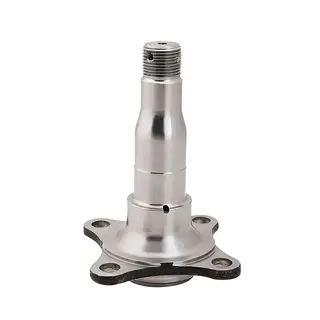
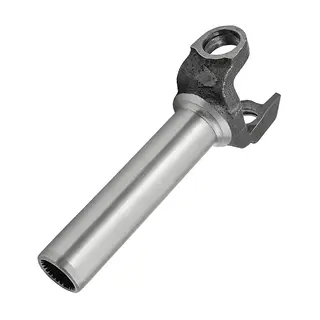
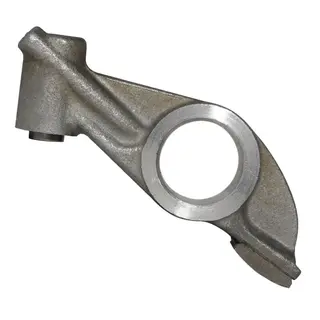
- Energy and Heavy Machinery: MDF is used for geometrically complex, high-load components in heavy machinery, rail systems, transportation equipment, and energy devices, including yokes, forks, hubs, connectors, branching components, support arms, and high-load brackets.
- Hydraulic and Pipeline Systems: MDF is applied to large valve bodies, pipe joints, and cylindrical components with internal cavities and branching structures, enabling single-stroke production of complex shapes.
Successful MDF requires proper process planning, focusing on selecting parting methods and determining parting surface positions. Factors include component geometry, size, structure, vertical and horizontal projections, internal cavities, hole ratios, press parameters, punch stroke, and die installation space. Proper planning ensures forging quality, prolongs die life, and maximizes MDF advantages.
Multi-directional forging, as a precision forging technology, forms complex components in a single operation through multi-directional pressure. It offers clear advantages in material utilization, forging performance, production efficiency, and adaptability to special materials. With continuous advances in die design and manufacturing, MDF’s applications in aerospace, energy, heavy machinery, and hydraulic systems will expand further.
For enterprises producing complex, high-performance forgings, MDF is an advanced forming technology worthy of deep exploration. By selecting suitable parting methods, optimizing die design, and strictly controlling process parameters, its full potential can be realized, producing high-quality forgings efficiently.