Guide to Forging Cost Calculation and Cost Control

In modern manufacturing industries, forging is an important metal forming process widely used in automotive, construction equipment, aerospace, energy equipment, mining machinery, railway systems, and other industrial sectors. Forged components have become essential parts in many critical applications due to their excellent mechanical properties, high strength, durability, and reliability. These components are often responsible for transmitting loads, absorbing impact, and ensuring structural integrity under demanding working conditions.
However, forging production involves multiple manufacturing stages, and its cost structure is relatively complex. From raw material purchasing and die development to forging production, machining, heat treatment, surface treatment, and quality inspection, every step can influence the final product cost. For purchasing managers, engineers, and manufacturing decision-makers, accurately understanding the composition of forging costs, mastering cost calculation methods, and developing effective cost control strategies are essential for reducing production expenses and improving market competitiveness.
This article provides a complete overview of forging cost calculation and cost control, including cost components, calculation methods, key influencing factors, and practical strategies for reducing manufacturing costs.
Forging cost calculation refers to the process of estimating the total cost required to manufacture a specific metal component through forging processes. Since forging production usually requires significant initial investment, especially for tooling and die development, accurate cost calculation plays an important role when selecting the most suitable manufacturing method among forging, casting, and machining from solid materials.
Although forging requires higher upfront costs compared with some other manufacturing methods, it provides advantages in large-volume production through higher efficiency, better material utilization, and lower unit costs. Therefore, understanding the complete cost structure helps companies make better manufacturing decisions.
The total cost of forged components mainly consists of material costs, die costs, production and processing costs, post-forging treatment costs, management expenses, and profit margins. These costs are influenced by several factors, including production quantity, part complexity, dimensional tolerance requirements, material selection, component size, and weight.

The following section provides a detailed analysis of the specific components of forging costs. These cost elements include material costs, die costs, production and processing costs, post-forging treatment costs, as well as management expenses and profit margins. Each of these factors represents a significant portion of the total manufacturing cost and plays an important role in determining the final price of forged components.
Material cost is usually the largest variable cost in forging production. The raw materials used for forging mainly include billets, bars, and steel ingots, such as carbon steel, alloy steel, stainless steel, aluminum alloys, and titanium alloys.
Raw material costs depend not only on the market price of metals but also on billet weight and material utilization efficiency.
During closed-die forging, additional material allowance is normally required to ensure complete filling of the die cavity. The excess material flows out through the die parting line and forms flash. In addition, oxidation occurs on the metal surface during heating, creating oxide scale. Both flash and oxide scale result in material loss, but these losses still contribute to the overall material cost.
Therefore, improving material utilization, reducing flash formation, and minimizing machining allowance are important methods for reducing forging costs.
Material utilization is generally measured by comparing the final forged part weight with the original billet weight. A higher utilization rate indicates less material waste and lower manufacturing costs.
Die cost is one of the major fixed costs in forging production. Since forged components usually require customized dies according to their specific shapes, tooling expenses can significantly affect unit costs, especially in low-volume production.
Die costs include die design, engineering analysis, die material, machining, manufacturing, and heat treatment.
Modern forging dies are commonly manufactured from high-performance hot-work tool steels such as H13 steel. These dies require high-precision CNC machining and electrical discharge machining (EDM) to achieve accurate dimensions and long service life.
To improve resistance against high temperatures, wear, and thermal fatigue, forging dies usually undergo heat treatment processes such as hardening and tempering.
Because die investment is generally a one-time expense, manufacturers normally distribute tooling costs across the expected production quantity. For example, if a die set costs USD 15,000 and is used to manufacture 10,000 components, each part carries a die amortization cost of USD 1.50. The larger the production volume, the lower the tooling cost per part.
Production costs mainly include equipment operation expenses, energy consumption, labor costs, and production efficiency-related costs.
During forging, metal materials must be heated to temperatures suitable for plastic deformation. For example, steel is usually heated between 1000°C and 1250°C before forging. Therefore, electricity and natural gas consumption directly influence production costs.
Equipment costs include depreciation, maintenance, power consumption, and operating expenses for forging equipment such as mechanical presses, hydraulic presses, and forging hammers.
Production cycle time also affects cost allocation. Higher production efficiency allows equipment costs to be distributed among more components, reducing the cost per unit.
In addition, forging operations require operators, heating personnel, and material handling workers. Therefore, labor expenses must also be included in the final manufacturing cost.
Forged components usually cannot be used directly after forging and require additional processing.
Post-forging processing costs mainly include trimming, heat treatment, machining, surface treatment, and quality inspection.
Trimming removes flash and burrs generated during forging, allowing components to achieve basic dimensional requirements.
Heat treatment processes such as annealing, normalizing, quenching, and tempering are used to improve mechanical properties, including hardness, strength, and toughness.
Although forging is a near-net-shape process that reduces material waste, it usually cannot achieve final dimensional accuracy and surface requirements. Therefore, additional machining operations such as CNC turning, milling, and drilling are often necessary.
Depending on the operating environment, forged parts may also require surface treatments such as sand blasting, painting, coatings, or galvanizing.
Critical forged components may require non-destructive testing, including ultrasonic testing (UT) and magnetic particle inspection (MPI), to ensure product reliability.
5. Management Expenses and Profit
In addition to direct manufacturing costs, forged product prices also include management expenses and profit.
Management expenses include factory operation costs, administrative expenses, quality control costs, packaging, and transportation.
Manufacturers usually add profit margins based on market competition, product complexity, order quantity, and technical requirements. Typical profit margins for customized forged components are generally around 10%–30%.

The total cost of a forged component is generally calculated using the following formula:
Total Forging Cost per Part = Material Cost + Equipment Cost + Labor Cost + Secondary Processing Cost + Die Amortization Cost + Management Expenses + Profit
Material cost is calculated by multiplying billet weight by material price.
Equipment cost is calculated by dividing hourly equipment operating expenses by hourly production output.
Labor cost is calculated based on labor hours and production quantity.
Secondary processing costs include machining, heat treatment, surface treatment, and inspection expenses.
Die cost is calculated by dividing total tooling investment by the expected production volume.
Production quantity is one of the most important factors affecting forging economics. When production volumes reach thousands or even hundreds of thousands of pieces, forging becomes highly economical because tooling costs can be distributed over more products. However, small production quantities often result in higher unit costs because tooling expenses cannot be effectively amortized.
Part complexity also affects cost. Complex geometries require more forging operations, additional dies, higher forming pressure, and more machining processes. Optimizing component design can significantly reduce manufacturing difficulty and cost.
Dimensional tolerance requirements influence tooling precision, process control, and inspection requirements. Extremely tight tolerances increase manufacturing expenses and may raise scrap rates.
Component size and weight also affect cost because large forgings require larger presses, heating furnaces, handling equipment, and higher energy consumption.
Material selection has a direct impact on cost. Carbon steel and aluminum alloys generally have lower costs, while titanium alloys, high-temperature alloys, and nickel-based alloys are more expensive due to higher material prices and greater forging difficulty.
One of the most effective cost reduction methods is applying Design for Manufacturing (DFM) principles during product development.
Near-net-shape designs can reduce machining requirements and material waste. Proper draft angles, usually 3°–7°, help improve die release, reduce tooling damage, and extend die life. Designers should also avoid excessively deep cavities and thin sections because these structures increase forging difficulty and shorten tool service life.
Material selection optimization is another important strategy. Since raw materials often account for approximately 50%–70% of total forging costs, choosing the correct material grade is essential. Selecting materials with excessive performance levels can create unnecessary expenses. Professional forging suppliers usually analyze application requirements and recommend suitable materials that provide sufficient performance without unnecessary cost.
Choosing the correct forging process can also reduce costs. Open-die forging is suitable for large components and low-volume production, while closed-die forging is more economical for medium- and high-volume manufacturing. Hot forging provides excellent mechanical properties and complex forming capability, while cold forging offers better surface quality and dimensional accuracy.
Improving production efficiency through automation, advanced equipment, experienced operators, and effective production planning can further reduce manufacturing costs.
Post-forging processing and quality control should also be optimized. Integrated services combining forging, machining, heat treatment, and surface treatment can reduce supply chain complexity and improve efficiency.
Quality inspections such as ultrasonic testing, magnetic particle inspection, tensile testing, hardness testing, and dimensional inspection increase costs but help prevent failures and reduce long-term risks.
Supply chain and logistics management are also important. Stable material supply channels, reasonable inventory planning, professional packaging, and efficient transportation management help control overall costs.
Reducing forging costs requires a systematic approach rather than simply selecting the supplier with the lowest quotation.
Effective strategies include cooperating with forging suppliers during the early design stage, optimizing component structures, improving material utilization, integrating manufacturing processes, increasing production efficiency, and selecting suppliers with strong engineering capabilities.
The lowest unit price does not always represent the lowest overall cost. The Total Cost of Ownership (TCO) concept focuses on the entire product lifecycle, including manufacturing cost, reliability, maintenance requirements, and long-term performance.
By optimizing design, materials, processes, quality control, and supply chain management, companies can achieve the best balance between product performance and manufacturing cost.
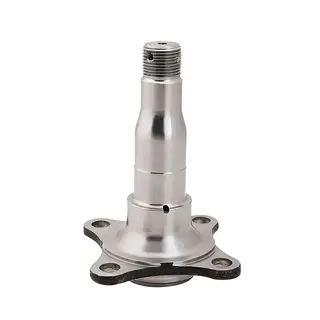
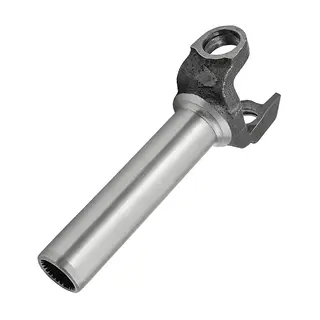
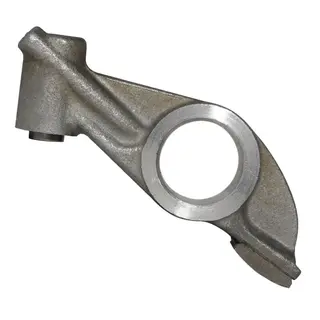
Customized forged components are widely used in automotive systems, construction equipment, mining machinery, agricultural machinery, railway systems, and energy infrastructure.
These components are responsible for carrying heavy loads, transmitting mechanical forces, absorbing impact, and ensuring equipment safety in demanding operating environments.
For purchasing managers and engineers, understanding forging cost factors is critical. A forged component price is not determined only by the supplier quotation but also by material selection, product design, tooling requirements, manufacturing processes, quality standards, and supply chain management.
A professional OEM forging supplier is not only a manufacturer but also an engineering partner that helps customers optimize product design, reduce costs, and improve reliability.
Forging cost calculation is a comprehensive process involving materials, tooling, production, machining, quality control, and supply chain management. By applying Design for Manufacturing principles, selecting appropriate materials, optimizing forging processes, improving production efficiency, integrating services, and focusing on Total Cost of Ownership, companies can effectively reduce forging costs while maintaining high product quality and performance. For buyers, selecting a forging supplier with strong engineering expertise, manufacturing experience, and reliable supply chain management is essential for achieving cost optimization and long-term value. Early cooperation between customers and forging suppliers during product development can control costs from the beginning, avoid unnecessary manufacturing difficulties, and create more competitive and reliable forged products.